
TL;DR

Get home appliances delivered free with Prime
- Fast, free delivery on millions of items
- Prime Video, Amazon Music and more included
- Member-only deals all year
Apple’s HomeView smart display can present compatible online recipes as simplified, hands-free instructions. The feature requires users to open the original recipe first, but food writers and publishers say that stripping away page content may reduce ad exposure and leave out useful cooking guidance. Its reach and financial impact are not yet known.
Apple has introduced a recipe feature for its HomeView smart display that turns compatible online recipes into simplified, hands-free instructions, renewing concerns among food writers that technology can reduce the advertising and other revenue their websites depend on. Users must first open a recipe on an iPhone or in Safari on HomeView, but the display can then foreground ingredients, steps and timers rather than the full webpage.
Apple demonstrated HomeView in an advertisement showing a family using the display during a busy morning, including to pull up a French toast recipe. The feature is designed to make cooking easier by presenting ingredients, directions and timers in a format that can be navigated with voice controls and Siri. Apple says it can work with online recipes that use Google’s search-friendly recipe formatting.
That streamlined presentation is also the source of concern for publishers. The original report in The Verge says recipe pages commonly earn money through advertising and affiliate links, while a cooking display that extracts only the recipe may limit the page content a user sees during the meal. HomeView does require an initial visit to the source page, which can expose a user to its ads once; it is not clear how that compares with the repeated ad impressions generated when a reader keeps a recipe page open.
The feature may also leave out information that helps cooks handle substitutions or troubleshoot a recipe. Eater senior reporter Bettina Makalintal told The Verge that extra material can help with those questions. The report also notes that recipe introductions and other written material can serve a practical purpose: writers have used longer text to improve the chance of appearing in search results, while that prose may be among the parts of a recipe page that can be copyrighted.
Recipe Views and Writer Revenue
HomeView illustrates a tension between convenience for cooks and the business model behind free online recipes. A concise, hands-free display can make directions easier to follow at the counter, especially when a cook does not want to handle a screen. But if users rely on an extracted version rather than the original page, publishers may lose opportunities to show ads or direct readers to affiliate products.
The scale of any effect remains unknown. The Verge describes HomeView as one more development in a broader shift toward recipe tools, including search and voice assistants. The practical stakes extend beyond publisher income: when a simplified version omits notes about ingredient swaps or possible problems, users could lose guidance that the recipe creator intended to provide. Whether HomeView preserves enough of that information will depend on how its format handles individual recipes.
As an affiliate, we earn on qualifying purchases.
Earlier Recipe Simplification Tools
Apple is entering a field where several companies have tried to make online recipes easier to use. Amazon’s Echo Show devices offer hands-free cooking features through partner sites including Allrecipes and Epicurious. Google previously offered step-by-step recipes on Nest Hub displays, but removed that feature in 2024 along with other functions it described as underused, according to The Verge.
The report also points to Google Search’s Gemini AI, which can assemble online recipe information into a streamlined result on the search page. That approach can present a recipe without requiring a visit to its source. In 2021, startup Recipeasly promised to remove ads and personal stories from online recipes, but took the service offline after a backlash that reportedly lasted less than a weekend. These examples show that the debate predates HomeView, though the tools differ in how they source and present recipes.
Recipe pages are varied: they include work from large services such as Allrecipes and NYT Cooking, food publications, independent chefs, newsletters and home cooks. The Verge’s report says many sites already provide a “jump to recipe” button for readers who want to skip introductory text. Ravenous co-founder Jaya Saxena argued that this option makes it possible to reach the recipe without reading the surrounding material.
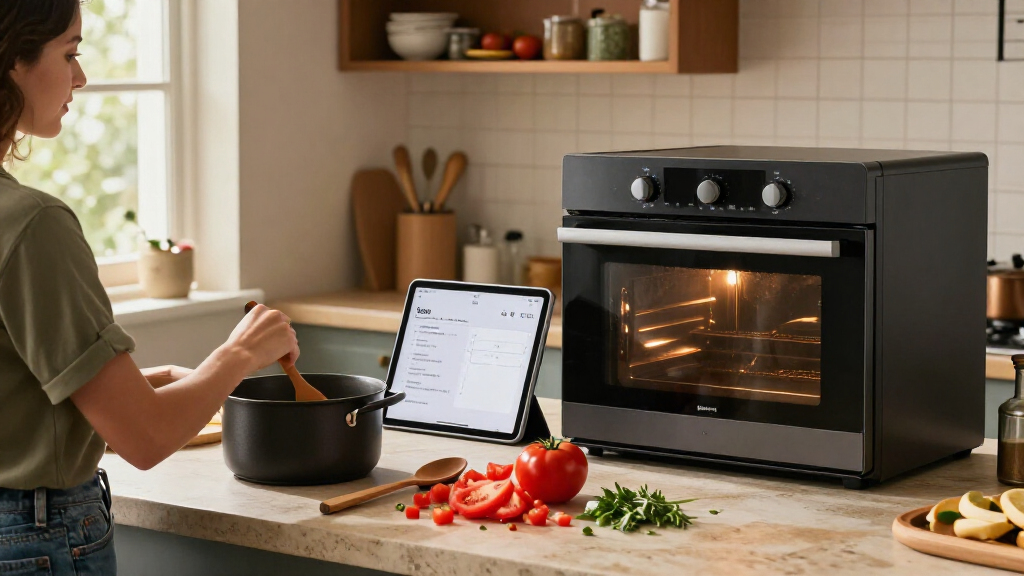
hands-free recipe assistant device
As an affiliate, we earn on qualifying purchases.
As an affiliate, we earn on qualifying purchases.
HomeView’s Reach and Recipe Details
Apple’s likely audience for the feature, the number of compatible recipes and the effect on publishers’ earnings have not been established in the source material. The report does not quantify how often HomeView users will cook from extracted recipes, how much of a source page the device displays before switching formats, or whether that initial visit will generate meaningful revenue for a publisher.
It is also unclear how consistently HomeView will retain recipe notes, substitution advice and troubleshooting information. Apple says the feature works with recipes using a particular search-friendly format, but the report does not describe how the display handles every kind of page or whether writers can control what is extracted. Claims about harm to writers are concerns raised by people quoted in the report, not measured outcomes from HomeView use.
As an affiliate, we earn on qualifying purchases.
Adoption Will Shape the Impact
The next sign to watch is whether HomeView reaches enough households, and whether people use its recipe view regularly. Its effect on publishers will depend on how often the tool sends users to original sites, what content remains visible there, and whether cooks return to those sites for other recipes and guidance. The source material gives no sales forecast or usage data for the display.
For now, recipe writers and readers will be weighing a familiar trade-off: fewer steps and less screen handling against the possibility of reduced page revenue or missing context. More information about HomeView’s recipe presentation, including how it treats notes and links, would help clarify the practical consequences. Until those details and user figures emerge, claims about the feature’s financial impact remain projections rather than established results.
As an affiliate, we earn on qualifying purchases.
Key Questions
What does Apple HomeView do with online recipes?
HomeView can present compatible recipes as step-by-step instructions, with ingredients and timers designed for hands-free use. Apple says it supports recipes using Google’s search-friendly recipe formatting.
Does HomeView completely bypass recipe websites?
Not according to the report. Users must first open a recipe on an iPhone or through Safari on HomeView, meaning the original page is visited before the simplified display is used. How much further interaction the page receives is unclear.
Why are food writers concerned?
Many recipe websites rely on advertising and affiliate links. Writers and publishers worry that a tool showing only the directions could reduce the time users spend on the source page and the revenue it generates.
Could a simplified recipe be less useful to cooks?
It could omit material such as substitution suggestions or troubleshooting advice, according to Eater reporter Bettina Makalintal. The report does not establish how often HomeView leaves out those details.
Is HomeView’s effect on recipe businesses known?
No. The source material provides no usage figures, sales data or measured revenue changes. Its effect will depend in part on adoption and how the feature displays source content.
Source: rss
Fall yard work Picks
leaf blowers
As an affiliate, we earn on qualifying purchases.