TL;DR
An Ideal Home writer compared kitchen foil with purpose-made radiator reflectors at home and found the foil less effective at keeping the wall behind a radiator cool. The test was observational, not a controlled measurement of room temperatures or energy use, so it does not establish how much either option could save on bills.
An Ideal Home writer’s home test found that ordinary kitchen foil behind radiators appeared less effective than purpose-made radiator reflectors at limiting heat reaching an external wall. The comparison was based on observations rather than controlled temperature or energy-use measurements, so it does not show how much either product warms a room or reduces bills.

Get home appliances delivered free with Prime
- Fast, free delivery on millions of items
- Prime Video, Amazon Music and more included
- Member-only deals all year
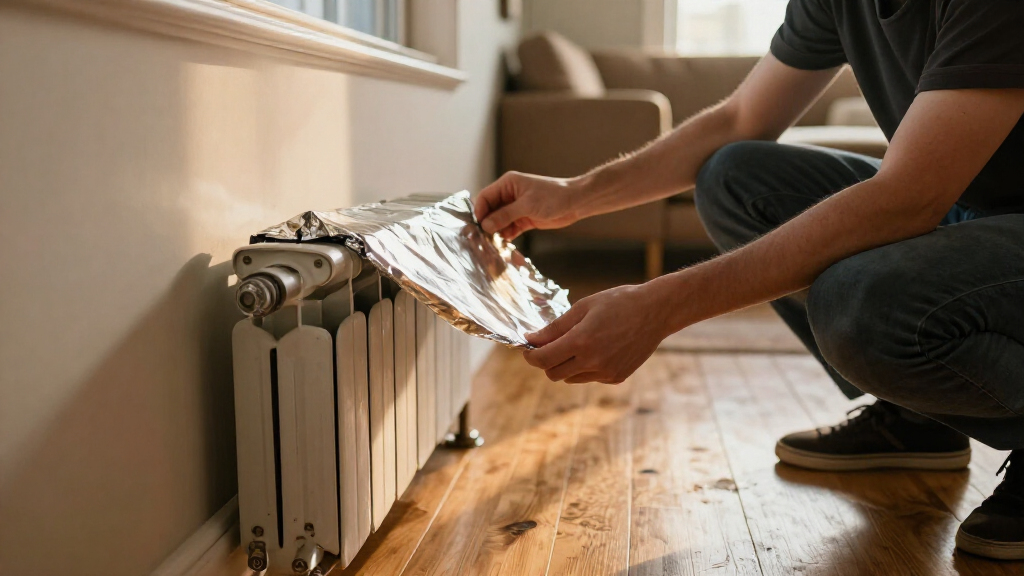
The writer, Sarah Handley, compared kitchen foil with radiator reflector panels she had used for four years. After placing foil behind a radiator, she reported that the foil became hot and the wall behind it felt warm. With the reflector in place, she said, the wall felt noticeably cooler. Those observations led her to judge the reflector more effective at reflecting heat back into the room.
The report suggested that the difference may relate to the materials: the foil was thinner and more fragile, while the purpose-made panels were thicker and more rigid. Handley also tried holding each material in the path of a hair dryer and said the foil became uncomfortable to hold within seconds, while the reflector did not become unbearably hot. This was an informal demonstration, not a measured comparison of insulation performance.
The writer found the reflector easier to fit. Its sheets could be cut to size with scissors and came with plastic strips to help position them on radiator brackets. The kitchen foil required several pieces taped together for larger radiators and tore during installation. Handley said her foil cost £7 for 20 metres; the reflectors cost about £40 for five sheets, enough for her five radiators on external walls.
What the test says about bills
The comparison matters to households looking for inexpensive ways to stay warm, but it does not establish that buying reflectors will deliver a particular saving. Handley reported that her energy bills in the first month after installing the panels were 20% lower than in the same period a year earlier. She also noted that milder weather or other energy-saving steps could have contributed. The report provides no controlled comparison that isolates the panels’ effect.
Handley said she had kept her thermostat at an average of 18–19°C during the four years she had the reflectors, around 2–3°C below her previous winter setting, while feeling just as comfortable. That is her experience, not proof that the panels alone enabled the change. The report also cites the Energy Saving Trust’s estimate that lowering a thermostat from 22°C to 21°C could save about £120 a year on energy bills. That estimate concerns the thermostat change; it is not a forecast of savings from foil or radiator reflectors.
For readers weighing a £7 roll against a more expensive product, the central distinction is between purchase price and proven performance. The test suggests ordinary foil may be awkward to install and less effective in this particular setup. It does not quantify the likely bill impact for other homes or show that the more expensive panels will repay their cost.
Products Worth Considering

EGO POWER+ Nexus Escape 400W Portable Inverter, Battery and Charger Not Included

Greenworks 48V Cordless Lawn Mower, String Trimmer, and Blower Combo Kit

EGO Power+ 880 CFM Cordless Leaf Blower with Two 4.0Ah Batteries
As an affiliate, we earn on qualifying purchases.
How the home comparison was done
The Ideal Home report was framed around colder weather and energy price rises expected in January, when households were considering ways to reduce heating costs. It compared kitchen foil with reflector panels already installed in the writer’s home, focusing on how hot the materials felt and whether the wall behind the radiator felt warm.
This was a single-home, informal test. The source does not describe use of temperature sensors, a control room, repeated trials, or measurements of heating consumption. It also does not provide the radiator type, wall construction, room conditions, or a product specification comparison. Those limits mean the writer’s observations should not be treated as a general performance rating.
The report distinguishes the two materials mainly by thickness, rigidity and ease of fitting. Its conclusion is grounded in the writer’s experience with the products, rather than an independent laboratory assessment or a broad comparison across homes.
“For me, the kitchen foil doesn’t work anywhere near as well as the radiator reflectors I have.”
— Sarah Handley, Ideal Home writer
What the home test cannot show
The report does not establish how much kitchen foil or radiator reflectors change room temperature, heating demand or annual bills. It contains no instrument readings or controlled comparison, and its observations may not apply to homes with different radiators, external walls or heating habits.
The reported 20% bill reduction was a comparison with the same period a year earlier, but the source does not account for weather, energy prices, household use or other changes. Handley herself said other factors may have contributed. It is also unclear whether the reflector’s cost would be recovered through savings, or how kitchen foil would perform if installed differently. The article offers no independent product testing or quantified savings specific to either material.
How to judge the options
The source describes a completed personal test and does not announce further testing or a new policy or product development. Readers considering the idea can treat the result as one household’s experience, rather than a guarantee. The report’s practical comparison is that kitchen foil costs less upfront but was harder to fit and appeared less effective in this home; the purpose-made sheets cost more and were easier for the writer to position.
Before spending money, households would need evidence that reflects their own setup, including the type of wall and radiator and how much heat is lost through the external wall. Any claimed savings should be checked against the comparison period and conditions, not assumed from the foil’s low price or the writer’s year-on-year bill figures. The report leaves the likely savings for other homes unresolved.
Key Questions
Does kitchen foil behind a radiator keep a room warmer?
The Ideal Home writer found that foil became hot and that the wall behind it felt warm, while the wall behind purpose-made reflectors felt cooler. The report did not measure room temperatures, so it cannot quantify whether foil makes a room warmer.
Did the test prove radiator reflectors cut energy bills?
No. Handley reported a 20% lower bill in the first month after installation compared with the same period a year earlier, but she said weather and other energy-saving steps may have affected the result. The report did not isolate the panels’ impact.
Which option was cheaper and easier to install?
The writer said her kitchen foil cost £7 for 20 metres, while five reflector sheets cost about £40. She found the reflectors easier to cut and position; the foil needed taping together and tore during installation.
How much could lowering the thermostat save?
The report cites the Energy Saving Trust’s estimate that lowering a thermostat from 22°C to 21°C could save around £120 a year. That figure is about the thermostat adjustment, not savings from radiator foil or reflector panels.
Source: idealhome.co.uk