
TL;DR

Get home appliances delivered free with Prime
- Fast, free delivery on millions of items
- Prime Video, Amazon Music and more included
- Member-only deals all year
A report by Ideal Home says gardening experts recommend native hedging, including hawthorn, hazel and holly, to support wildlife in UK gardens. Experts describe hedges as sources of food, shelter and shade, and say hedges can trap some air particles and help soil retain water. The report does not provide measurements for those environmental effects.
Gardening experts interviewed by Ideal Home recommend native hedging—including hawthorn, hazel and holly—as a way to give wildlife food and shelter while adding shade to UK gardens. The report also relays claims that hedges can trap some air pollution and improve water retention in soil, although it provides no measurements of those effects.
Ideal Home defines native hedging as plants indigenous to the UK, naming hawthorn and hazel as examples. The report says these species suit the UK climate and can provide several kinds of habitat in a garden. It recommends a well-managed mixed native hedge rather than relying on a single species.
Nick Mann, an environmentalist and founder of Somerset-based Habitat Aid, said hedges can absorb carbon dioxide and trap larger airborne particles, which can later be washed away. He also said hedge roots can improve soil health and its capacity to hold water. The source provides no data on how much pollution a hedge removes or how much extra water its soil can retain.
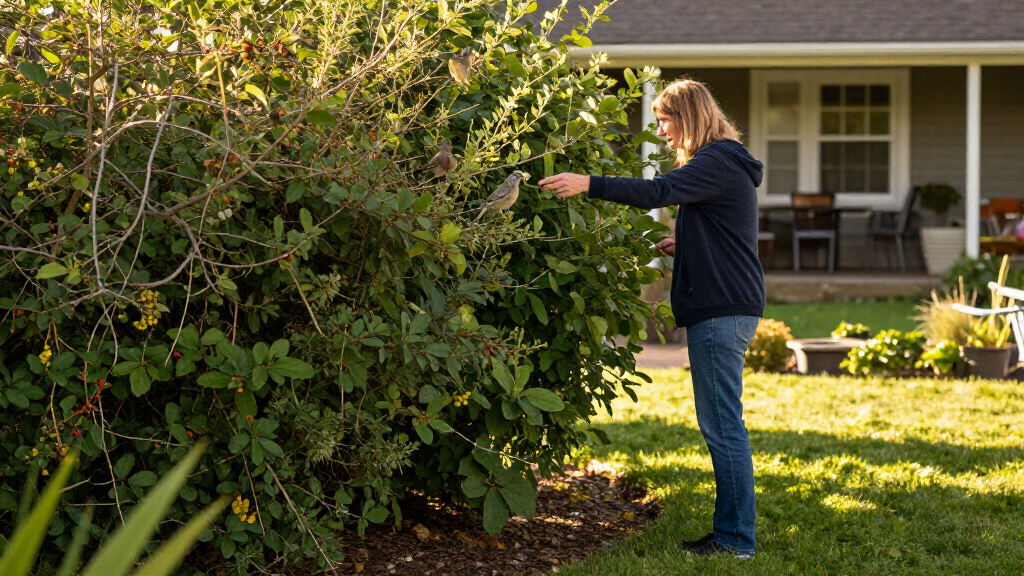
Mann described native hedges as a source of blossom, nuts and berries, as well as food plants for moth and butterfly larvae. Richard Barker, a horticultural expert and commercial director of LBS Horticulture, said dense, thorny hedges such as hawthorn can offer nesting cover for birds. He also pointed to leaf litter as shelter for insects and small animals, and hedges as windbreaks for vulnerable insects.
Hedges Offer More Than Boundaries
A hedge can function as a habitat as well as a garden boundary. The experts quoted by Ideal Home say established hedges can provide shade during hot weather, shelter animals from wind and connect separated habitat areas. Those features may matter to wildlife moving through developed landscapes, where suitable spaces can be fragmented.
The advice also links planting choices to several garden concerns at once: wildlife support, shade and soil conditions. But the benefits depend on the plants selected and how the hedge is managed. The report describes environmental benefits in general terms; it does not compare hedges with fences or other planting options, or quantify their effects on air quality, flooding or temperatures.
Products Worth Considering

EGO Power+ 10” Cordless Pole Saw with Telescopic Shaft and LED Cut Line Indicator

Greenworks 2100 PSI Electric Pressure Washer

EGO Power+ LB8803-2 Cordless Leaf Blower with Two Batteries
As an affiliate, we earn on qualifying purchases.
Native Species and Hedge Care
The report places wildlife-friendly gardening among garden trends for 2026, alongside measures such as planting bird-feeding plants and adding a small pond. Its main point is that the hedge itself can be part of that approach, rather than an afterthought added around other wildlife features.
Hawthorn is presented as a prominent option because it grows quickly and produces spring blossom and red autumn berries, known as haws. Barker highlighted its dense, thorny growth as cover for nesting birds. Mann also suggested holly for year-round cover and hazel for nuts, while recommending other native species in small groups. He advised avoiding blackthorn in a garden hedge because, he said, it suckers aggressively. The report also names dogwood, buckthorn and honeysuckle for their distinct seasonal or wildlife value.
For installation, Barker recommends traditional hedge laying to create a dense barrier and reduce gaps near the base. He says the work should be done during the dormant season, October to March, and on hedges with several years of growth. He advises trying a small section first and hiring a professional for complex or lengthy work, or when the gardener lacks experience.
“Hedges of all sorts are proven to reduce air pollution in urban areas. They trap larger particulates, which are then washed away.”
— Nick Mann, environmentalist and founder of Habitat Aid, as quoted by Ideal Home
Benefits Are Not Quantified
The source is an expert-advice report, not a study comparing hedge species or measuring environmental outcomes. It does not establish how much pollution a hedge traps, how much shade it provides, or how strongly it affects flooding or soil water retention. These effects will depend on factors such as hedge size, location, species and condition, but the report does not assess those variables.
It is also unclear whether the recommended species suit every garden or local site. The article offers general guidance rather than a site-specific planting plan, and provides no detailed sourcing on the claims about pollution or climate resilience. Readers should treat those statements as expert comments reported by Ideal Home, not as quantified findings in the supplied material.
Plan Planting Around the Site
For gardeners considering a hedge, the advice points toward choosing a mix of native plants suited to the space and maintaining the hedge so it remains dense near ground level. Before planting or laying an established hedge, gardeners can seek guidance from a qualified local horticultural professional, particularly for long, overgrown or complex boundaries. The report gives no announced policy change, new research release or fixed follow-up date; its immediate next step for readers is to assess their garden and select plants accordingly.
Key Questions
Which native hedge plant does the report recommend most prominently?
The report highlights hawthorn for its fast growth, spring blossom, autumn berries and dense, thorny cover. It also discusses holly, hazel and other native species as part of a mixed hedge.
What wildlife can a native hedge support?
Experts quoted by Ideal Home say hedges can provide nesting cover for birds, food for insects and birds, and shelter for small animals. Different species may offer blossom, nuts, berries or food plants for butterfly and moth larvae.
When should a hedge be laid?
Richard Barker recommends hedge laying during the dormant season, from October to March. He advises attempting the work only on a hedge with several years of growth and starting with a small section if working without experience.
Does a native hedge remove a measured amount of air pollution?
No measurement is provided in the report. Nick Mann says hedges can trap larger particles and absorb carbon dioxide, but the source gives no figures or study details to quantify those effects.
Source: rss