
TL;DR

Get home appliances delivered free with Prime
- Fast, free delivery on millions of items
- Prime Video, Amazon Music and more included
- Member-only deals all year
Heavy rain does not automatically ruin newly sown grass seed: it can still germinate if water drains and the soil stays moist rather than waterlogged. For affected areas, redistribute displaced seed when the ground is workable, aerate lightly, or apply a thin covering of topsoil or compost. Germination commonly takes seven to 21 days, according to Johnson’s Lawn Seed consumer manager Guy Jenkins.
Heavy rain does not necessarily kill newly sown grass seed, but seed may struggle if water remains pooled or the soil becomes waterlogged, according to lawn-care experts cited by Ideal Home. The report recommends checking for washed-out patches and standing water, then redistributing seed, aerating affected ground lightly or covering seed with a thin layer of topsoil or compost.
Grass seed needs moisture to germinate, but saturated soil can limit germination. Guy Jenkins, consumer manager at Johnson’s Lawn Seed, told Ideal Home that seed will grow in many cases, provided the ground is not completely saturated. Lawn-care expert Jonathan Davis of Lawnsmith said seed should germinate as normal when rain has drained away and the soil remains moist rather than waterlogged.
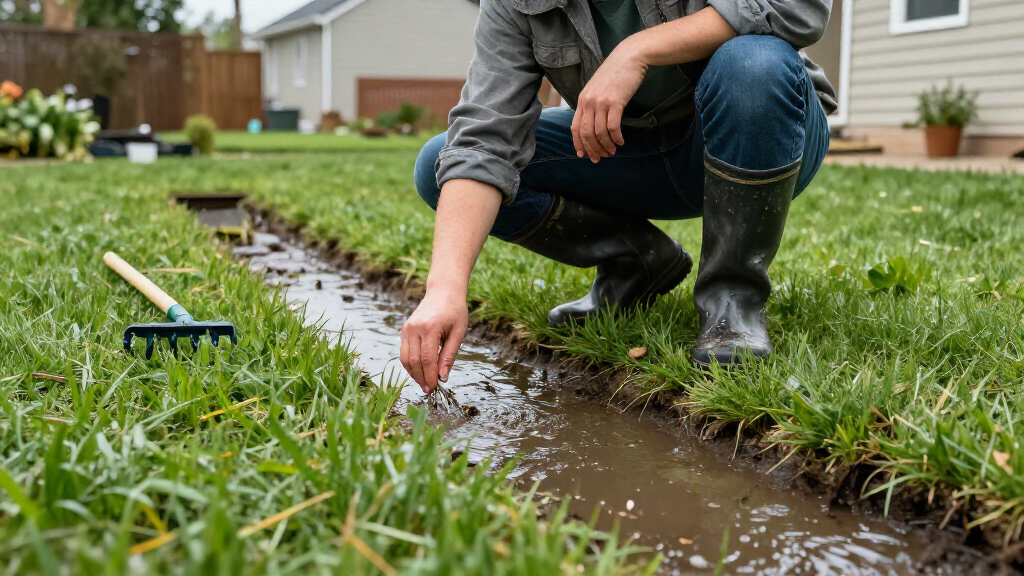
Standing water can leave seed without enough oxygen and may cause it to rot, Davis said. Heavy rain can also wash seed from where it was sown or push it into clumps, potentially leaving some places bare and others unusually dense. Whether seed survives depends in part on how quickly water drains from the lawn.
The three remedies in the report are to rake displaced seed back across bare areas once the ground is workable; aerate waterlogged areas lightly to make channels for drainage; and apply a thin layer of topsoil or compost to help hold seed in place. Jenkins said germination typically becomes visible within seven to 21 days. If the lawn remains patchy after that period, he advised overseeding the bare areas.
Rain Can Leave Lawns Uneven
The distinction between damp soil and waterlogged ground can determine whether a new lawn establishes evenly. Seed washed into piles or left in standing water may produce a patchy result, while seed that remains in moist, draining soil can still germinate. Checking the lawn after a storm can help identify whether seed has moved before bare spots become harder to address.
The advice also cautions against treating every wet lawn the same way. Aerating can help water drain, but Davis recommends keeping it light and concentrating on waterlogged areas so seed and existing grass are not unnecessarily disturbed. The report offers practical options, but does not guarantee that every seed will recover.
Products Worth Considering

DEWALT 20V MAX XR Brushless 3-Speed Oscillating Multi-Tool Kit (DCS356C1)

Greenworks 60V Cordless Leaf Blower with 2.5Ah Battery and Rapid Charger

Greenworks 24V Brushless Drill and Impact Driver Combo Kit with Two 2.0Ah USB-C Batteries and 65W Charger
As an affiliate, we earn on qualifying purchases.
Moisture Versus Standing Water
The Ideal Home report focuses on lawns sown shortly before stormy weather and notes that autumn is often considered a suitable time for sowing grass seed. Its central point is that moisture supports germination, while prolonged saturation can interfere with it. The condition of the lawn after rain—not simply the fact that rain fell—is the key distinction in the experts’ advice.
Jenkins and Davis describe different problems caused by heavy rain: seed can be affected by standing water, or it can be physically moved across the surface. The suggested response depends on what is visible. Raking is for seed that has shifted and left bare patches; aeration is aimed at pooling water; and a thin covering is intended to help keep seed in place.
Seed Recovery Depends on Drainage
The report does not establish how much rain, how long standing water must remain, or what soil conditions will cause seed to fail. Recovery varies with drainage, and no inspection or test can be inferred from the general advice alone. The proportion of seed that may have washed away or rotted will also differ from lawn to lawn.
The seven-to-21-day germination period is Jenkins’ typical estimate, not a guarantee for every seed type or site. The report does not provide a universal threshold for when a lawn is too waterlogged, nor does it say that aerating or covering will save all affected seed.
Check the Lawn as Seed Sprouts
After the rain, check whether water is still pooled and whether seed has collected in clumps or left bare soil. Wait until the ground is workable before raking seed back across affected areas. If water is pooling, aerate lightly in those spots; a thin topsoil or compost layer can help hold seed in place.
Watch for germination over the following seven to 21 days, the period Jenkins gives as typical. If the lawn is still noticeably patchy after that, overseed bare areas. The report does not identify a later weather forecast or a fixed date for follow-up; the next step depends on drainage and what emerges.
Key Questions
Will grass seed grow after heavy rain?
It can. Experts quoted by Ideal Home say seed may germinate if rain drains away and the soil remains moist rather than waterlogged. Standing water can interfere with germination.
What should I do if rain washed seed into piles?
Wait until the ground is workable, then use a rake to redistribute seed over bare areas, Jenkins advised. Check for germination over the next seven to 21 days; overseed noticeably bare patches after that if needed.
Can aerating help a waterlogged lawn?
Davis recommends light aeration to create channels that help water drain. Focus on waterlogged spots and avoid heavy disturbance that could affect the seed or existing grass.
Should I cover grass seed after rain?
A thin layer of topsoil or compost may help keep seed in place, according to Davis. The report also says a light natural covering can help reduce seed washout, but it does not promise that covering will rescue seed already lost or damaged.
Source: idealhome.co.uk