
Smart thermostat systems vary most in HVAC compatibility, smart-home support, and how much control they offer beyond a phone app. I would put the ecobee Smart Thermostat Enhanced first for its balance of comfort features and connected-home flexibility, while the ecobee Smart Thermostat Premium suits buyers who want a broader feature set and the Amazon Smart Thermostat is a simpler Alexa-centered option. The best fit depends on whether you need support for a particular heating system, want room-level sensing, or prefer straightforward scheduling. Lower-cost and basic models can cover everyday temperature control, but may offer fewer integrations or advanced comfort tools. Read on for the full comparison, buying criteria, and advice for matching a thermostat to your system.

Get home appliances delivered free with Prime
- Fast, free delivery on millions of items
- Prime Video, Amazon Music and more included
- Member-only deals all year
Complete the kit


Key Takeaways
- ecobee Enhanced is the strongest all-around choice in this lineup because it balances advanced comfort features with broad smart-home usefulness without being the most specialized pick.
- ecobee Premium is the feature-led option, while Enhanced is the more restrained choice for buyers who do not need every added capability.
- The meross Matter thermostat is a different category of product: it targets compatible electric baseboard heating, so buyers should not treat it as a standard replacement for a central-HVAC thermostat.
- Google Nest models favor approachable scheduling and familiar app control, but buyers should compare their specific HVAC wiring needs and ecosystem preferences before choosing among the color variants.
- Sensi, Honeywell Home, Aqara, Amazon, and Vine offer distinct paths rather than interchangeable picks, making compatibility, preferred assistant, and desired control style more useful filters than brand recognition alone.
| Google Nest Thermostat – Smart Thermostat for Home – Programmable Wifi Thermostat – Charcoal | 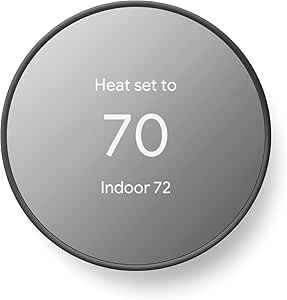 | Best for Simple Google Home Setups | Connectivity: Wi-Fi 2.4 GHz and 5 GHz; Bluetooth Low Energy | Display: 2-inch LCD | Power: Battery powered; two included AA batteries | VIEW LATEST PRICE | See Our Full Breakdown |
| ecobee Smart Thermostat Enhanced |  | Best for Occupancy-Based Comfort | HVAC compatibility: Listed as compatible with 90% of systems | Connectivity: Wi-Fi | Display: 4-inch LCD | VIEW LATEST PRICE | See Our Full Breakdown |
| ecobee Smart Thermostat Essential, Wi-Fi, Energy Star Certified |  | Best Value for Everyday Scheduling | Connectivity: Wi-Fi | Display: 3.74-inch LCD touchscreen | Power: Battery powered | VIEW LATEST PRICE | See Our Full Breakdown |
| Aqara Smart Thermostat W200 with Apple Adaptive Temperature |  | Best Smart-Home Hub Thermostat | HVAC compatibility: About 85%; includes furnaces, air conditioners, heat pumps, boilers, and PTAC units | Display: 4-inch full-color touchscreen | Smart-home protocols: Matter 1.4, Zigbee, and Thread | VIEW LATEST PRICE | See Our Full Breakdown |
| Sensi Touch 2 Smart Thermostat Wi‑Fi, Alexa, Energy Star Certified |  | Best for Sensor-Based Room Balancing | Connectivity: Wi-Fi | Display: LCD touchscreen | Power: Common wire required | VIEW LATEST PRICE | See Our Full Breakdown |
| Honeywell Home Wi-Fi Smart Color Programmable Thermostat, Touchscreen, Gray |  | Best for Customizable On-Wall Control | Model: RTH9585WF1004 | Connectivity: Wi-Fi | Display: Customizable color LED touchscreen | VIEW LATEST PRICE | See Our Full Breakdown |
| Amazon Smart Thermostat with Alexa and Ring Compatibility |  | Best for Alexa- and Ring-Centered Homes | Model: S6ED3R | Dimensions: 3.56 x 3.56 x 0.84 inches | Weight: 3.86 oz | VIEW LATEST PRICE | See Our Full Breakdown |
| Vine Smart Wi-Fi Thermostat with Alexa and Google Assistant Compatibility |  | Best for Detailed Weekly Scheduling | Model: B0FFBC4MV4 | Connectivity: Wi-Fi | Display: 2.8-inch LCD | VIEW LATEST PRICE | See Our Full Breakdown |
| Sensi ST55 Wi-Fi Smart Thermostat |  | Best for DIY Installation and Broad Smart-Home Support | Model: ST55 | Connectivity: Wi-Fi | Compatible controllers: Amazon Alexa, Apple HomeKit, Google Assistant, SmartThings, and Vera | VIEW LATEST PRICE | See Our Full Breakdown |
| ecobee Smart Thermostat Premium with Wi-Fi, Siri and Alexa, and SmartSensor |  | Best Premium Room-Aware System | Connectivity: Wi-Fi | Voice assistants: Siri and Alexa | Included sensor: SmartSensor | VIEW LATEST PRICE | See Our Full Breakdown |
| Honeywell Home X2S Smart Wi-Fi Thermostat |  | Best for Matter Flexibility | Model: RTH2SM | System compatibility: Up to 2 heat/2 cool conventional; up to 2 heat/1 cool heat pump with electric backup | Power: C-wire required; 24 VAC | VIEW LATEST PRICE | See Our Full Breakdown |
| Google Nest Thermostat, Programmable Wi-Fi Smart Thermostat, Fog |  | Best for Simple Google Home Control | Color: Fog | Connectivity: Wi-Fi | Compatibility: Compatible with 85% of heating and cooling systems, according to product data | VIEW LATEST PRICE | See Our Full Breakdown |
| meross Matter Smart Thermostat for Electric Baseboard Heaters |  | Best for Electric Baseboard Heating | Model: MTS215 | Compatible heating systems: 120–240V electric baseboard, convector, and fan-forced heaters | Incompatible systems: 24V HVAC, heat pumps, and conventional air conditioning | VIEW LATEST PRICE | See Our Full Breakdown |
| Sensi Lite Wi-Fi Smart Thermostat (ST25) | 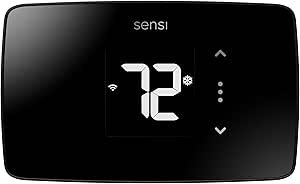 | Best for DIY Installation | Model: ST25 | HVAC compatibility: Air conditioner, boiler, furnace, and heat pump | Connectivity: Wi-Fi, 2.4 GHz | VIEW LATEST PRICE | See Our Full Breakdown |
| Google Nest Smart Thermostat, Wi-Fi, Snow |  | Best for Energy-Aware Scheduling | Color: Snow | Connectivity: Wi-Fi, 2.4 GHz and 5 GHz; Bluetooth Low Energy | Temperature control: Heating and cooling | VIEW LATEST PRICE | See Our Full Breakdown |
| smart thermostat system | Connectivity | Power | Display |
|---|---|---|---|
| Google Nest Thermostat | Wi-Fi 2.4 GHz and 5 GHz; Bluetooth Low Energy | Battery powered; two included AA batteries | 2-inch LCD |
| ecobee Smart Thermostat Enhanc | Wi-Fi | Corded electric | 4-inch LCD |
| ecobee Smart Thermostat Essent | Wi-Fi | Battery powered | 3.74-inch LCD touchscreen |
| Aqara Smart Thermostat W200 wi | — | — | 4-inch full-color touchscreen |
| Sensi Touch 2 Smart Thermostat | Wi-Fi | Common wire required | LCD touchscreen |
| Honeywell Home Wi-Fi Smart Col | Wi-Fi | AC power; C-wire required | Customizable color LED touchscreen |
| Amazon Smart Thermostat with A | — | C-wire or separately sold power adapter kit | — |
| Vine Smart Wi-Fi Thermostat wi | Wi-Fi | — | 2.8-inch LCD |
| Sensi ST55 Wi-Fi Smart Thermos | Wi-Fi | Corded electric; common wire not required in most applications | — |
| ecobee Smart Thermostat Premiu | Wi-Fi | — | — |
| Honeywell Home X2S Smart Wi-Fi | Matter and Wi-Fi, 2.4 or 5 GHz | C-wire required; 24 VAC | — |
| Google Nest Thermostat | Wi-Fi | Designed to work without a C-wire in most homes; some systems require a C-wire or compatible power accessory | — |
| meross Matter Smart Thermostat | Matter and Wi-Fi | — | — |
| Sensi Lite Wi-Fi Smart Thermos | Wi-Fi, 2.4 GHz | Battery or C-wire; 24 volts | — |
| Google Nest Smart Thermostat | Wi-Fi, 2.4 GHz and 5 GHz; Bluetooth Low Energy | — | LCD; 1.07-inch screen |
More Details on Our Top Picks
Google Nest Thermostat – Smart Thermostat for Home – Programmable Wifi Thermostat – Charcoal
The Google Nest Thermostat is a good fit for households that want app-based scheduling and away adjustments without adding a separate room sensor system. It can lower heating or cooling when the home is empty, and Savings Finder suggests schedule changes rather than requiring owners to fine-tune every setting themselves. Compared with the ecobee Smart Thermostat Enhanced, it has a simpler feature set and a smaller display, but Nest is a natural match for people already using Google Home and supports Matter-certified voice assistants. DIY installation is designed to be straightforward, though the wiring fit is not universal: some heat-pump, zone-controlled, or single-function systems may need a C-wire or power accessory. I’d choose it for convenient basic automation, not for room-by-room temperature balancing.
Pros:- Away adjustments can reduce heating or cooling when the home is empty.
- Savings Finder offers schedule suggestions through the Google Home app.
- Supports remote control and voice control through compatible smart-home platforms.
- Designed for DIY installation and works without a C-wire in many homes.
Cons:- Some HVAC configurations require a C-wire or compatible power accessory.
- Does not include room sensors for balancing temperatures across multiple rooms.
- The 2-inch display and feature set are less suited to buyers wanting richer on-device controls.
Best for: Google Home households seeking remote control, away adjustments, and guided schedule savings without optional room sensors.
Not ideal for: Owners of zone-controlled or certain heat-pump systems who cannot add a C-wire or compatible power accessory, and households wanting room-by-room temperature sensing.
- Connectivity:Wi-Fi 2.4 GHz and 5 GHz; Bluetooth Low Energy
- Display:2-inch LCD
- Power:Battery powered; two included AA batteries
- Voltage:24 volts
- Controls:Google Home app, remote control, and compatible voice assistants
- Features:Programmable scheduling, away adjustments, Savings Finder, and HVAC alerts
- Mounting:Wall mount
- Color:Charcoal
Our verdict“Choose the Nest for straightforward Google Home scheduling and away control, but pick the ecobee Enhanced if room sensing and broader included installation support matter more.”
ecobee Smart Thermostat Enhanced
The ecobee Smart Thermostat Enhanced puts occupancy and humidity adjustments at the center of its approach, making it a stronger choice than the more basic Google Nest Thermostat for homes where comfort needs change through the day. Its app, scheduling, and broad platform support give owners several ways to manage heating and cooling, while the included Power Extender Kit can help in homes without a C-wire. The 4-inch screen also gives more room for on-device control than Nest’s compact display. The tradeoff is that room-by-room sensing depends on optional SmartSensors, which are sold separately; the thermostat alone cannot balance every distant bedroom. I’d favor it for flexible automation and a broad smart-home setup, while buyers who want the least complicated feature set may prefer Nest.
Pros:- Adjusts temperature based on occupancy and schedules.
- Humidity adjustments can help maintain comfort as indoor conditions change.
- Power Extender Kit is included for many installations without a C-wire.
- Works with Alexa, Google Assistant, Apple HomeKit, and SmartThings.
Cons:- SmartSensors for room-by-room temperature management are sold separately.
- HVAC compatibility still needs to be checked before installation.
Best for: Households wanting occupancy-aware scheduling, humidity adjustments, and compatibility with several major smart-home platforms.
Not ideal for: Buyers who need room-by-room temperature balancing included, or who want to avoid checking HVAC compatibility and may need separate SmartSensors.
- HVAC compatibility:Listed as compatible with 90% of systems
- Connectivity:Wi-Fi
- Display:4-inch LCD
- Voltage:24 volts
- Power:Corded electric
- Smart-home platforms:Amazon Alexa, Google Assistant, Apple HomeKit, and SmartThings
- Included accessories:Power Extender Kit and trim kit
- Certification and warranty:ENERGY STAR certified; 3-year warranty
Our verdict“Pick the ecobee Enhanced for occupancy-led comfort and broad platform support, especially if you may add room sensors later.”
ecobee Smart Thermostat Essential, Wi-Fi, Energy Star Certified
The ecobee Smart Thermostat Essential covers the core smart-thermostat jobs—app control, programmable schedules, and auto-away—without the Enhanced model’s emphasis on occupancy and humidity adjustments. Its 3.74-inch color touchscreen makes local changes easier to read than the compact Google Nest display, and it supports Alexa, Apple HomeKit, and Google Assistant. The tradeoff is installation planning: homes without a C-wire need a Power Extender Kit, and the listing says that kit is sold separately. Optional SmartSensors are also separate, so this is less ready-made for room balancing than the ecobee Smart Thermostat Enhanced. I’d choose the Essential when broad 24 VAC system support and straightforward scheduling are the priority; buyers seeking a more involved comfort system should compare it with the Enhanced before deciding.
Pros:- Auto-away and scheduling can adjust heating and cooling around household routines.
- Color touchscreen provides a larger control surface than the Google Nest Thermostat display.
- Works with Alexa, Apple HomeKit, and Google Assistant.
- Supports many common 24 VAC systems, including heat pumps and boilers.
Cons:- A Power Extender Kit is required in homes without a C-wire and is sold separately.
- SmartSensor and trim kit are sold separately.
- System compatibility should be checked before purchase.
Best for: Owners of common 24 VAC heating and cooling systems who want touchscreen scheduling, app control, and auto-away across major voice platforms.
Not ideal for: Households without a C-wire that want an all-in-one installation kit, or buyers who expect room sensors and a trim kit to be included.
- Connectivity:Wi-Fi
- Display:3.74-inch LCD touchscreen
- Power:Battery powered
- Supported systems:Most 24 VAC systems, including gas, oil, electric, dual fuel, forced air, conventional systems, heat pumps, and boilers
- Smart-home compatibility:Amazon Alexa, Apple HomeKit, and Google Assistant
- Features:Auto-away, auto-scheduling, fan control, humidity detection, and schedule assistant
- C-wire support:Power Extender Kit required without a C-wire; sold separately
- Mounting and finish:Wall mount; matte white plastic
Our verdict“Choose the Essential for core scheduling and app control, but step up to the ecobee Enhanced if occupancy and humidity adjustments are priorities.”
Aqara Smart Thermostat W200 with Apple Adaptive Temperature
The Aqara Smart Thermostat W200 is the most ambitious smart-home device in this group: alongside temperature control, it includes mmWave presence detection, a Zigbee hub, a Matter controller, and a Thread border router. That combination can reduce the need for separate hubs and supports automations beyond the thermostat itself. Its 4-inch color display can also show compatible Aqara doorbell snapshots and control a smart lock, a broader role than the more thermostat-focused ecobee Smart Thermostat Enhanced. That breadth brings conditions: listed HVAC coverage is about 85%, a C-wire adapter is sold separately, and Apple Adaptive Temperature needs a compatible home hub and recent Apple software. I’d pick the W200 for a connected-home enthusiast who will use its protocols and presence features, not for someone seeking a simple thermostat swap.
Pros:- Built-in mmWave radar adds presence detection for temperature control and automations.
- Combines Zigbee hub, Matter controller, and Thread border-router functions.
- Supports Apple Home, Google Home, Amazon Alexa, Samsung SmartThings, and Home Assistant.
- 4-inch touchscreen can display compatible Aqara doorbell snapshots and control a smart lock.
Cons:- Listed HVAC compatibility is about 85%, so system fit needs checking.
- C-wire adapter is sold separately for systems that need one.
- Apple Adaptive Temperature requires a home hub and compatible iPhone or Apple Watch software.
Best for: Smart-home enthusiasts who want a thermostat that also adds presence sensing and Zigbee, Matter, and Thread hub functions.
Not ideal for: Buyers seeking a simple thermostat replacement, owners of HVAC systems outside its listed compatibility, or households unwilling to source a separate C-wire adapter when needed.
- HVAC compatibility:About 85%; includes furnaces, air conditioners, heat pumps, boilers, and PTAC units
- Display:4-inch full-color touchscreen
- Smart-home protocols:Matter 1.4, Zigbee, and Thread
- Wi-Fi:Dual-band 2.4 GHz and 5 GHz
- Presence detection:Built-in mmWave radar
- Smart-home platforms:Apple Home, Google Home, Amazon Alexa, Samsung SmartThings, and Home Assistant
- C-wire:Adapter sold separately for systems without a C-wire
- Apple feature requirements:Adaptive Temperature requires a home hub and iPhone or Apple Watch running version 26 or later
Our verdict“Choose the W200 if you will use its presence sensing and smart-home hub features; for thermostat-only control, the ecobee Enhanced is a more focused alternative.”
Sensi Touch 2 Smart Thermostat Wi‑Fi, Alexa, Energy Star Certified
The Sensi Touch 2 is the clearest choice here for owners who want to build toward room-by-room temperature balancing: it can integrate with up to 15 optional Sensi room sensors. That gives it a different emphasis from the Google Nest Thermostat, which focuses more on away adjustments and schedule suggestions than on a multi-room sensor setup. The glass touchscreen, app control, usage reports, and guided DIY installation add useful day-to-day control, while the stated privacy policy may appeal to buyers who are selective about personal-data practices. Its main limitation is electrical fit: it requires a common wire, so some older installations may need wiring work or a different thermostat. The sensors are also sold separately, meaning the balancing benefit depends on extra hardware. I’d shortlist it for multi-room comfort, provided the C-wire is available.
Pros:- Supports up to 15 optional room sensors for a broader temperature-balancing setup.
- Glass LCD touchscreen works alongside app and voice controls.
- Guided mobile-app installation supports DIY setup.
- Product information states that personal data is not sold to third parties.
Cons:- Requires a common wire, which may be absent in older homes.
- Room sensors are sold separately.
- Room-balancing functionality depends on adding optional sensor hardware.
Best for: Homeowners with a C-wire who want app-based control and the option to add room sensors for temperature differences across rooms.
Not ideal for: Owners of older homes without a common wire, or buyers who need room sensors included rather than purchased separately.
- Connectivity:Wi-Fi
- Display:LCD touchscreen
- Power:Common wire required
- Voltage:24 V
- Compatible equipment:Air conditioner, boiler, furnace, and heat pump
- Controls:App, touchscreen, Alexa, Google Assistant, and SmartThings
- Sensor support:Up to 15 optional room sensors
- Dimensions:5.6 inches deep × 3.25 inches wide × 0.77 inches high
Our verdict“Choose the Sensi Touch 2 for expandable room sensing if your wiring includes a C-wire; otherwise, the Google Nest Thermostat is less dependent on that requirement.”
Honeywell Home Wi-Fi Smart Color Programmable Thermostat, Touchscreen, Gray
The Honeywell Home RTH9585WF1004 suits buyers who want scheduling and remote access without relying on a phone for everyday adjustments. Its customizable color touchscreen puts schedules, fan settings, and temperature changes on the wall, while app access, voice control, energy reports, and equipment reminders extend its usefulness beyond basic programming. Compared with the Amazon Smart Thermostat, Honeywell offers a more prominent touchscreen interface and flexible hold options; Amazon is a more natural fit for households already centered on Alexa and Ring. The tradeoff is installation flexibility: this model requires a C-wire and excludes electric baseboard heat, so checking the HVAC setup comes before choosing it. It makes the strongest case for homes with compatible central systems where a readable, configurable control panel matters as much as app convenience.
Pros:- Customizable color touchscreen makes on-device adjustments straightforward.
- Supports temporary, permanent, and vacation holds for flexible scheduling.
- App and compatible voice-assistant control allow remote temperature changes.
- Energy reports, usage tips, and equipment reminders add helpful system feedback.
Cons:- Requires a C-wire, which may complicate installation in some homes.
- Not compatible with 120–240 V electric baseboard heat.
- Heating-only oil systems need a C-wire.
Best for: Households with compatible forced-air, boiler, or heat-pump systems that want a customizable touchscreen and detailed schedule controls.
Not ideal for: Homes with electric baseboard heat or buyers whose heating-only oil system lacks a C-wire.
- Model:RTH9585WF1004
- Connectivity:Wi-Fi
- Display:Customizable color LED touchscreen
- Programming:Flexible scheduling; temporary, permanent, and vacation holds
- Compatible systems:Forced-air gas, oil, or electric; hot water and steam; heat pumps with electric backup
- Power:AC power; C-wire required
- Voice assistants:Amazon Alexa and Google Home
- Certification:ENERGY STAR
Our verdict“Choose this Honeywell if your HVAC is compatible and you want a feature-rich touchscreen rather than a thermostat built mainly around app or voice control.”
Amazon Smart Thermostat with Alexa and Ring Compatibility
The Amazon Smart Thermostat is a practical match for homes already managed through Alexa or Ring: schedules and settings live in those apps, and compatible Alexa devices add voice control. Its automatic temperature adjustments for home, away, and sleep routines can reduce the need to make every change manually, while humidity sensing and an energy dashboard provide extra context. Compared with the Honeywell Home RTH9585WF1004, Amazon is more closely tied to an app-and-voice ecosystem and has only three touch buttons, rather than a customizable color touchscreen with broader on-device controls. That simpler interface may be a plus for buyers who want fewer controls, but voice use requires a separate Alexa-enabled device. It also needs a C-wire or separately sold power adapter and supports 2.4 GHz Wi-Fi, not 5 GHz.
Pros:- Automatic adjustments can follow home, away, and sleep settings.
- Controls are available through the Alexa and Ring apps, touch buttons, and compatible Alexa devices.
- Humidity sensing, vacation mode, scheduling, and an energy dashboard are included.
- Alexa app installation guidance can help with setup.
Cons:- Needs a C-wire or a separately sold power adapter kit.
- Does not support 110–240 V systems such as electric baseboard heat.
- Voice control requires a separate Alexa-enabled device, and Wi-Fi is limited to 2.4 GHz.
Best for: Alexa or Ring households with compatible 24V HVAC that want routine-based temperature changes and app control.
Not ideal for: Buyers who want a full touchscreen, need 5 GHz Wi-Fi, use electric baseboard heat, or do not want to add an Alexa device for voice control.
- Model:S6ED3R
- Dimensions:3.56 x 3.56 x 0.84 inches
- Weight:3.86 oz
- Compatibility:Most 24V HVAC systems; not 110–240V systems such as electric baseboard heat
- Power:C-wire or separately sold power adapter kit
- Wi-Fi:2.4 GHz, 802.11 b/g/n; does not support 5 GHz
- Controls:Three touch buttons, Alexa app, Ring app, or compatible Alexa voice control
- Features:Humidity sensing, schedules, emergency heat, vacation mode, energy dashboard, and automatic adjustments
- Certifications:ENERGY STAR and ECOLOGO Gold
Our verdict“Pick Amazon’s thermostat if your home already uses Alexa or Ring and you value automated routines over a large on-device display.”
Vine Smart Wi-Fi Thermostat with Alexa and Google Assistant Compatibility
The Vine Smart Wi-Fi Thermostat is a schedule-focused option for buyers who want several temperature changes built into each day. Its seven-day programming with up to eight periods gives households room to set distinct routines, while Auto Home/Away mode, alerts, and filter reminders add useful automation and upkeep prompts. It works with Alexa and Google Assistant, plus the Vine Thermostat or Smart Life app for remote adjustments. Compared with the Amazon Smart Thermostat, Vine offers a stated multi-period weekly schedule and supports both Alexa and Google Assistant; Amazon instead brings Ring integration and its own automatic routine features. Vine’s tradeoff is a narrower system fit: it requires a C-wire and supports only compatible 24V AC systems. Its 2.8-inch LCD is functional, but buyers seeking a larger, more customizable interface may prefer the Honeywell touchscreen.
Pros:- Seven-day scheduling allows up to eight periods for detailed daily routines.
- Works with Alexa and Google Assistant for voice control.
- Auto Home/Away mode, temperature alerts, and filter reminders support day-to-day management.
- Remote control is available through the Vine Thermostat and Smart Life apps.
Cons:- Requires a C-wire.
- Compatibility is limited to supported 24V AC conventional and heat-pump systems.
- The 2.8-inch LCD offers less display space than the Honeywell color touchscreen.
Best for: Households with supported 24V conventional or heat-pump systems that want precise day-by-day scheduling and Google Assistant support.
Not ideal for: Homes with line-voltage baseboard systems, unsupported HVAC wiring, or no C-wire.
- Model:B0FFBC4MV4
- Connectivity:Wi-Fi
- Display:2.8-inch LCD
- Programming:Seven-day schedule with up to eight periods
- System compatibility:Supported 24V AC conventional and heat-pump systems
- Wiring:C-wire required
- Voice assistants:Amazon Alexa and Google Assistant
- Mounting:Wall mount
- Certification:ENERGY STAR
Our verdict“Choose Vine if precise weekly programming and support for both major voice assistants matter more than broad HVAC compatibility or a large display.”
Sensi ST55 Wi-Fi Smart Thermostat
The Sensi ST55 stands out for buyers who want a smart thermostat without making a C-wire an automatic prerequisite. A common wire is not required in most applications, and the built-in level plus step-by-step app instructions help homeowners handle installation with less guesswork. It also connects with Alexa, Apple HomeKit, Google Assistant, SmartThings, and Vera, giving it broader stated platform support than the Amazon Smart Thermostat, which centers on Alexa and Ring. Sensi adds scheduling, remote control, HVAC usage reports, equipment alerts, and filter reminders, while its privacy protections may appeal to buyers wary of sharing personal information. The main caveat is that wiring needs vary by system, so compatibility should be checked before installation. Like the Vine model, it is designed for 24-volt HVAC rather than line-voltage electric baseboard heat.
Pros:- Common wire is not required in most applications.
- Built-in level and app instructions support DIY installation.
- Compatible with Alexa, Apple HomeKit, Google Assistant, SmartThings, and Vera.
- Provides scheduling, remote access, usage reports, equipment alerts, and filter reminders.
Cons:- Common-wire needs depend on the specific HVAC setup.
- Designed for 24-volt HVAC systems, not line-voltage baseboard heat.
- Button-based controls are less suited to buyers who want a large touchscreen interface.
Best for: DIY homeowners with 24-volt HVAC who want guided installation, flexible smart-home platform support, and a chance to avoid adding a C-wire.
Not ideal for: People with electric baseboard heat or HVAC setups that require a common wire when one is unavailable.
- Model:ST55
- Connectivity:Wi-Fi
- Compatible controllers:Amazon Alexa, Apple HomeKit, Google Assistant, SmartThings, and Vera
- HVAC compatibility:Air conditioner, boiler, furnace, and heat pump
- Voltage:24 volts AC
- Power:Corded electric; common wire not required in most applications
- Display and controls:5-inch LED display; buttons, app, touch, and voice control
- Mounting:Wall mount
- Included batteries:Two AA batteries
Our verdict“Sensi is a strong fit for DIY buyers who want broad smart-home compatibility and may not have a C-wire, provided their system is 24-volt.”
ecobee Smart Thermostat Premium with Wi-Fi, Siri and Alexa, and SmartSensor
The ecobee Smart Thermostat Premium is the most system-oriented pick here: its included SmartSensor can help the thermostat respond to room occupancy, rather than relying only on the temperature around the wall unit. That can suit homes where a bedroom or frequently used room needs attention, while the built-in air-quality monitor adds another layer of household feedback. A built-in speaker supports Siri or Alexa, and the package includes a Power Extender Kit for homes without a C-wire. Compared with the Honeywell Home RTH9585WF1004, ecobee emphasizes sensing and connected-home functions over a customizable color control panel. The tradeoff is a more involved ecosystem: Siri needs an Apple home hub, some security features require a subscription, and HVAC compatibility still needs checking. Buyers seeking straightforward scheduling may find the Sensi ST55 simpler.
Pros:- Included SmartSensor adds room occupancy information to temperature control.
- Built-in air-quality monitor provides alerts and filter reminders.
- Built-in speaker supports Siri or Alexa and audio streaming.
- Power Extender Kit and trim kit are included for installation flexibility.
Cons:- Siri requires an Apple home hub.
- Some security features require an ecobee Smart Security subscription.
- Compatibility depends on the home’s HVAC system.
Best for: Households with uneven room temperatures that want occupancy-aware comfort, air-quality monitoring, and integrated voice features.
Not ideal for: Buyers who want a simple scheduling thermostat, do not use compatible smart-home devices, or prefer to avoid subscription-dependent security features.
- Connectivity:Wi-Fi
- Voice assistants:Siri and Alexa
- Included sensor:SmartSensor
- HVAC compatibility:Compatible with 95% of HVAC systems
- Installation accessories:Power Extender Kit and trim kit included
- Air-quality monitor:Built in
- Smart speaker:Built in
- Siri requirement:Apple home hub
- Warranty:3 years
Our verdict“Choose ecobee Premium if you want room-aware comfort and air-quality features in one system and are comfortable with its smart-home requirements.”
Honeywell Home X2S Smart Wi-Fi Thermostat
The Honeywell Home X2S is the strongest fit here for buyers who want a conventional or heat-pump thermostat that can join a Matter-based smart home. It supports Alexa, Google Home, and Apple HomeKit, giving it broader platform choice than the Google Nest Thermostat models, which center control on the Google Home app. Its multiple schedule formats and auto-away feature help tailor heating and cooling to household routines, while filter reminders add a practical maintenance prompt. The tradeoff is installation flexibility: unlike the Google Nest Thermostat, which works without a C-wire in many homes, the X2S requires a C-wire and 24 VAC power. It also cannot control high-voltage electric baseboards, so buyers with that setup should choose the meross instead.
Pros:- Matter connectivity works with Alexa, Google Home, and Apple HomeKit.
- Flexible scheduling and auto-away accommodate different household routines.
- Filter reminders and optional humidity display add useful home-comfort information.
- Interchangeable white and gray accent pieces offer a small amount of appearance customization.
Cons:- Requires a C-wire and 24 VAC power, limiting installation options.
- Does not support 120–240V electric baseboard heating.
- LCD display and plastic construction offer a simpler presentation than touchscreen thermostat systems.
Best for: Homeowners with compatible 24V conventional or heat-pump systems who want Matter support across Alexa, Google, or Apple smart-home platforms.
Not ideal for: Households with 120–240V electric baseboard heat or no available C-wire, since this model requires 24 VAC power and does not support high-voltage heating.
- Model:RTH2SM
- System compatibility:Up to 2 heat/2 cool conventional; up to 2 heat/1 cool heat pump with electric backup
- Power:C-wire required; 24 VAC
- Connectivity:Matter and Wi-Fi, 2.4 or 5 GHz
- Smart-home control:Amazon Alexa, Google Assistant, and Apple HomeKit
- Scheduling:7-day, 5-1-1-day, 5-2-day, 1-week, or non-programmable
- Additional features:Auto-away, filter reminders, optional humidity display, and low-heat setpoint to 32°F
- Certification and warranty:ENERGY STAR; 2-year warranty
Our verdict“Choose the X2S if you have compatible 24V wiring and want Matter flexibility, but pick the meross for electric baseboards or a Nest model if you need a thermostat designed to work without a C-wire in many homes.”
Google Nest Thermostat, Programmable Wi-Fi Smart Thermostat, Fog
The Google Nest Thermostat in Fog suits buyers who want app-based scheduling and away adjustments without committing to a more elaborate control system. Its Google Home app handles remote temperature changes, and eligible HVAC monitoring can flag potential system issues. Compared with the Honeywell Home X2S, Nest is a more approachable choice for homes where a C-wire is absent: it is designed to work without one in many installations. That advantage is not universal, though; some heat pumps, zones, and other systems need a C-wire or compatible power accessory. Its smart-home control also depends on a working Wi-Fi connection, and buyers who want the X2S’s several schedule formats or Matter-first platform flexibility may prefer Honeywell. Installation is described as typically taking 30 minutes or less, but compatibility still needs checking.
Pros:- Remote temperature control and schedules are managed through the Google Home app.
- Can lower the temperature when the home is unoccupied.
- Eligible HVAC monitoring can provide alerts and maintenance reminders.
- Designed to work without a C-wire in many homes.
Cons:- Some heat-pump, zone-controlled, and other systems require a C-wire or compatible power accessory.
- Remote and voice features depend on working internet and Wi-Fi.
- Its Google Home-centered controls may be less suitable for buyers seeking the X2S’s multiple schedule formats and broad Matter platform emphasis.
Best for: Google Home households seeking remote temperature changes, scheduled comfort, and away adjustments on a compatible HVAC system.
Not ideal for: Buyers who want detailed multi-platform control, or owners of systems that require a C-wire or power accessory they cannot provide.
- Color:Fog
- Connectivity:Wi-Fi
- Compatibility:Compatible with 85% of heating and cooling systems, according to product data
- Temperature control:Heating and cooling
- Scheduling:Programmable schedules through the Google Home app
- Power:Designed to work without a C-wire in most homes; some systems require a C-wire or compatible power accessory
- Installation:Typically 30 minutes or less
- Controls:Google Home app and compatible voice assistants
Our verdict“Pick this Nest model for straightforward Google Home scheduling and away control, provided your HVAC system’s wiring and compatibility check out.”
meross Matter Smart Thermostat for Electric Baseboard Heaters
The meross Matter Smart Thermostat fills a gap the 24V-focused Honeywell Home X2S and Sensi Lite cannot: it controls 120–240V electric baseboard, convector, and fan-forced heaters. That makes it the clear match for high-voltage electric heating, not a general replacement for a conventional HVAC thermostat. Matter support connects it with Alexa, Apple HomeKit, Google Assistant, and SmartThings, while energy monitoring gives owners a way to track electricity use over time. Its open-window detection can pause heating when a window is detected, which is useful in rooms where heat might otherwise be wasted. The narrow compatibility is the main tradeoff: it does not work with 24V HVAC, heat pumps, or conventional air conditioning. Buyers should also confirm their heater type and wiring before installation.
Pros:- Supports high-voltage electric baseboard, convector, and fan-forced heating.
- Matter works with Alexa, Apple HomeKit, Google Assistant, and SmartThings.
- Energy monitoring records electricity use and historical consumption.
- Open-window detection can pause heating when a window is detected.
Cons:- Limited to 120–240V electric heating systems.
- Incompatible with 24V HVAC, heat pumps, and conventional air conditioning.
- Its focused heating compatibility makes it unsuitable as a general-purpose system like the Google Nest Thermostat.
Best for: Owners of 120–240V electric baseboard, convector, or fan-forced heaters who want Matter-connected scheduling and energy tracking.
Not ideal for: Households with a conventional 24V furnace or air conditioner, a heat pump, or a mixed HVAC setup that needs one thermostat to control heating and cooling.
- Model:MTS215
- Compatible heating systems:120–240V electric baseboard, convector, and fan-forced heaters
- Incompatible systems:24V HVAC, heat pumps, and conventional air conditioning
- Connectivity:Matter and Wi-Fi
- Smart-home compatibility:Amazon Alexa, Apple HomeKit, Google Assistant, and SmartThings
- Features:Auto-scheduling, energy monitoring, and open-window detection
- Display and mounting:LCD; wall mount
- Dimensions and weight:1.7 × 2.9 × 4.6 in; 10.4 oz
Our verdict“Choose meross for compatible high-voltage electric heaters and Matter-based energy tracking; skip it if your home uses 24V HVAC or a heat pump.”
Sensi Lite Wi-Fi Smart Thermostat (ST25)
The Sensi Lite ST25 is aimed at buyers who want everyday app control without making installation feel like a specialist project. Its kit includes wire labels, mounting hardware, and a built-in level and step-by-step guidance are described as part of its DIY installation approach. Like the Google Nest Thermostat, it can work without a C-wire in many homes, though some system types still need one or a compatible power accessory. Sensi adds geofencing and usage reports, giving it a more explicit routine-and-consumption angle than the Nest’s emphasis on Google Home scheduling and eligible HVAC alerts. The compromises are a 2.4 GHz Wi-Fi requirement and narrower listed assistant compatibility than the Matter-certified Honeywell X2S. Check HVAC wiring before buying, especially for heating-only, cooling-only, or heat-pump systems.
Pros:- DIY-oriented installation includes a guide, wire labels, mounting hardware, and batteries.
- Works without a C-wire in most homes, though some systems need a power accessory.
- Geofencing, scheduling, remote access, and usage reports support routine-based control.
- Supports Amazon Alexa, Google Assistant, and SmartThings.
Cons:- Requires a 2.4 GHz Wi-Fi connection.
- Some heating-only, cooling-only, and heat-pump systems require a C-wire or compatible power accessory.
- Does not list the broad Matter compatibility offered by the Honeywell Home X2S.
Best for: DIY-minded owners of compatible 24V HVAC systems who want app scheduling, geofencing, and usage reports without a C-wire in many installations.
Not ideal for: Households relying only on 5 GHz Wi-Fi or owners who need broader Matter-based smart-home platform support than the listed Alexa, Google Assistant, and SmartThings compatibility.
- Model:ST25
- HVAC compatibility:Air conditioner, boiler, furnace, and heat pump
- Connectivity:Wi-Fi, 2.4 GHz
- Power:Battery or C-wire; 24 volts
- Controls:App, touch, and voice
- Smart-home compatibility:Amazon Alexa, Google Assistant, and SmartThings
- Additional features:Scheduling, geofencing, remote access, and usage reports
- Included components and warranty:2 AAA batteries, installation guide, mounting hardware, wire labels; 3-year warranty
Our verdict“Choose the Sensi Lite if you want guided DIY setup and geofencing on a compatible 2.4 GHz network, but look elsewhere if your home needs Matter support or 5 GHz-only Wi-Fi.”
Google Nest Smart Thermostat, Wi-Fi, Snow
The Google Nest Thermostat in Snow makes the most sense for buyers who want a programmable schedule paired with automatic adjustments when the home is unoccupied. It adds energy-saving schedule suggestions and eligible HVAC alerts to the familiar Google Home app, giving it a slightly stronger guidance angle than the Fog Nest model, whose supplied details emphasize scheduling and system monitoring. Both Nest options share the same central caveat: some heat pumps, zones, or other setups require a C-wire or power accessory, and remote features rely on working Wi-Fi. Compared with the Honeywell Home X2S, the Snow model is not positioned around multiple schedule formats or broad Matter control; its appeal is simpler app-led adjustment and voice compatibility. Buyers should confirm their system’s wiring and assistant setup before choosing it.
Pros:- Adjusts temperature when the home is unoccupied and supports programmable schedules.
- Google Home app enables remote temperature control.
- Eligible systems can receive HVAC alerts and maintenance reminders.
- Works with supported Google Assistant, Alexa, and Matter-certified voice assistants.
Cons:- Some heat-pump, zone-controlled, and other systems may require a C-wire or compatible power accessory.
- Remote and voice controls depend on working Wi-Fi, with voice control also requiring a compatible device.
- Does not support 120–240V electric baseboard heating, unlike the meross thermostat.
Best for: Google Home users who want programmable heating and cooling, away adjustments, and schedule suggestions on a compatible system.
Not ideal for: Buyers who need a thermostat for high-voltage electric baseboards, want broad Matter platform flexibility, or cannot provide a required C-wire or power accessory.
- Color:Snow
- Connectivity:Wi-Fi, 2.4 GHz and 5 GHz; Bluetooth Low Energy
- Temperature control:Heating and cooling
- Programmable:Yes
- Power and voltage:Battery powered; 24 volts
- Display:LCD; 1.07-inch screen
- Smart-home compatibility:Google Assistant, Alexa, Google Home, and Matter-certified voice assistants
- Additional features:Unoccupied-home temperature adjustment, energy-saving schedule suggestions, and eligible HVAC alerts
Our verdict“Pick the Snow Nest for Google Home scheduling and energy-aware prompts on compatible 24V heating and cooling, but choose meross for electric baseboards or the X2S for broader Matter control.”

How We Picked
I ranked these smart thermostat systems by how well they serve different real-world setups, not by feature count alone. The main criteria were compatibility with common heating and cooling configurations, clarity of day-to-day controls, usefulness of scheduling and automation, smart-home integration, and the level of installation or setup confidence a buyer may need. I also separated central-HVAC thermostats from the meross model for electric baseboard heaters, since confusing those product types can lead to an unsuitable purchase.
The top position goes to a model that combines practical comfort control with a broad set of capabilities. More specialized picks rank lower in the overall order when they serve a narrower ecosystem, prioritize simplicity over flexibility, or depend on a particular wiring or heating setup. The roundup includes value-minded, beginner-friendly, premium, and system-specific choices, so the ranking reflects both general usefulness and how clearly each model fits a defined buyer.
| smart thermostat system | Connectivity |
|---|---|
| Google Nest Thermostat | Wi-Fi 2.4 GHz and 5 GHz; Bluetooth Low Energy |
| ecobee Smart Thermostat Enhanc | Wi-Fi |
| ecobee Smart Thermostat Essent | Wi-Fi |
| Aqara Smart Thermostat W200 wi | — |
| Sensi Touch 2 Smart Thermostat | Wi-Fi |
| Honeywell Home Wi-Fi Smart Col | Wi-Fi |
| Amazon Smart Thermostat with A | — |
| Vine Smart Wi-Fi Thermostat wi | Wi-Fi |
| Sensi ST55 Wi-Fi Smart Thermos | Wi-Fi |
| ecobee Smart Thermostat Premiu | Wi-Fi |
| Honeywell Home X2S Smart Wi-Fi | Matter and Wi-Fi, 2.4 or 5 GHz |
| Google Nest Thermostat | Wi-Fi |
| meross Matter Smart Thermostat | Matter and Wi-Fi |
| Sensi Lite Wi-Fi Smart Thermos | Wi-Fi, 2.4 GHz |
| Google Nest Smart Thermostat | Wi-Fi, 2.4 GHz and 5 GHz; Bluetooth Low Energy |
Factors to Consider When Choosing Smart Thermostat Systems
Before choosing among these smart thermostat systems, start with the equipment and wiring already in your home. A feature-rich thermostat is not a useful upgrade if it cannot control your HVAC system or requires installation work you are not prepared to do. These checks can narrow the field before you compare apps and smart-home features.
Match the Thermostat to Your Heating Equipment
First identify whether your home uses central forced-air heating and cooling, a heat pump, a boiler, or electric baseboard heaters. These systems can require different thermostat controls, and a thermostat designed for central HVAC is not automatically suitable for line-voltage baseboard circuits. Check the product’s compatibility information against your exact equipment type and control terminals, rather than relying on a broad claim that it works with heating and cooling. If you have multiple zones or unusual equipment, ask the manufacturer or an HVAC professional before ordering. This extra check matters more than a long feature list because an incompatible unit cannot deliver its promised scheduling or automation.
Check Wiring Before You Choose an App
Take a clear photo of the existing thermostat wiring and note the terminal labels before removing anything. Some installations need a common wire, often called a C-wire, or a supported alternative for continuous power; requirements differ by thermostat and HVAC setup. Do not assume that a wire’s color tells you its function, since installers may use colors inconsistently. If the wiring is unclear, consult the installation guide or a qualified technician rather than guessing. Buyers who rent or want a quick self-install should give extra weight to a model whose power requirements and installation steps fit the existing setup.
Choose Smart-Home Support You Will Actually Use
Pick a thermostat around the assistant and connected-home platform you already rely on, not a list of integrations you may never activate. Alexa, Google Assistant, Apple Home, and Matter support can affect voice control, automation, and how easily the thermostat works alongside other devices. Compatibility labels do not always mean every feature works in every platform, so check which controls and automations are available for your preferred ecosystem. A household split across platforms may value broad compatibility more than a thermostat optimized for one assistant. If you mainly want remote temperature changes and schedules, paying extra for wider integration may not improve your daily routine.
Decide Whether Room-Level Comfort Is Worth the Setup
A thermostat mounted in one location can miss temperature differences between bedrooms, upper floors, and living areas. Room sensors or other occupancy-aware tools can help a system respond to where people spend time, but they add setup decisions and may require separate accessories. Think about whether the real problem is uneven temperatures, rooms that sit empty, or simply forgetting to adjust the schedule. Sensors can help address the first two; they cannot correct poor insulation, blocked vents, or an undersized HVAC system. Buyers with a single comfortable zone may be better served by simple scheduling than by adding another layer of automation.
Compare Control Style, Not Just Feature Lists
Consider who will adjust the thermostat and how: a touchscreen at the wall, a phone app, voice commands, or schedules that rarely need manual changes. A screen with clear local controls can make a home easier for guests or family members who do not want to use an app. App-first models may suit households that manage several devices from one phone, while a more basic interface can reduce setup and ongoing decisions. Look at whether the controls make common tasks—changing the setpoint, editing a schedule, or switching modes—easy to find. The right level of sophistication is the one your household will use consistently, not the one with the most menu options.
Know When a Premium Model Is Worth It
Paying for a more advanced thermostat makes sense when its added capabilities solve a specific problem, such as managing comfort across rooms or coordinating with a connected-home setup. It is less compelling when you only need a reliable schedule and remote temperature adjustment. Also account for possible accessory needs, installation labor, and whether the extra features depend on a particular platform or subscription; verify current requirements directly with the manufacturer. A less expensive model that fits your equipment and routine can be a better decision than a premium unit whose standout tools go unused. Compare the complete setup you need, not just the thermostat itself.
Frequently Asked Questions
Can I use a smart thermostat with a heat pump or boiler?
Often, but compatibility depends on the thermostat model and the exact controls used by your equipment. Heat pumps may use reversing-valve and auxiliary-heat terminals that need specific support, while boiler systems can have different wiring and control requirements from forced-air systems. Check the manufacturer’s compatibility tool or installation guide using your current terminal labels and equipment type. If the system is zoned, has multiple stages, or uses less common controls, ask an HVAC professional before buying. Do not assume that support for a general category covers every configuration within it.
How can I tell whether my home needs a C-wire?
Look at the wiring behind your current thermostat and compare the terminal labels with the installation guide for the model you want. A C-wire supplies continuous power, but some systems or thermostat models have alternate power arrangements. A wire’s color alone is not reliable evidence of its function, so use the terminal label and, when needed, have the wiring checked by a professional. If your preferred thermostat needs a C-wire and your setup lacks one, confirm the manufacturer-approved options before purchase. Avoid improvising a wiring change, since incorrect connections can damage equipment.
Are smart thermostats for electric baseboard heaters interchangeable with central-HVAC models?
No. Electric baseboard heaters commonly use line-voltage controls, while many smart thermostats are made for low-voltage central HVAC systems. The meross Matter model in this roundup is specifically aimed at compatible electric baseboard heating, which makes it a distinct option rather than a universal thermostat. Confirm the heater’s voltage, wiring, and thermostat requirements against the product documentation before installation. If you have both baseboard heat and central air, you may need separate controls for each system. A mismatch can create a safety or equipment problem, so this is a case where professional guidance is sensible.
Will a smart thermostat work if my home internet goes down?
Some basic heating or cooling control may remain available at the wall, but remote access and cloud-connected features can be interrupted. The exact offline behavior varies by model, including whether schedules continue locally and which app or voice functions stop working. Check the product documentation for its behavior during internet or service outages before relying on automation for comfort. If local control matters to your household, favor a model with accessible on-device controls and a schedule that does not depend on continuous remote access. Smart-home integrations may also behave differently when the network is unavailable.
Should I buy a thermostat that matches my voice assistant or one that supports Matter?
Choose based on how your household actually controls devices and what platforms you already use. Direct support for your preferred assistant can make voice commands and setup more straightforward, while Matter may help connect compatible products across supported smart-home platforms. Neither label guarantees that every advanced feature is available everywhere, so check the thermostat’s specific integration details. If you use one ecosystem and do not plan to change it, a well-supported direct integration may be enough. If your home mixes platforms or you expect that to change, broader interoperability may offer more flexibility.
Conclusion
For most buyers seeking a capable all-around system, I would start with the ecobee Smart Thermostat Enhanced. Choose the Amazon Smart Thermostat as the value-minded, Alexa-centered route, and look to the ecobee Smart Thermostat Premium if you want a more feature-rich setup. For beginners who prefer familiar scheduling and app-based control, a Google Nest Thermostat is a straightforward shortlist candidate, provided it matches the home’s wiring and HVAC. The meross Matter Smart Thermostat is the specific pick for compatible electric baseboard heating, while Aqara, Sensi, and Honeywell Home are worth comparing when their ecosystem, control style, or system fit better matches your needs. Start with equipment and wiring compatibility, then choose the level of smart-home control you will use.
Black Friday Picks

Sony WH-1000XM6 Wireless Noise-Canceling Headphones, Black
As an affiliate, we earn on qualifying purchases.