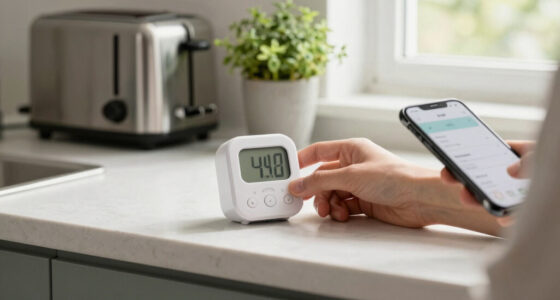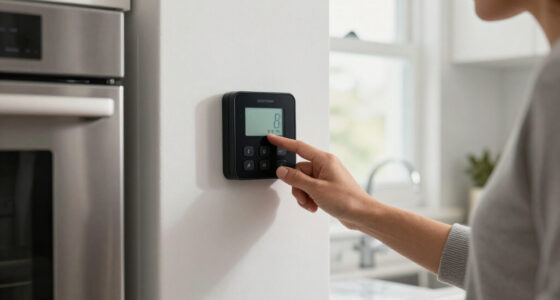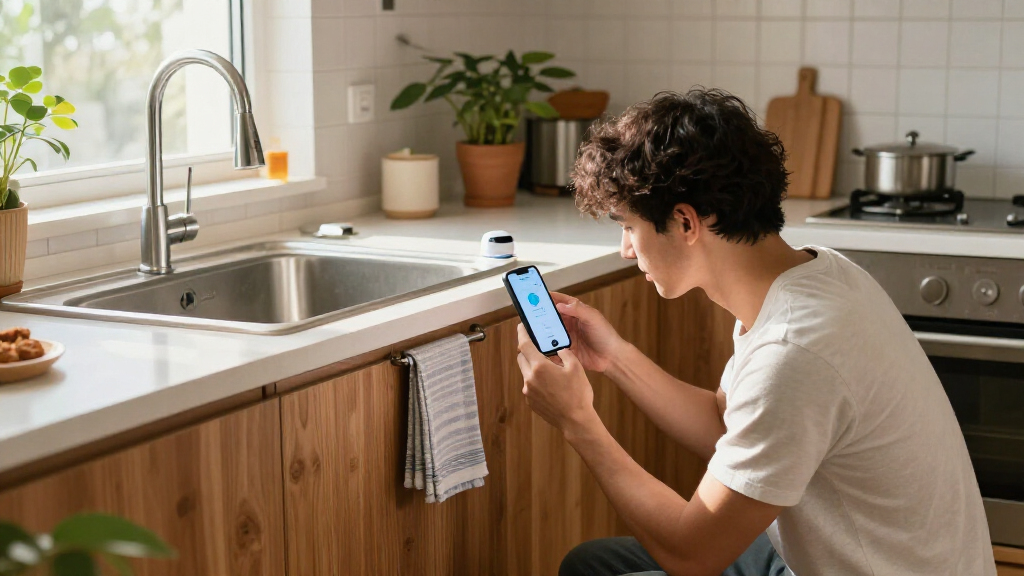

This checklist is for homeowners who want to add smart monitoring to a home water setup and think through how leaks, flow, and freezing pipes might be detected. It covers products named for this article alongside two advice-only slots, so you can compare the role each device could play in your home. Start with your main concern: a leak near an appliance, a shutoff point, a sump area, or a pipe that may freeze.

Get home appliances delivered free with Prime
- Fast, free delivery on millions of items
- Prime Video, Amazon Music and more included
- Member-only deals all year
The sections are organized by protection task: detecting leaks, stopping water automatically, monitoring a sump pump area, sensing freezing conditions, watching water flow, and extending leak detection with a rope sensor. Some picks overlap in function, so read each slot as a distinct use case rather than assuming every home needs every device. Match the device to the location where you want coverage.
Before choosing, identify the plumbing connection or area you want to monitor, check the product’s installation requirements, and confirm that its app, connectivity, and shutoff setup fit your household. Follow the manufacturer’s instructions for placement and compatibility. For advice-only slots, use the buying notes as a checklist when comparing options. Plan placement first to avoid buying a sensor that cannot reach the area you need.
Wi-Fi Water Leak Detector
A Wi-Fi water leak detector is useful when you want to place leak sensing near a likely source of water and receive an alert when a problem is detected. The listed pick is the YoLink DIY Automatic Water Leak Detection & Shut-Off Starter Kit, Wire. Its name indicates a kit that combines leak detection and shutoff, so consider whether you want a single setup covering both tasks or are selecting a detector for one location. Think about the full coverage area before deciding where the kit belongs.
A common mistake is choosing a sensor based only on the room name and overlooking the exact spot where water could collect, or assuming a wireless connection will work reliably from every corner of the home. Check the product’s stated connectivity requirements, sensor placement guidance, and shutoff installation instructions. Confirm that the kit’s included components suit the locations and plumbing you intend to cover; the product name alone does not establish those details. Verify the connection and components against the manufacturer’s information.
For fit, map nearby appliances, water lines, and floor-level areas, then compare those locations with the sensor’s reach and the kit’s installation needs. If you need detection in multiple rooms, establish whether the kit supports the number and placement of sensors you need. Choose placement before quantity so coverage follows your home’s layout.
What to look for:
- Confirm the kit’s stated Wi-Fi or hub requirements.
- Check which sensors and shutoff components are included.
- Compare sensor placement guidance with the leak-prone spots you identified.
- Verify shutoff installation requirements for your plumbing.
- Check whether the setup supports the number of locations you plan to cover.
YoLink DIY Automatic Water Leak Detection & Shut-Off Starter Kit, Wireless Valve

The YoLink Water Leak Detection & Shut-Off Starter Kit includes four leak sensors, a smart valve controller, valve operator, and hub. It provides reliable water leak detection and automatic shut-off, functioning during WiFi outages and power failures.
Pros:
- Reliable operation during WiFi or power outages
- Long-range connectivity up to ¼ mile
- Scalable system supporting many devices
- Compatible with popular voice assistants
Cons:
- Installation requires proper environment conditions
- Potential damage if exposed to harsh elements
- Requires suitable location for optimal performance
Best for: Homeowners considering a kit named for both leak detection and shutoff
Not ideal for: Shoppers who need a standalone sensor or have not checked installation requirements
Bottom line: Choose this kit only after confirming its connectivity, included components, and shutoff fit for your home.
Automatic Water Shutoff Valve
An automatic shutoff valve can make sense when your goal is to stop water at a plumbing point after a leak is detected. The listed pick is the Frizzlife LPG365-P Smart Water Automatic Shutoff Valve with Leak Senso. The product name points to automatic shutoff and a leak sensor, but it does not specify the full installation details or the plumbing configurations it supports. Start with your shutoff location and verify the valve’s fit before considering the smart features.
A frequent buying mistake is treating all household plumbing connections as interchangeable. Before choosing, check the manufacturer’s specified pipe size, connection type, installation direction, and any required power or connectivity components. Confirm whether the sensor coverage and valve operation match the area you want to protect. If installation involves modifying plumbing or you are unsure about compatibility, have a qualified professional review the setup. Connection details determine fit, so use the product documentation rather than assumptions based on the name.
Consider how the valve would be accessed for setup, maintenance, and manual operation, and check the manufacturer’s guidance for those tasks. Make sure the sensor can be placed where it can detect the leak scenario you have in mind. Check both valve and sensor placement so the system can serve the intended location.
What to look for:
- Verify pipe size and connection type in the product documentation.
- Check installation direction and space requirements.
- Confirm power, connectivity, and app requirements.
- Review where the leak sensor can be placed and what it covers.
- Check guidance for manual operation and maintenance access.
Frizzlife LPG365-P Smart Water Automatic Shutoff Valve with Leak Sensors, Wi-Fi/

The Frizzlife LPG365-P is a smart water shutoff valve equipped with ultrasonic leak detection and wireless sensors, providing comprehensive home leak protection. It allows remote control via app, real-time alerts, and water usage monitoring, helping prevent costly water damage.
Pros:
- Advanced ultrasonic leak detection for tiny leaks
- Remote control and real-time alerts via app
- Whole-home leak protection with multiple sensors
- Compatible with popular smart home systems
Cons:
- Professional installation recommended
- Requires Wi-Fi connection for full functionality
- Includes batteries but needs power supply
Best for: Homeowners seeking a valve named for automatic shutoff with leak sensing
Not ideal for: Anyone whose plumbing compatibility or installation space is still unknown
Bottom line: Confirm the valve’s plumbing fit and sensor placement requirements before selecting it.
Smart Sump Pump Monitor
A smart monitor in a sump pump area can help focus attention on a part of the home where water management matters. The listed pick is the Frizzlife LP365 Smart Water Monitor and Automatic Shutoff Valve. Its name describes water monitoring and an automatic shutoff valve; it does not, by itself, establish that it monitors a sump pump directly. Check the intended function carefully before treating it as a sump pump monitor.
A common mistake is assuming that a product with “water monitor” in its name detects sump pump operation, power loss, or rising water. Look for explicit manufacturer information about the conditions it senses, alerts it provides, and any separate sensor needed for a sump basin. Also check whether the product’s valve and monitoring functions are relevant to the plumbing setup around the sump area. Match the monitored condition to the problem you want alerts for.
For placement and compatibility, compare the manufacturer’s installation instructions with the available space, nearby power and connectivity, and the water lines involved. If your priority is pump status or water level, seek documentation that specifically confirms those capabilities before buying. Verify sump-specific coverage rather than inferring it from the product name.
What to look for:
- Confirm whether the product explicitly monitors sump pump status or water level.
- Check which sensors are included and what conditions they detect.
- Review alerts and connectivity requirements.
- Verify the valve’s compatibility with the plumbing in the area.
- Compare installation instructions with the available space and access.
Frizzlife LP365 Smart Water Monitor and Automatic Shutoff Valve

The Frizzlife LP365 is a smart water monitor with automatic shutoff, capable of detecting micro leaks down to 0.01 GPM using ultrasonic technology. It offers real-time flow, temperature, and pressure monitoring via a mobile app, providing customizable leak protection and remote control for whole-house water safety.
Pros:
- Highly sensitive leak detection down to 0.01 GPM
- Remote control and real-time water usage monitoring via app
- Automatic shutoff feature enhances home safety
- Compatible with popular smart home systems
Cons:
- Requires professional installation for best results
- Needs to be plugged in for network connectivity
- Outdoor use may require additional weatherproofing
Best for: Shoppers comparing a named water monitor for a sump-area setup
Not ideal for: Anyone needing confirmed pump-status or water-level alerts without documentation
Bottom line: Use this pick for a sump area only if its documented sensing functions match your needs.
Pipe Freeze Sensor
A pipe freeze sensor is an advice-only slot in this checklist, with no product named. It is worth considering when you want a way to monitor pipes in areas that may get cold, such as a space you cannot easily check in person. First identify which pipes and locations concern you, then look for a product whose stated sensing and alert functions address those conditions. Pinpoint the vulnerable pipe locations before comparing sensors.
A common mistake is assuming that every temperature or leak sensor is designed to provide a freeze warning. Read the product description for the specific temperature range, alert behavior, connectivity needs, and any required hub or app. Check whether the sensor can be placed against or near the pipe as instructed, and whether the signal can reach your network from that spot. Confirm freeze-related alerts explicitly rather than relying on a generic sensor label.
Think through fit and placement: pipes may sit behind cabinets, in basements, or in other areas with limited access, so make sure the product can be installed where its instructions call for and remain reachable for battery changes or checks. If you are comparing a standalone temperature sensor with a broader leak system, confirm how each handles alerts and connectivity. Use the manufacturer’s placement guidance to judge whether a sensor suits the pipe location.
What to look for:
- Check that the product explicitly supports low-temperature or freeze alerts.
- Review the stated temperature range and alert behavior.
- Confirm whether a hub, app, or specific network connection is required.
- Check sensor placement instructions for the pipe location.
- Consider access for battery changes and ongoing checks.
Smart Water Flow Monitor
A smart water flow monitor can be relevant when you want visibility into water movement through a home line and a way to respond to detected issues. The listed pick is the Frizzlife LPG365 Smart Water Auto Shutoff Valve with Leak Sensors. Its name describes an auto shutoff valve with leak sensors, but the name alone does not confirm what flow data it reports or how flow monitoring works. Check the flow features directly before treating it as a monitor.
A common mistake is conflating leak detection with flow tracking. A leak sensor may detect water at its placement point, while a flow monitor may use information from the plumbing line; verify which functions the product actually provides. Review the stated measurement details, alert types, app or network requirements, and shutoff behavior. Separate sensing claims from assumptions by checking the manufacturer’s specifications.
Fit depends on the plumbing location and installation requirements, as well as whether the product’s sensors can cover the areas you care about. Check the specified pipe connections and installation conditions, and consider whether the valve can be accessed for setup and maintenance. If you need flow history or particular usage alerts, confirm those features are documented before buying. Match documented monitoring to your goal and verify the valve fits your plumbing.
What to look for:
- Confirm whether the product provides flow monitoring or only leak sensing and shutoff.
- Review documented measurements, alerts, and app requirements.
- Verify pipe connection and installation requirements.
- Check sensor placement and coverage guidance.
- Confirm the valve remains accessible for setup and maintenance.
Frizzlife LPG365 Smart Water Auto Shutoff Valve with Leak Sensors
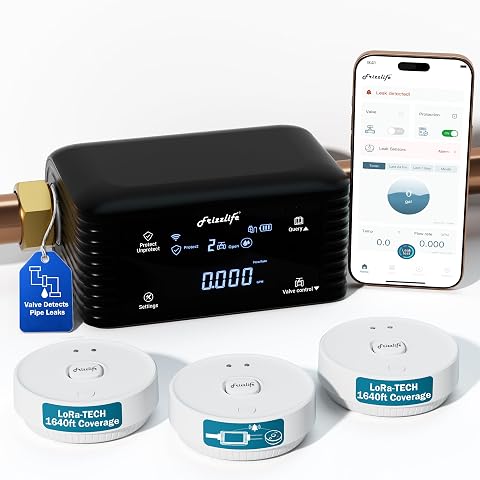
The Frizzlife LPG365 is a smart water shutoff system that detects leaks using ultrasonic sensors and wireless leak sensors, providing whole-home leak protection. It can be controlled remotely via app, monitors water flow and temperature, and automatically shuts off water when leaks are detected.
Pros:
- Advanced dual-detection leak protection for comprehensive coverage
- Precise ultrasonic leak detection with high sensitivity
- Long-range wireless sensors for larger homes
- Remote control and real-time alerts via app
Cons:
- Professional installation recommended for best results
- Requires Wi-Fi for remote app control
- May be complex to set up for non-technical users
Best for: Shoppers comparing an auto shutoff valve with leak sensors
Not ideal for: Anyone requiring specific flow data that the documentation does not confirm
Bottom line: Select it for flow monitoring only if the manufacturer documents the measurements and alerts you need.
Leak Detection Rope Sensor
A rope sensor is an advice-only option for extending leak detection along a longer path than a single point sensor may cover. No specific product is named for this slot, so use the intended route to guide your comparison. Consider where water could travel or collect, such as along a floor edge or around equipment, and check whether the sensor’s design supports that placement. Sketch the route you want covered before shopping.
A common mistake is assuming any rope sensor can be joined, extended, or used with an existing smart home system. Check the manufacturer’s stated sensor length, whether extensions are supported, what controller or hub is needed, and which alerts are available. Also verify whether the rope is designed for the surface and environment where you plan to place it. Confirm system compatibility and coverage from the product documentation.
For fit, compare the proposed route with the sensor’s length and placement instructions, allowing for corners and access around appliances or pipes. Consider how you will test the sensor and reach it for cleaning or replacement. If you already own a leak detection system, check whether it supports the rope sensor before assuming they will work together. Measure the path and check compatibility to avoid gaps in coverage.
What to look for:
- Compare the sensor’s stated length with the route you need to cover.
- Check whether extensions or connectors are supported.
- Verify required hub, controller, and smart home compatibility.
- Review placement guidance for the intended surface and environment.
- Confirm testing, cleaning, and replacement access.
If you are buying in stages, begin with the location and problem that matter most: a likely leak point, a shutoff location, a sump-area concern, cold-exposed pipes, water flow, or a longer detection route. Then check compatibility and installation requirements for that use case before adding coverage elsewhere. Prioritize by exposure and fit, and compare overlapping products only after confirming what each one actually senses.
You do not need to solve every water-protection concern at once. A clear map of your plumbing and sensor locations can help you make a practical choice, while the manufacturer’s documentation can settle questions about setup and functions. Start with one well-matched location and build your checklist from there.
Black Friday Picks

Vitamix 5200 Blender with 64 oz Container, Black
As an affiliate, we earn on qualifying purchases.