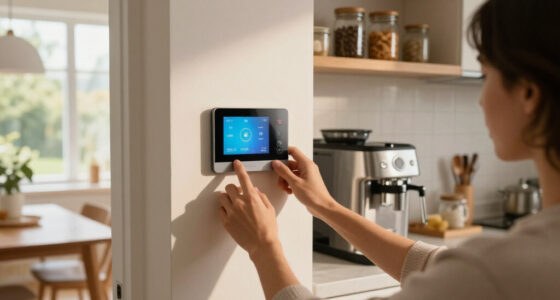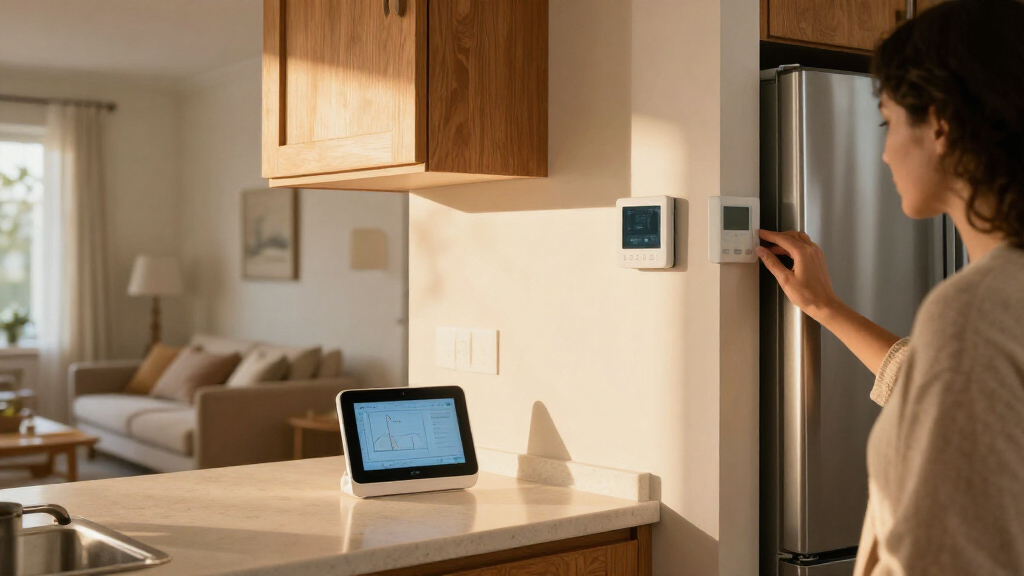

Smart home energy monitors can show how much electricity your home uses overall or reveal which circuits drive that use. I’d choose the Emporia Vue 3 with 16 Circuit Sensors as the best overall for buyers who want broad circuit visibility, while the Emporia Vue 3 with 8 Circuit Sensors suits homes that need less coverage and the Refoss 16-Sensor model with Local Control stands out for buyers who prioritize local operation. The main tradeoffs are circuit coverage, installation complexity, and whether you want cloud-connected features or local control. Whole-home-only monitors are simpler, but they offer less detail about individual loads. Read on for the full comparison and guidance on choosing a monitor that fits your electrical panel and energy goals.

Get home appliances delivered free with Prime
- Fast, free delivery on millions of items
- Prime Video, Amazon Music and more included
- Member-only deals all year
Complete the kit



Key Takeaways
- More circuit sensors mean more useful detail, not automatically a better fit: the two Emporia Vue 3 versions let buyers match coverage to the number of circuits they want to track.
- Local control is a meaningful differentiator: the Refoss 16-sensor model is the standout for shoppers who want to prioritize local operation over a cloud-centered setup.
- Whole-home and circuit-level monitors solve different problems: options such as the Eyedro 200A and Leviton with a pair of current transformers focus on broad usage tracking, while multi-sensor kits can help pinpoint circuit demand.
- Installation fit matters as much as sensor count: buyers should check panel space, service configuration, and clamp compatibility before choosing a model with multiple sensors.
- The lineup offers different routes to visibility: Meross, Refoss, Emporia, and the other circuit-sensor kits vary in coverage and control approach, so buyers should prioritize their monitoring goal rather than sensor count alone.
| Siemens Inhab Smart Home Energy Monitor with Circuit-Level and Main Sensors |  | Best for Broad Circuit Coverage | Model: INHEM1216 | Main sensors: 2 × 200A | Circuit sensors: 16 × 50A | VIEW LATEST PRICE | See Our Full Breakdown |
| Refoss EM16P Smart Home Energy Monitor |  | Best for Local Control and Data Export | Model: EM16P | Main circuit sensors: 2 sensors, 2–200A each | Branch circuit sensors: 16 sensors, 1–60A each | VIEW LATEST PRICE | See Our Full Breakdown |
| Emporia Vue 3 Home Energy Monitor with 8 Circuit Sensors |  | Best for App-First Monitoring | Model: EMV3A-2P-8 | Circuit sensors: 8 | Accuracy: ±2% | VIEW LATEST PRICE | See Our Full Breakdown |
| Leviton LWHEM-2R Whole Home Energy Monitor with One Pair of Current Transformers |  | Best for Leviton Smart Breaker Homes | Model: LWHEM-2R | Connectivity: Wi-Fi | Included current transformers: One pair | VIEW LATEST PRICE | See Our Full Breakdown |
| Eyedro Smart Home Energy Monitor, 200A, WiFi and Ethernet |  | Best for Straightforward Whole-Home Monitoring | Model: EYEDRO-HOME | Current sensor capacity: 200A | Included sensors: Two 200A directional current sensors | VIEW LATEST PRICE | See Our Full Breakdown |
| Meross Smart Home Energy Monitor with 18-Circuit Monitoring |  | Best for Home Assistant Users | Model: EM16 | Circuit monitoring: 2 main circuits up to 200A and 16 branch circuits up to 60A | Accuracy: ±2% | VIEW LATEST PRICE | See Our Full Breakdown |
| Emporia Vue 3 Home Energy Monitor with 16 Circuit Sensors |  | Best for App-Based Solar Monitoring | Model: EMV3A-2P-16 | Branch sensors included: 16, rated at 50A | Accuracy: ±2% | VIEW LATEST PRICE | See Our Full Breakdown |
| WiFi Home Energy Monitor with 2 × 120A CTs |  | Best for Simple Solar Import and Export Tracking | Model: SDM02T-TW-120A/IEC-ZM | Current transformers: 2 × 120A split-core CTs | Electrical system: Single-phase, 3-wire | VIEW LATEST PRICE | See Our Full Breakdown |
| EdgeAnt Smart Home Energy Monitor with 3 × 120A Clamps |  | Best for Exportable SmartLife Energy Records | Model: 3 × 120A Clamps | Current transformer clamps: 120A; product details conflict on whether two or three are included | Stated accuracy: ±2% | VIEW LATEST PRICE | See Our Full Breakdown |
| Refoss Smart Home Energy Monitor with 16 Circuit Sensors and Local Control |  | Best for Local Control and Precision | Model: EM16P | Main current transformers: 2, up to 200A | Branch current transformers: 16, up to 60A | VIEW LATEST PRICE | See Our Full Breakdown |
| Meross Smart Home Energy Monitor with 16 Branch Circuit Sensors | | Best for Home Assistant and Detailed Circuit Tracking | Model: EM16 | Main circuit support: 2 circuits, up to 200A | Branch circuit support: Up to 16 circuits, up to 60A each | VIEW LATEST PRICE | See Our Full Breakdown |
| Smart Home Energy Monitor with 16 Circuit-Level Sensors |  | Best for Solar and Electricity-Cost Tracking | Model: SEM-Meter | Sensors: 16 clamp-on sensors, 50A each | Voltage compatibility: Single-phase up to 240VAC line-neutral; split-phase 120/240VAC; three-phase up to 415Y/240VAC; no Delta | VIEW LATEST PRICE | See Our Full Breakdown |
| smart home energy monitor | Model | Connectivity | Accuracy |
|---|---|---|---|
| Siemens Inhab Smart Home Energ | INHEM1216 | Wi-Fi and mobile app | — |
| Refoss EM16P Smart Home Energy | EM16P | Built-in Web UI, Open API, MQTT, and Home Assistant | ±1%; ±2% at low current |
| Emporia Vue 3 Home Energy Moni | EMV3A-2P-8 | 2.4 GHz Wi-Fi and internet connection required | ±2% |
| Leviton LWHEM-2R Whole Home En | LWHEM-2R | Wi-Fi | — |
| Eyedro Smart Home Energy Monit | EYEDRO-HOME | 2.4 GHz Wi-Fi or Ethernet | — |
| Meross Smart Home Energy Monit | EM16 | — | ±2% |
| Emporia Vue 3 Home Energy Moni | EMV3A-2P-16 | 2.4 GHz Wi-Fi and internet connection required | ±2% |
| WiFi Home Energy Monitor with | SDM02T-TW-120A/IEC-ZM | 2.4 GHz Wi-Fi | Class 1 |
| EdgeAnt Smart Home Energy Moni | 3 × 120A Clamps | 2.4 GHz Wi-Fi | — |
| Refoss Smart Home Energy Monit | EM16P | — | — |
| Meross Smart Home Energy Monit | EM16 | — | — |
| Smart Home Energy Monitor with | SEM-Meter | 2.4 GHz Wi-Fi and local MQTT support | 1% |
More Details on Our Top Picks
Siemens Inhab Smart Home Energy Monitor with Circuit-Level and Main Sensors
The Siemens Inhab is a strong fit for households that want a view of both whole-home flows and many individual circuits. Its two 200A main sensors track consumption and production, while 16 included 50A circuit sensors help identify which loads are driving use. That coverage is broader out of the box than the eight-circuit Emporia Vue 3 bundle, making Siemens more useful when you want to break down a busy panel without adding sensors immediately. Custom alerts, peak demand management, and load shedding for compatible devices add a path from monitoring to action. The tradeoff is a panel-based installation and an app service limited to the United States and Canada. Buyers who prioritize local interfaces and exportable long-term data may prefer the Refoss EM16P instead.
Pros:- Includes two main sensors and 16 branch-circuit sensors
- Tracks both energy consumption and production
- Customizable alerts and energy-management features include peak demand management and compatible-device load shedding
- UL Listed in the United States and Canada
Cons:- Installation requires access to the electrical panel
- Mobile app service is limited to the United States and Canada
- Load shedding depends on compatible devices
Best for: Homeowners in the United States or Canada who want whole-home and up to 16 circuit readings, including energy production, in one panel-installed system.
Not ideal for: Renters, households without safe access to an electrical panel, or buyers who need local-only controls or app service outside the United States and Canada.
- Model:INHEM1216
- Main sensors:2 × 200A
- Circuit sensors:16 × 50A
- Connectivity:Wi-Fi and mobile app
- Dimensions:1.1 × 5.71 × 2.76 inches
- Weight:4.8 pounds
- Availability:United States and Canada
- Certifications:CE marked and UL Listed in the United States and Canada
Our verdict“Choose Siemens for included 16-circuit coverage and energy-management features, but pick Refoss EM16P if local access and data export matter more.”
Refoss EM16P Smart Home Energy Monitor
The Refoss EM16P is the clearest choice here for buyers who want energy data without depending on a cloud service: its built-in web interface, Open API, MQTT, and native Home Assistant integration support local monitoring and automation. It also pairs that flexibility with two main sensors and 16 branch sensors, plus up to five years of exportable history. That makes it more appealing to data-focused smart-home users than the app-centered Emporia Vue 3 with eight circuit sensors. Refoss can support solar self-consumption automation and circuit-level alerts, so the readings can feed practical routines rather than sit in a dashboard. Its tradeoffs are panel installation and reduced accuracy at low current, where the stated tolerance is ±2% rather than ±1%. It suits technically comfortable owners better than someone seeking a simple app-only setup.
Pros:- Local Web UI, Open API, MQTT, and native Home Assistant integration
- Includes two main sensors and 16 branch-circuit sensors
- Stores up to five years of exportable data
- Supports solar self-consumption automation and circuit-level alerts
Cons:- Requires installation in a compatible electrical panel
- Accuracy is ±2% at low current
- Local interfaces and integrations may require more setup than an app-first monitor
Best for: Homeowners running Home Assistant or other local smart-home automations who want 16 circuit readings and years of exportable energy history.
Not ideal for: Buyers who want a simple cloud-app setup, cannot access their electrical panel, or need the stated ±1% accuracy at very low current.
- Model:EM16P
- Main circuit sensors:2 sensors, 2–200A each
- Branch circuit sensors:16 sensors, 1–60A each
- Connectivity:Built-in Web UI, Open API, MQTT, and Home Assistant
- Accuracy:±1%; ±2% at low current
- Data storage:Up to five years; exportable
- Dimensions:4.5 × 3.5 × 1.1 inches
- Certification and warranty:ETL certified; complies with UL 61010; two-year warranty
Our verdict“Choose Refoss EM16P if local smart-home control and exportable history outrank a simpler app-only experience.”
Emporia Vue 3 Home Energy Monitor with 8 Circuit Sensors
The Emporia Vue 3 with eight sensors suits households that want a familiar app-based view of household use, solar generation, and net metering without starting with a 16-circuit setup. Its readings cover real-time energy use and can support energy management and automation, while compatibility with iPhone, Android, and a web app gives buyers several ways to check in. Compared with the Siemens Inhab and Refoss EM16P, this package includes fewer circuit sensors, so it offers less immediate detail across a large panel. It also requires 2.4 GHz Wi-Fi and an internet connection, unlike Refoss’s local-control approach. The ±2% accuracy and short retention of one-second data—three hours—make it less suited to fine-grained long-term analysis. Some electrical configurations need an additional sensor sold separately.
Pros:- Monitors real-time household use, solar generation, and net metering
- Works with iPhone, Android, and a web app
- Includes eight circuit sensors for targeted load tracking
- UL and CE listed
Cons:- Requires 2.4 GHz Wi-Fi and an internet connection
- Some electrical configurations require an additional sensor sold separately
- One-second data is retained for only three hours
Best for: App-oriented homeowners with a supported electrical system who want to track household use, solar, or net metering across up to eight circuits.
Not ideal for: Buyers who need 16 included circuit sensors, local-only data access, long retention of one-second readings, or operation without internet.
- Model:EMV3A-2P-8
- Circuit sensors:8
- Accuracy:±2%
- Connectivity:2.4 GHz Wi-Fi and internet connection required
- Compatible devices:iPhone, Android, and web app
- Electrical system support:Single phase, single-split phase, 2-wire; some 3-wire and 3-phase systems with an additional sensor
- Certifications:UL and CE listed
- Warranty:One year
Our verdict“Choose this Emporia bundle for app-based monitoring across eight circuits, but opt for Siemens or Refoss if you need more included circuit coverage.”
Leviton LWHEM-2R Whole Home Energy Monitor with One Pair of Current Transformers
The Leviton LWHEM-2R makes the most sense when energy monitoring is part of a Leviton electrical system, not as a stand-alone circuit-by-circuit analyzer. Through the My Leviton app, it tracks whole-home consumption and production; paired with compatible Leviton 2nd Gen Smart Circuit Breakers, it can also support remote control, scheduling, and alerts. That breaker integration gives it a different role from the Siemens Inhab, which includes sensors for 16 branch circuits, or the eight-sensor Emporia Vue 3: Leviton’s standout is control of compatible breakers rather than broad included circuit monitoring. It can also help shed nonessential circuits during backup power operation with a compatible system. The tradeoff is that breaker control depends on additional compatible hardware, and monitoring additional energy sources requires optional current transformers.
Pros:- Tracks whole-home energy consumption and production in real time
- Supports remote control, scheduling, and alerts with compatible Leviton smart breakers
- Can help shed nonessential circuits with a compatible backup power system
- Receives over-the-air firmware updates
Cons:- Remote breaker control requires compatible Leviton 2nd Gen Smart Circuit Breakers
- Additional energy sources require optional current transformers
- The included pair of transformers does not provide the 16-circuit coverage included with Siemens Inhab or Refoss EM16P
Best for: Homeowners with Leviton 2nd Gen Smart Circuit Breakers who want whole-home monitoring linked to breaker control, scheduling, and backup-power load management.
Not ideal for: Buyers seeking included circuit-level sensors, remote control without compatible Leviton breakers, or expanded source monitoring without buying optional transformers.
- Model:LWHEM-2R
- Connectivity:Wi-Fi
- Included current transformers:One pair
- Optional transformer inputs:Up to three pairs of optional LSMMA current transformers
- App:My Leviton
- Included components:Monitor, one pair of current transformers, installation accessories, and guide
- Color:White
Our verdict“Choose Leviton if compatible smart breakers and backup-power load control are central to your setup; otherwise, Siemens or Refoss offers more included circuit sensing.”
Eyedro Smart Home Energy Monitor, 200A, WiFi and Ethernet
The Eyedro EYEDRO-HOME keeps the job focused: monitor whole-home electricity use or solar production and view readings in watts, amps, volts, or dollars through MyEyedro cloud access, with no subscription required. Its choice of 2.4 GHz Wi-Fi or Ethernet is useful when a wired network connection is preferable or wireless coverage near the electrical equipment is unreliable. Compared with the Siemens Inhab and Refoss EM16P, Eyedro is less about mapping many branch circuits and more about straightforward whole-home or source monitoring. One unit can monitor grid energy, solar, or net metering, but it cannot separately measure grid use and solar generation at the same time; that requires two units. Buyers seeking circuit-level diagnosis or local integrations should look to Refoss EM16P instead.
Pros:- Displays usage in watts, amps, volts, or dollars
- Supports either 2.4 GHz Wi-Fi or Ethernet
- Includes two 200A directional current sensors
- MyEyedro cloud access requires no subscription
Cons:- One unit cannot separately monitor grid energy and solar generation
- Separate grid and solar monitoring requires two units
- Does not provide the included 16-branch-circuit coverage of Siemens Inhab or Refoss EM16P
Best for: Homeowners who want a simple whole-home electricity or solar view, prefer Ethernet as an option, and do not need separate grid and solar readings from one unit.
Not ideal for: Buyers who want circuit-by-circuit breakdowns, local smart-home integrations, or separate grid consumption and solar generation readings from a single unit.
- Model:EYEDRO-HOME
- Current sensor capacity:200A
- Included sensors:Two 200A directional current sensors
- Connectivity:2.4 GHz Wi-Fi or Ethernet
- Cloud service:MyEyedro cloud access; no subscription required
- Power source:AC
- Dimensions:8 × 8 × 3 inches
- Weight:1.54 pounds
Our verdict“Choose Eyedro for straightforward whole-home or solar monitoring with wired-network flexibility, but select Siemens or Refoss for circuit-level detail.”
Meross Smart Home Energy Monitor with 18-Circuit Monitoring
The Meross EM16 suits buyers who want whole-panel visibility without giving up Home Assistant compatibility. It monitors two main circuits and up to 16 branch circuits, so I’d favor it over the Blindsmart WiFi Home Energy Monitor when the goal is to pinpoint which household circuits drive consumption, not just track overall import and export. Local storage for up to five years and solar-surplus detection also support longer-term analysis and automation. Its stated ±2% accuracy is less precise than the Refoss EM16P’s ±1% claim, and the Meross lacks the Refoss’s listed Open API, MQTT, and WebSocket interfaces. It also excludes Delta systems, so I’d check the panel’s wiring type before choosing it. A two-year warranty adds reassurance for a panel-installed device.
Pros:- Tracks two main circuits and up to 16 branch circuits for detailed household-level diagnosis.
- Supports Home Assistant and solar-surplus detection.
- Stores data locally for up to five years and provides smart alerts.
- ETL-certified and backed by a two-year warranty.
Cons:- Does not support Delta electrical systems.
- Its stated ±2% accuracy is less precise than the Refoss EM16P’s ±1% specification.
- Supports fewer listed local interfaces than the Refoss EM16P.
Best for: Home Assistant users who want to monitor two main feeds and up to 16 individual circuits, including solar surplus.
Not ideal for: Households with Delta wiring or buyers who need the finer stated precision and broader local interfaces listed for the Refoss EM16P.
- Model:EM16
- Circuit monitoring:2 main circuits up to 200A and 16 branch circuits up to 60A
- Accuracy:±2%
- Compatible electrical systems:Single-phase 2-wire, split-phase 3-wire, and 3-phase 4-wire Wye; no Delta
- Home automation:Home Assistant
- Data storage:Up to 5 years
- Certification:ETL-certified; compliant with UL 61010 testing standard
- Warranty:2 years
Our verdict“Choose the Meross EM16 if Home Assistant, long local data history, and monitoring up to 16 branch circuits matter more than Delta compatibility or ±1% stated precision.”
Emporia Vue 3 Home Energy Monitor with 16 Circuit Sensors
The Emporia Vue 3 is a straightforward choice for buyers who want whole-home and circuit-level readings through a dedicated app, with solar and net-metering support in the same system. Its 16 included 50A branch sensors make it a fuller circuit-monitoring package than the Blindsmart WiFi Home Energy Monitor, which uses two 120A clamps for bidirectional monitoring rather than listing branch-circuit coverage. The tradeoff is a stronger reliance on the cloud: Emporia requires 2.4 GHz Wi-Fi and an internet connection, while the Meross EM16 and Refoss EM16P list local data or control options. Some supported wiring setups need an additional 200A sensor, and the one-year warranty is shorter than the two-year coverage on those monitors. I’d choose this for app-centered energy management, not local-first automation.
Pros:- Includes 16 branch sensors for circuit-level monitoring.
- Tracks whole-home energy use and supports solar and net metering.
- Provides real-time monitoring and energy management through the Emporia app.
- Supports several common single- and split-phase configurations.
Cons:- Requires 2.4 GHz Wi-Fi and an internet connection.
- Some supported systems require an additional 200A sensor.
- One-year warranty is shorter than the two-year coverage listed for the Meross EM16 and Refoss EM16P.
Best for: Homeowners who want app-based whole-home and individual-circuit tracking with solar or net-metering support.
Not ideal for: Local-first smart-home users, households without reliable 2.4 GHz internet, or buyers who need the longest listed warranty.
- Model:EMV3A-2P-16
- Branch sensors included:16, rated at 50A
- Accuracy:±2%
- Connectivity:2.4 GHz Wi-Fi and internet connection required
- Supported systems:Single phase, single-split phase, and 2-wire; select 3-wire and 3-phase systems with an additional sensor
- Solar features:Solar and net-metering support
- Certifications:UL and CE
- Warranty:1 year
Our verdict“Pick the Emporia Vue 3 if you want app-based solar and circuit monitoring with 16 included sensors and are comfortable relying on internet connectivity.”
WiFi Home Energy Monitor with 2 × 120A CTs
This Blindsmart monitor focuses on bidirectional household energy tracking rather than mapping a breaker panel circuit by circuit. Its two split-core 120A CTs measure consumption and solar export, and Smart Life adds live readings, alerts, and automation. That makes it a closer fit for a solar household wanting import-versus-export visibility than the Emporia Vue 3, which includes 16 branch sensors for appliance and circuit diagnosis. Blindsmart also lists dynamic load balancing and zero-export mode, useful features for compatible setups. The narrower scope is the main compromise: it supports single-phase, 3-wire systems only, whereas the Meross EM16 and Refoss EM16P cover more listed wiring configurations and many more circuits. It also relies on 2.4 GHz Wi-Fi and does not list local storage or a warranty in the supplied specifications.
Pros:- Bidirectional monitoring tracks household consumption and solar power export.
- Includes two split-core 120A current transformers.
- Smart Life supports live monitoring, alerts, and automation.
- Lists dynamic load balancing and zero-export mode.
Cons:- Designed for single-phase, 3-wire electrical systems.
- Does not list individual branch-circuit monitoring.
- Requires 2.4 GHz Wi-Fi, with no local storage or warranty specified in the supplied product data.
Best for: Solar or battery-system owners with a single-phase, 3-wire home who want Smart Life monitoring of energy import and export.
Not ideal for: Buyers seeking branch-circuit breakdowns, broader electrical-system compatibility, or documented local data storage.
- Model:SDM02T-TW-120A/IEC-ZM
- Current transformers:2 × 120A split-core CTs
- Electrical system:Single-phase, 3-wire
- Monitoring:Bidirectional energy monitoring
- App:Smart Life
- Connectivity:2.4 GHz Wi-Fi
- Accuracy:Class 1
- Power source:Battery powered
Our verdict“Choose Blindsmart for Smart Life-based solar import and export tracking on a compatible single-phase, 3-wire system, not for detailed circuit diagnosis.”
EdgeAnt Smart Home Energy Monitor with 3 × 120A Clamps
The EdgeAnt’s clearest advantage is the combination of bidirectional solar measurement and records that can be exported by hour, day, or month. That makes it more useful for reviewing patterns outside the app than the Blindsmart monitor, whose supplied details emphasize Smart Life alerts and automation but do not list record export or a history period. EdgeAnt stores up to one year of history and supports several single- and split-phase configurations, though Delta is excluded. I’d be cautious about the clamp count: the title and model say three 120A clamps, while the description refers to two sensors. That mismatch makes it harder to confirm the intended setup before purchase. The 2.4 GHz Wi-Fi and internet requirement also means this is not a local-first option like the Refoss EM16P.
Pros:- Bidirectional measurement supports solar energy tracking.
- Exports hourly, daily, and monthly energy records.
- Stores up to one year of historical data.
- Supports several listed single- and split-phase wiring configurations.
Cons:- Delta systems are excluded.
- Product details conflict on whether two or three 120A sensors are included.
- Requires 2.4 GHz Wi-Fi with internet access.
Best for: SmartLife users with a supported single- or split-phase panel who want exportable usage records and solar tracking.
Not ideal for: Buyers with Delta wiring, those who require confirmed sensor-count details before installation, or households that need local-first monitoring.
- Model:3 × 120A Clamps
- Current transformer clamps:120A; product details conflict on whether two or three are included
- Stated accuracy:±2%
- Connectivity:2.4 GHz Wi-Fi
- App:SmartLife (Tuya ecosystem)
- Supported systems:Single-phase, split-phase, 2-wire, and 2-phase 3-wire Wye with neutral; no Delta
- Data history:Up to 1 year
- Dimensions:2.3 × 3.5 × 3.65 inches
Our verdict“Choose EdgeAnt if SmartLife record exports and a year of history suit your needs, but confirm the included clamp count and your wiring type first.”
Refoss Smart Home Energy Monitor with 16 Circuit Sensors and Local Control
The Refoss EM16P leads this group for buyers who want local control and detailed panel monitoring. It covers two main circuits and 16 branch circuits, like the Meross EM16, but lists ±1% measurement precision and direct interfaces including a web UI, Open API, MQTT, and WebSocket. That breadth gives technically minded households more paths to build automations or export data than the Emporia Vue 3’s app-and-internet-centered setup. Refoss also keeps daily data for five years, supports CSV export, and includes solar tracking. The tradeoff is setup: local interfaces and integrations can require configuration, and installation takes place inside the breaker box. Its listed wiring support includes single-phase, split-phase, and 3-phase 4-wire Wye, not Delta, so compatibility still needs checking.
Pros:- Monitors two main circuits and up to 16 branch circuits with stated ±1% precision.
- Offers a web UI, Open API, MQTT, WebSocket, and Home Assistant integration.
- Stores daily data for five years and supports CSV export.
- Includes solar monitoring, ETL certification, and a two-year warranty.
Cons:- Requires installation in a breaker box.
- Local interfaces and integrations may need technical setup.
- Delta systems are not listed as supported.
Best for: Smart-home enthusiasts who want local integrations, CSV exports, and detailed monitoring across a main feed and up to 16 branch circuits.
Not ideal for: Buyers who want a simple app-only setup, cannot work with breaker-panel installation, or have Delta wiring.
- Model:EM16P
- Main current transformers:2, up to 200A
- Branch current transformers:16, up to 60A
- Measurement precision:±1%
- Supported electrical systems:Single-phase, split-phase, and 3-phase 4-wire Wye
- Local interfaces:Web UI, Open API, MQTT, and WebSocket
- Data retention and export:Daily data stored for 5 years; CSV export
- Certification and warranty:ETL; 2 years
Our verdict“Pick the Refoss EM16P if you want precise, circuit-level monitoring with local automation and data export, and are prepared to configure the integrations.”
Meross Smart Home Energy Monitor with 16 Branch Circuit Sensors
The Meross EM16 is a strong fit for homeowners who want whole-panel visibility plus detailed branch-circuit tracking without a subscription. It monitors two main circuits and up to 16 branches, while local storage, Open API access, and Home Assistant integration give technically minded users more control over their data than a cloud-first setup may offer. Its stated ±1% accuracy and charting, reports, and alerts also make it easier to trace which circuits drive consumption. Compared with the other 16-sensor monitor in this batch, the SEM-Meter, Meross supports branch circuits up to 60A rather than 50A and offers up to five years of storage; the SEM-Meter, by contrast, calls out solar and net-metering support. The tradeoffs are panel-installation complexity and no support for Delta systems, so check wiring compatibility before buying.
Pros:- Tracks two main circuits and up to 16 branch circuits, with branch sensors rated up to 60A each
- Offers Home Assistant integration, Open API access, and local data storage without a subscription
- Provides charts, hourly report exports, and custom alerts for identifying usage patterns
- Includes ETL certification and a two-year manufacturer warranty
Cons:- Does not support Delta electrical systems
- Installation and compatibility depend on the home’s panel and wiring configuration
- Requires electrical-panel access and installation rather than a simple plug-in setup
Best for: Homeowners with a compatible electrical panel who want up to 16 branch circuits, local data access, and Home Assistant or Open API integration.
Not ideal for: Homes with Delta three-phase wiring, or buyers who want a plug-in monitor that avoids electrical-panel installation.
- Model:EM16
- Main circuit support:2 circuits, up to 200A
- Branch circuit support:Up to 16 circuits, up to 60A each
- Supported systems:Single-phase 2-wire, split-phase 3-wire, and 3-phase 4-wire Wye with earthed neutral; no Delta
- Measurement accuracy:±1%
- Data storage:Up to 5 years
- Connectivity and integration:Wi-Fi, web control, Home Assistant, and Open API
- Certification and warranty:ETL-certified; compliant with UL 61010 testing standard; 2-year warranty
Our verdict“Choose the Meross EM16 if local Home Assistant control and 16-circuit monitoring matter more to you than solar-specific features or a simpler installation.”
Smart Home Energy Monitor with 16 Circuit-Level Sensors
This SEM-Meter is the more solar-focused choice in this pair: it tracks real-time use and electricity costs, supports solar and net metering, and lets owners set time-of-use rates. Its local MQTT support can connect with Home Assistant without cloud access, while the companion app supplies usage history and cost tracking. That combination suits households trying to relate circuit activity to changing utility rates or solar production. Compared with the Meross EM16, it gives clearer emphasis to solar and net metering, but its sensors are rated at 50A each rather than Meross’s 60A, and its hourly exports cover 90 days instead of up to five years of storage. The monitor supports several common single-, split-, and three-phase configurations, but not Delta. Panel installation is required, and panels with busbar-only access may need separately purchased flexible sensors.
Pros:- Monitors up to 16 circuits and supports solar and net metering
- Tracks electricity costs with customizable time-of-use rates
- Supports local MQTT operation with Home Assistant without cloud access
- Provides 1% accuracy and permanent daily, monthly, and yearly exports
Cons:- Hourly exports are available for only 90 days
- Does not support Delta three-phase systems
- Flexible sensors for busbar-only panel access are sold separately
Best for: Solar-owning households or time-of-use customers who want circuit-level usage and cost tracking with local MQTT and Home Assistant support.
Not ideal for: Buyers with Delta three-phase wiring, those needing long-term hourly exports, or homeowners whose busbar-only panel would require extra sensors.
- Model:SEM-Meter
- Sensors:16 clamp-on sensors, 50A each
- Voltage compatibility:Single-phase up to 240VAC line-neutral; split-phase 120/240VAC; three-phase up to 415Y/240VAC; no Delta
- Connectivity:2.4 GHz Wi-Fi and local MQTT support
- Accuracy:1%
- Data history:Hourly exports for 90 days; daily, monthly, and yearly exports are permanent
- Dimensions:3.1 x 1.2 x 4.18 inches
- Warranty:1 year
Our verdict“Choose the SEM-Meter if solar and time-of-use cost tracking are your priorities and your electrical panel is compatible with its clamp sensors.”
How We Picked
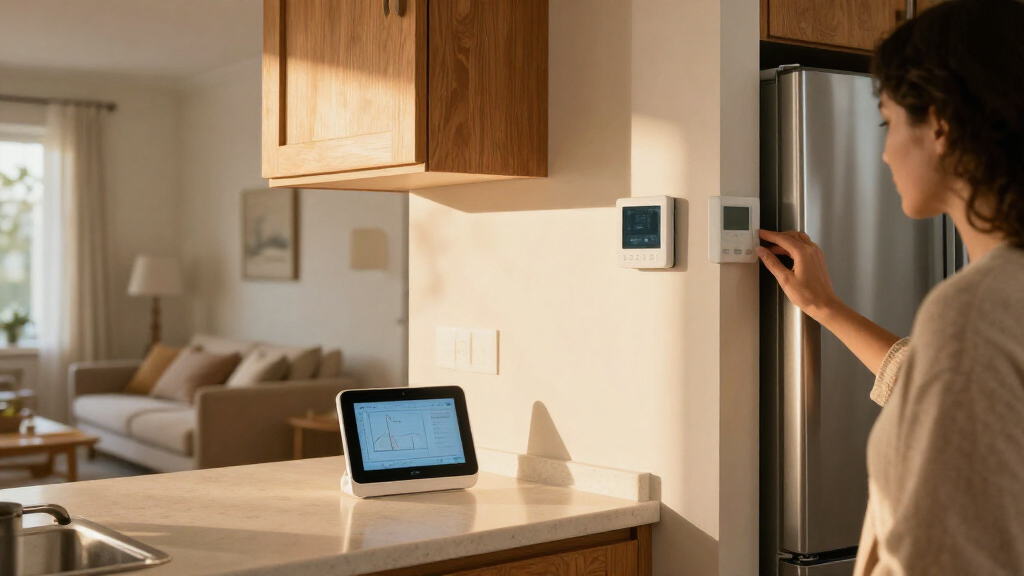
I ranked these smart home energy monitors by how well their stated features address real household monitoring needs: whole-home visibility, circuit-level detail, sensor coverage, and control options. I also weighed practical fit, including the number and type of current transformers or circuit sensors, connectivity choices, and how clearly a product’s configuration signals the kind of installation it suits. Since the product names alone do not establish accuracy, app quality, compatibility, or long-term reliability, I avoid treating those qualities as proven advantages.
The order favors options with a clear use case and a useful balance of coverage and flexibility. The Emporia Vue 3 with 16 sensors leads for buyers seeking broad circuit monitoring; the 8-sensor version ranks as a more limited-coverage alternative. I give separate consideration to local control, whole-home-only monitoring, and stated sensor counts, rather than assuming that more sensors always deliver better value. Before buying, shoppers should verify panel compatibility and installation requirements against the manufacturer’s documentation.
Factors to Consider When Choosing Smart Home Energy Monitors
Choosing a monitor starts with the question you want it to answer: how much power the whole home uses, which circuits consume the most, or whether you can track selected equipment locally. These broader checks can prevent a mismatch between the monitor’s sensor package and your panel, even when a product looks right on paper.
Choose Whole-Home Tracking or Circuit-Level Detail
A whole-home monitor can be enough if your main goal is to follow total consumption and spot broad changes over time. Circuit-level sensors add another layer: they can help distinguish, for example, whether a change comes from a major appliance circuit or from the rest of the house. That extra detail is useful only when you have a specific question to investigate or intend to act on what you learn. A common mistake is paying for many sensors while having no plan to identify or label the monitored circuits. If you mainly want a household-wide view, models built around main sensors, such as the Eyedro or Leviton options here, may be a closer fit. Choose circuit coverage when separating loads will change how you manage energy use.
Match Sensor Count to the Circuits You Need
Count the circuits you actually want to monitor before choosing a kit, and check how the manufacturer defines its sensor count. A higher number can offer more visibility, but it can also leave you with unused sensors if your priorities are limited to a few large loads. Some circuits may require a different sensing arrangement than a standard single-pole circuit, so sensor quantity alone does not guarantee complete coverage. Make a short list of the loads you care about, then compare that list with the product’s supported configurations. Leave room for future needs only if you expect to add appliances, electrification, or other major electrical loads. This approach can make an 8-sensor kit a better fit than a 16-sensor kit for some homes, even when the larger kit appears more capable.
Check Panel Compatibility Before Ordering
Smart energy monitors connect to equipment inside or near the electrical panel, so installation fit is a purchase decision, not a minor detail. Confirm your service type, panel layout, breaker arrangement, and the current-transformer specifications against the manufacturer’s instructions. A panel may have limited working space or wiring arrangements that make fitting multiple sensors difficult. Do not assume that a monitor supports every electrical configuration simply because its clamps have a familiar amperage rating. If the documentation leaves a compatibility question unanswered, ask the manufacturer or a qualified electrician before purchasing. For many buyers, a professional installation is the safer choice than trying to make a kit fit an unfamiliar panel.
Decide How Much You Need Cloud or Local Control
Connectivity affects how you access data and which features may depend on an internet connection or an account. A product with stated local control, such as the 16-sensor Refoss model in this roundup, may appeal to buyers who want to prioritize local operation, but check exactly which functions remain available locally. Other monitors may center their experience on Wi-Fi, Ethernet, or a companion service. Think about how you want to view readings when your internet connection is down and whether you plan to connect the monitor to a broader home automation setup. Avoid treating the word “local” as a promise of complete independence; verify data access, storage, and integrations in the product documentation. Choose the control approach that matches your privacy preferences and daily habits.
Separate Useful Alerts From Data You Will Not Act On
More readings do not always lead to better decisions. Before buying, decide whether you want simple usage trends, circuit-by-circuit comparisons, or alerts tied to unusual consumption. A monitor can only help you reduce waste if its data is understandable and relevant to choices you can make. Check how the product presents historical data, identifies circuits, and handles notifications rather than relying on a long feature list. If you are trying to investigate one high-use appliance, a few well-chosen sensors may be more useful than full-panel coverage. Buyers seeking detailed household analysis should favor a setup that can answer specific questions without creating a stream of information they will ignore.
Plan for Installation and Future Changes
Installation effort can grow with the number of sensors and the complexity of the panel, so account for more than the monitor’s central unit. Some homes have clear access and an electrician familiar with energy-monitor installs; others may need extra planning or professional help. Think ahead about likely changes, such as adding an electric vehicle charger, heat pump, or solar equipment, because those can shift which circuits you want to track. At the same time, buying for hypothetical future needs can leave you with unused coverage today. Check whether the monitoring setup can be expanded or reconfigured before choosing a larger sensor package. The best fit is the one that covers your current priorities while leaving a sensible path for the changes you realistically expect.
Frequently Asked Questions
Should I choose an 8-sensor or 16-sensor monitor?
Start by listing the circuits you want to understand, such as major appliances or a workshop, rather than choosing by the largest sensor count. The Emporia Vue 3 options in this roundup make the difference visible: one is configured with 8 circuit sensors and the other with 16. More sensors may help you track more circuits, but only if your panel and the product’s supported setup allow that coverage. Check whether any circuits need special sensor arrangements before counting them as covered. If you have a short list of priorities, the smaller configuration may be enough; broader circuit investigations point toward the larger kit.
Can a whole-home monitor tell me which appliance is using the most electricity?
A monitor that measures only whole-home use can show when total consumption rises, but it may not identify the specific appliance or circuit responsible. Circuit-level sensors provide more context by separating usage across selected branches, though they may still group multiple devices on one circuit. For appliance-level answers, check whether the appliance has a dedicated circuit and whether the monitor supports tracking it separately. The Eyedro and Leviton models here are framed around whole-home sensing, while multi-circuit kits offer a route to more granular monitoring. Confirm the exact monitoring method in the product documentation before expecting appliance-by-appliance readings.
Do I need an electrician to install a smart home energy monitor?
Installation depends on the monitor design, your panel, and your comfort working around electrical equipment. Many products in this roundup use current transformers or circuit sensors placed at the panel, so a buyer should read the manufacturer’s installation instructions before deciding to install one independently. Panel space, wiring layout, and service configuration can make an otherwise compatible monitor difficult to fit. If you are unfamiliar with electrical panels or the instructions do not clearly match your setup, use a qualified electrician. Verify local requirements as well, since installation rules can vary by location.
What should I check before buying a monitor with local control?
Find out which functions operate locally, including live readings, historical data, alerts, and integrations. The Refoss model with 16 circuit sensors is the lineup’s clear local-control option, but the product label alone does not establish that every feature works without cloud access. Check whether setup requires an account or internet connection and how data is stored. Also confirm that local operation supports the home automation tools you use, if any. These details help separate a useful privacy or reliability feature from a label that may cover only part of the experience.
Will a home energy monitor lower my electricity use by itself?
A monitor reports energy use; savings depend on how you respond to what it shows. It can help you notice patterns or identify circuits worth investigating, but it does not automatically reduce demand. Before choosing, decide what action you might take if the data reveals a high-use load, such as changing schedules or checking equipment settings. Circuit-level coverage can help narrow the search, while whole-home readings can be sufficient for tracking broad trends. If you do not plan to review the data or make changes, a more elaborate sensor package may offer little practical benefit.
Conclusion
For the broadest circuit-level coverage in this lineup, I recommend the Emporia Vue 3 with 16 Circuit Sensors as best overall; choose the 8-sensor version if you want the same product family with a narrower monitoring plan. The best value depends on how many circuits you will actually track, so I would favor a smaller sensor package over paying for unused coverage. For buyers seeking a premium-style feature set centered on local operation, the Refoss 16-Sensor model with Local Control is the specific standout, provided its local functions match your needs. Beginners who mainly want a household-wide view can start by comparing the simpler whole-home sensing approach of the Eyedro 200A and Leviton LWHEM-2R. For detailed circuit comparisons, look at the Emporia, Meross, and Refoss multi-sensor options; for any choice, verify panel compatibility and installation requirements before ordering.