TL;DR
Interior designers interviewed by House Beautiful describe a soft return of honey oak, the orange-toned wood finish common in homes from the late 1980s through the early 2000s. They say current projects tend to use it selectively and pair it with cooler colors, contrasting materials and other wood tones; the report offers designers’ observations, not sales data or evidence of a broad market shift.
Interior designers say honey oak, the orange-toned wood finish that was widespread in homes from the late 1980s through the early 2000s, is appearing again in some projects, particularly in cabinetry, millwork and furniture. A House Beautiful report describes the shift as a soft return, not a full-scale revival, and says designers are using the finish selectively with cooler colors and contrasting materials.

Get home appliances delivered free with Prime
- Fast, free delivery on millions of items
- Prime Video, Amazon Music and more included
- Member-only deals all year
The report is based on comments from designers, rather than sales figures or a survey measuring how often homeowners are choosing the finish. Cathleen Gruver of Gruver Cooley told House Beautiful that she has noticed a return in specific applications. She said clients may not request “honey oak” by name, but are drawn to natural wood tones that add warmth and character.
Designers cited two possible reasons for renewed interest: warmer interiors are gaining favor, and honey oak carries nostalgic associations for people who grew up in the 1980s and 1990s. Elizabeth Bennett and Mallory Robins of Kobel + Co connected that nostalgia with the return of other styles from the period, including in fashion. Those comments describe the designers’ interpretation, not a measured explanation for the trend.
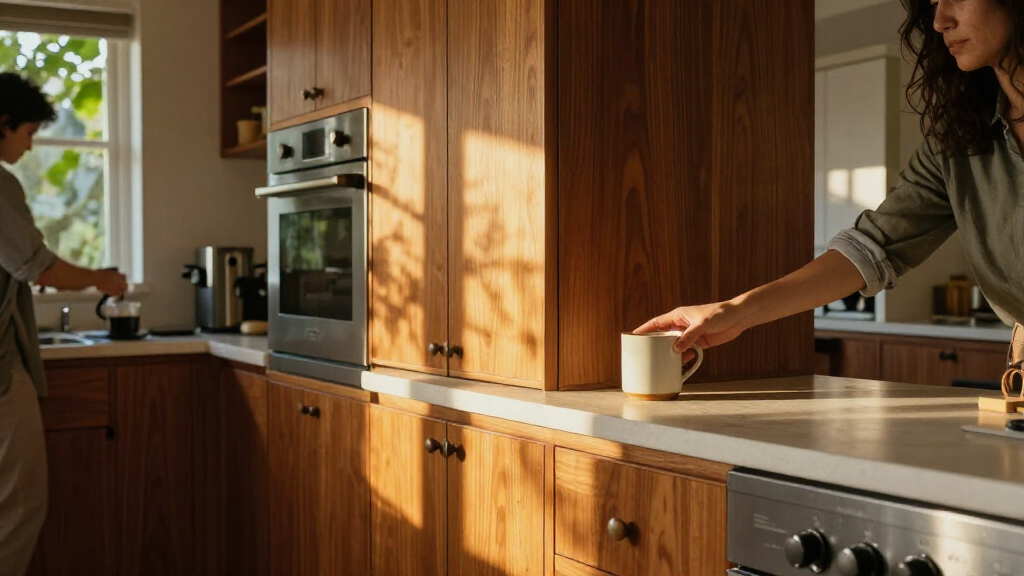
The examples in the report show ways designers are adapting the finish rather than recreating an entire room in one wood tone. One bathroom pairs a honey oak vanity with blue tile, silver finishes and gray paint. Another project uses the finish on a kitchen island against a largely white room. Designers also describe mixing it with different wood tones, muted greens, warm whites, taupe, light blue and modern lighting.
A Warmer Alternative to Gray Interiors
The reported shift matters to homeowners who have original oak cabinets, trim or furniture and are deciding whether to replace or refinish them. Designers interviewed by House Beautiful suggest that existing honey oak does not automatically have to be removed: in their view, a more restrained palette and updated surrounding materials can change how the wood reads.
That advice is a design perspective, not a guarantee that every room with honey oak will look current or that keeping it will save money. The practical takeaway is narrower: homeowners can test color, lighting and material combinations before committing to a larger renovation. For people adding new wood, the designers’ examples point toward using honey oak as an accent—such as a vanity, island or standalone piece—rather than repeating it across every surface.
Products Worth Considering

Metabo HPT C10FCG2 10-Inch Single Bevel Compound Miter Saw

EGO Power+ 12-Inch Cordless Electric Snow Shovel with 56V 2.5Ah Battery and Charger

DEWALT DW7440RS Rolling Table Saw Stand
As an affiliate, we earn on qualifying purchases.
From Ubiquitous Finish to Accent
Honey oak was a familiar feature in residential interiors from the late 1980s into the early 2000s. Gruver told House Beautiful that it appeared on cabinetry, trim, stair railings and floors, and was a common choice for builders and homeowners. The report says it lost favor as many interiors shifted toward cooler, more neutral palettes in the early 2000s.
The current interest described by the designers is not a return to that earlier approach. Robins said homeowners are using the wood more sparingly than in the period when it might cover trim, floors and cabinetry throughout a house. In one project discussed by designer Adina Hall, the team kept existing honey oak and introduced whitewashed French oak floors, taupe-toned ash cabinetry, crisp white and cooler accents. Hall said the mix gave the original wood a contemporary setting without competing with it.
Other examples in the report include Melanie Millner’s sunroom, which combines orange oak with cypress, and Nancy Dow’s approach of pairing honey oak with clean lines, matte black details, natural stone and modern lighting. These are individual project choices, not evidence that designers have settled on one formula.
““It’s not necessarily a full-blown comeback, but I’ve definitely noticed a soft return—particularly in cabinetry, millwork details, and furniture.””
— Cathleen Gruver of Gruver Cooley, speaking to House Beautiful
How Broad Is the Return?
The source report does not establish how widespread the renewed interest is among homeowners, builders or the interior design industry. It provides designer observations and selected project examples, but no sales data, survey results, search trends or comparison with earlier years. The size and duration of the shift therefore remain unclear.
It is also not clear whether clients are choosing honey oak specifically or responding more generally to natural, warm-toned wood, as Gruver says some do not use the finish’s name when discussing their preferences. The report does not quantify how frequently the finish is being installed in new projects, nor whether interest differs by region, budget or type of home.
Watch for More Project Evidence
The report identifies no forthcoming industry survey, product launch or other milestone that could confirm the scale of the trend. Further evidence would need to come from broader data, such as reported sales or a survey of designers and homeowners, rather than a small set of project examples alone.
For now, the development to watch is whether the selective use described by designers continues across future projects. Homeowners considering the finish can compare samples in their own room and assess the effect of natural and artificial light, nearby paint colors and existing materials before making renovation decisions. House Beautiful’s report supports the conclusion that some designers are working with honey oak again; it does not establish that the finish has returned everywhere.
Key Questions
Is honey oak fully back in style?
The report does not describe a full-scale comeback. Designer Cathleen Gruver calls it a “soft return,” especially in cabinetry, millwork details and furniture.
What is honey oak?
In the report, honey oak refers to a warm, orange-toned wood finish that was widely used on cabinets, trim, stair railings and floors from the late 1980s into the early 2000s.
How are designers making honey oak feel more current?
Examples include using it on a single feature, such as a vanity or kitchen island, and balancing its warmth with cooler paint and tile colors, other wood tones, stone, matte black details and modern lighting.
Should homeowners replace original honey oak cabinets?
The designers quoted by House Beautiful suggest considering the surrounding palette before replacing existing wood. Their examples show that color and material choices can change the look of a room, but the report does not offer a universal recommendation or assess renovation costs.
Is there data showing honey oak sales are rising?
No sales or market data are provided in the report. Its account of renewed interest is based on designers’ observations and examples of their projects.
Source: housebeautiful.com