
TL;DR
An Ideal Home writer says radiator reflectors installed behind most radiators on external walls in November 2022 have let them keep their thermostat at 18–19°C rather than 21°C. The account reports a perceived comfort benefit, but gives no measured energy use or bill comparison, so the savings attributable to the reflectors remain unknown.
An Ideal Home writer says radiator reflectors installed in November 2022 have helped them feel comfortable with the thermostat set at 18–19°C instead of 21°C. The four-year account describes a perceived change in one home, but does not provide energy-use readings or bill figures that isolate savings from the reflectors.

Get home appliances delivered free with Prime
- Fast, free delivery on millions of items
- Prime Video, Amazon Music and more included
- Member-only deals all year
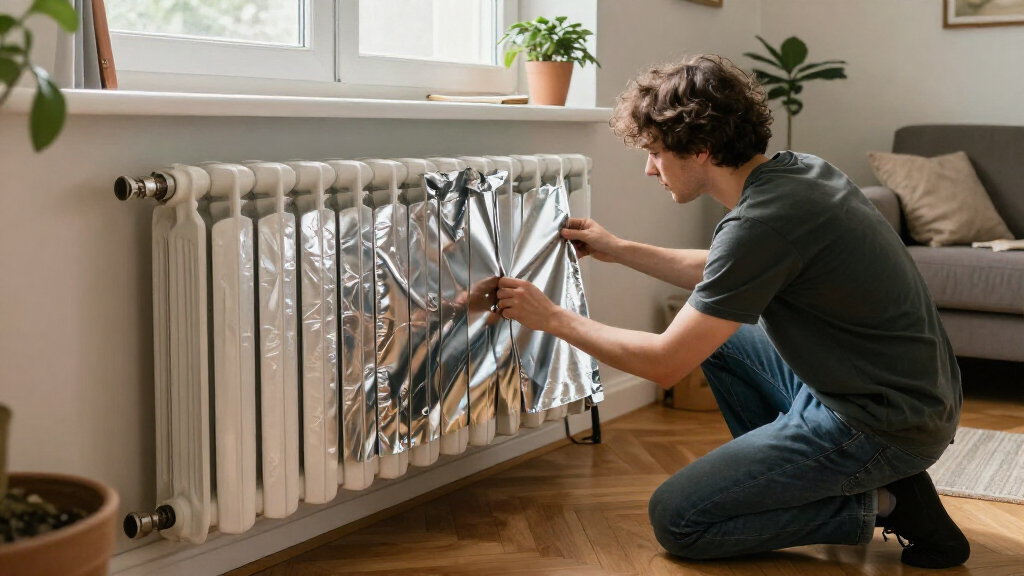
The writer fitted Radflek reflectors behind most radiators on external walls in a house described as nearly 60 years old. They left out a bathroom towel rail and a designer radiator because the panels would have been too visible. The writer says there is less reason to add reflectors behind radiators on internal walls, where heat escaping through the wall remains inside the home; a wall adjoining an attached garage may be an exception.
Before installation, the writer regularly set the thermostat to 21°C. In the winters since, they say they have been comfortable at 18–19°C. That is a personal observation, not a controlled test: the article says the writer tried several energy-saving measures over the same period and acknowledges that comfort changes cannot be attributed to one intervention alone. It supplies no before-and-after meter readings, usage period, or bill comparison for the reflectors.
The writer also says the wall behind a reflector feels cold to the touch, which they take as a sign that the product is playing a part. The account recommends keeping radiators in good condition by bleeding them, checking for cold spots and dusting them. It advises buying purpose-made reflectors rather than using kitchen foil, citing the Energy Saving Trust for the view that ordinary foil lacks the same insulating properties. No product test results or independent measurements are included in the supplied report.
What the Four-Year Account Can Show
The report offers a long-term household experience with a relatively simple retrofit, but it does not establish how much energy or money reflectors save. The writer’s lower preferred thermostat setting may matter to household costs if it reflects a genuine change in heating needs. However, the article does not show that reflectors alone caused the change or quantify any resulting reduction in fuel use.
The account also points to a practical distinction for readers: a reflector’s potential value depends on where a radiator sits and how much heat is lost through the wall behind it. The writer considers the panels more useful on uninsulated external walls than in a well-insulated newer home. That is the author’s assessment based on their house, not a universal finding for all buildings or products.
Readers weighing the measure against other ways to cut heating use should treat the article as an individual report rather than a savings guarantee. The evidence presented is a change in the writer’s thermostat habits and their impression of comfort, not a verified reduction in bills.
Products Worth Considering

DEWALT 20V MAX Cordless Circular Saw, 6-1/2-Inch (DCS391B)

DEWALT FLEXVOLT 60V MAX 7-1/4-Inch Cordless Worm Drive Style Circular Saw Kit with 9.0Ah Battery (DCS577X1)

DEWALT DWE575SB 7-1/4 Inch Corded Circular Saw
As an affiliate, we earn on qualifying purchases.
Installation and Home Conditions
The reflectors were installed in November 2022, behind most radiators fixed to outside walls. The house is described as nearly 60 years old: the writer says it is not as poorly insulated as some older properties, but is less insulated than some new builds. That matters because the report itself expects results to vary with wall insulation and the amount of heat that would otherwise pass behind a radiator.
The source article frames the experience against a reported 26% energy price-cap rise on Jan. 1, 2027, calling it the steepest increase in four years. The supplied material does not identify the cap’s unit, explain the calculation or provide a separate source for that forecast, so the figure should be understood as the article’s stated context—not as a measured effect of radiator reflectors.
The writer describes the reflectors as one part of a broader set of home energy measures, including draught-proofing, limiting unnecessary open-window time and regular radiator maintenance. Because several actions were taken together, the source does not isolate the contribution of each one.
““Each winter since I installed the reflectors, I was comfortable with the thermostat set at 18–19°C.””
— The Ideal Home writer
Savings Without Meter Readings
The article does not state how much energy, if any, the reflectors saved, or whether the writer’s bills fell after installation. It gives no fuel type, tariff, household heating schedule, weather adjustment or comparison period. The claimed comfort at a lower thermostat setting is not accompanied by measurements confirming indoor temperatures or energy consumption.
It is also unclear how much the home’s insulation, draught-proofing, radiator maintenance and other changes contributed to the reported experience. The source offers no independent evaluation of the reflectors or side-by-side results from homes with different wall construction. The reported 2027 price-cap rise is included as motivation in the source article, but further details supporting that figure are not provided in the supplied material.
What Readers Can Check at Home
The account reports no planned follow-up study or new test. For readers considering reflectors, its practical guidance is to focus on radiators against external or otherwise heat-losing walls, consider whether panels would be visible, and keep radiators clean and evenly warm. The article does not offer a quantified payback period, so households should not assume a particular bill reduction based on this experience.
A clearer assessment would require recording energy use across comparable periods while accounting for weather, thermostat settings and other heating changes. Until such figures are available, the four-year report remains evidence of one homeowner’s experience—not proof of a specific financial return.
Key Questions
What did the Ideal Home writer report after four years?
The writer said they were comfortable setting the thermostat at 18–19°C rather than 21°C after installing reflectors in November 2022. They did not provide measured energy savings or bill comparisons.
Where did the writer install the reflectors?
They fitted them behind most radiators attached to external walls. They omitted a bathroom towel rail and a designer radiator because the reflectors would have been too visible.
Does this report prove radiator reflectors cut energy bills?
No. It describes one homeowner’s experience and thermostat preference, but gives no before-and-after meter readings or figures showing savings caused by the reflectors.
Does the writer recommend ordinary kitchen foil?
No. The writer recommends purpose-made reflectors, saying kitchen foil is thinner and more prone to tearing. The article also cites the Energy Saving Trust for the view that ordinary foil does not have the same insulating properties.
Source: idealhome.co.uk