
TL;DR
An Ideal Home report describes three household items gardeners can repurpose to deter squirrels: used CDs, plastic bottles and chicken wire. The methods rely on movement or physical barriers, but the report provides no controlled evidence or guarantee that they will work in every garden.
An Ideal Home gardening report has outlined three items people may already have at home — used CDs, plastic bottles and chicken wire — that can be repurposed to discourage squirrels from disturbing garden plants. The suggestions use moving reflections or physical covers to protect vulnerable plants, though the report does not establish how reliably they work.

Get home appliances delivered free with Prime
- Fast, free delivery on millions of items
- Prime Video, Amazon Music and more included
- Member-only deals all year
The report says old CDs can be hung from trees, pergolas or fences. Julian Palphramand, head of plants at British Garden Centres, said their movement and reflected light in the wind may deter squirrels entering a garden. The article also suggests the discs may help protect vegetable plots from birds, but offers no comparative testing or measured results.
For young plants, Palphramand recommends cutting an empty plastic bottle in half and placing it over the plant as a small cloche. The cover is presented as a way to limit digging and provide a physical barrier. The report also describes using chicken wire over pots: cut it slightly larger than the pot, secure it around the rim and tuck away sharp ends.
Westland Horticulture shared the chicken-wire pot-cover method in an Instagram reel. In the caption, the company described it as a way to stop squirrels digging up newly planted bulbs. The article advises using pliers to fasten the wire and gardening gloves to reduce the risk of cuts. These are practical suggestions, not a guarantee that squirrels will stay away.
Protecting Newly Planted Garden Beds
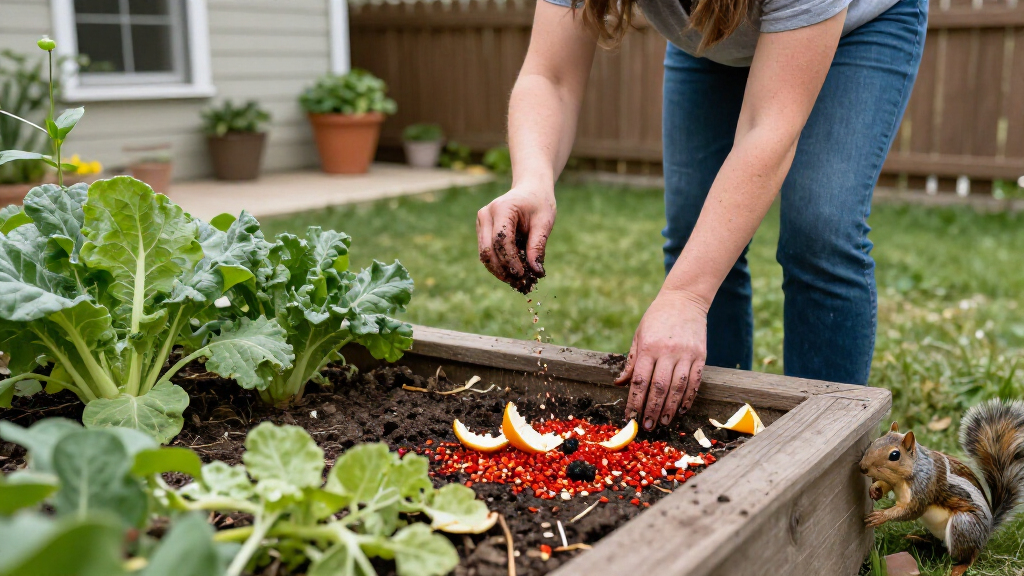
Squirrels can dig in borders and pots, disturbing newly planted bulbs and young plants. A simple cover may help gardeners protect specific vulnerable areas without immediately buying purpose-made equipment. Reusing materials such as bottles and CDs also gives household items another use.
The methods differ in how they work: hanging CDs rely on movement and reflected light, while bottles and chicken wire physically cover plants or soil. A barrier may suit a pot or small patch better than an open garden, and gardeners may need to adapt the approach to the size and location of the plants.
Products Worth Considering

WORX Trivac WG588 40V Cordless 3-in-1 Leaf Blower, Vacuum & Mulcher

Metabo HPT C10FCG2 10-Inch Single Bevel Compound Miter Saw

EGO Power+ 12-Inch Cordless Electric Snow Shovel with 56V 2.5Ah Battery and Charger
As an affiliate, we earn on qualifying purchases.
Three Repurposed Garden Deterrents
The article frames the advice around squirrels digging up freshly planted spring bulbs and eating or disturbing garden plants. It presents the methods as humane deterrents made from items that may be available in a cupboard or shed, rather than as ways to trap or harm animals.
It also mentions alternatives for gardeners without suitable materials, including pre-formed wire cloches and squirrel baffles or squirrel-proof bird feeders. Those products are offered as additional options, not as part of the three household-item suggestions.
“This can help to deter the squirrels that come into your garden through the movement and light they give off as they move in the wind.”
— Julian Palphramand, head of plants at British Garden Centres
How Reliable Are the Barriers?
The report does not provide controlled trials, success rates or comparisons among the three methods. It is not clear how long reflected light from CDs might discourage squirrels, or whether results depend on the garden, weather, squirrel behavior or placement.
Nor does the article specify how long plastic-bottle covers should remain over plants or how best to ventilate them in different conditions. For chicken wire, the fit and secure fastening matter: sharp edges can cause injury if left exposed. The advice should be treated as practical experimentation rather than a proven, universal solution.
Testing a Suitable Plant Cover
Gardeners considering the suggestions can start by protecting a small, vulnerable area and checking whether the method reduces digging or plant disturbance. Any wire should be fixed firmly, with sharp ends tucked away, and gloves used while handling it. Bottle covers should be checked so they do not damage or restrict the plants they are meant to protect.
The source does not announce further research or a scheduled update. Whether these approaches work in a particular garden will depend on local conditions, and the report gives no timeline for assessing results.
Key Questions
Which household items does the report suggest?
It suggests used CDs, empty plastic bottles and chicken wire as possible ways to discourage squirrels or shield plants.
How are used CDs meant to deter squirrels?
Julian Palphramand of British Garden Centres says CDs hung from trees, pergolas or fences may deter squirrels through movement and reflected light as they move in the wind. The report does not provide measured results.
How can a plastic bottle protect a plant?
The report recommends cutting an empty bottle in half and placing it over a young plant as a small physical cover, or cloche, to help protect it from digging.
How should chicken wire be used over a pot?
Cut a piece slightly larger than the pot, secure it around the rim and tuck away any sharp ends. The article recommends gardening gloves and pliers when handling and fastening the wire.
Are these methods guaranteed to keep squirrels away?
No. The report describes them as possible deterrents but gives no success rates or controlled evidence. Their effectiveness may vary between gardens.
Source: idealhome.co.uk