TL;DR

Get home appliances delivered free with Prime
- Fast, free delivery on millions of items
- Prime Video, Amazon Music and more included
- Member-only deals all year
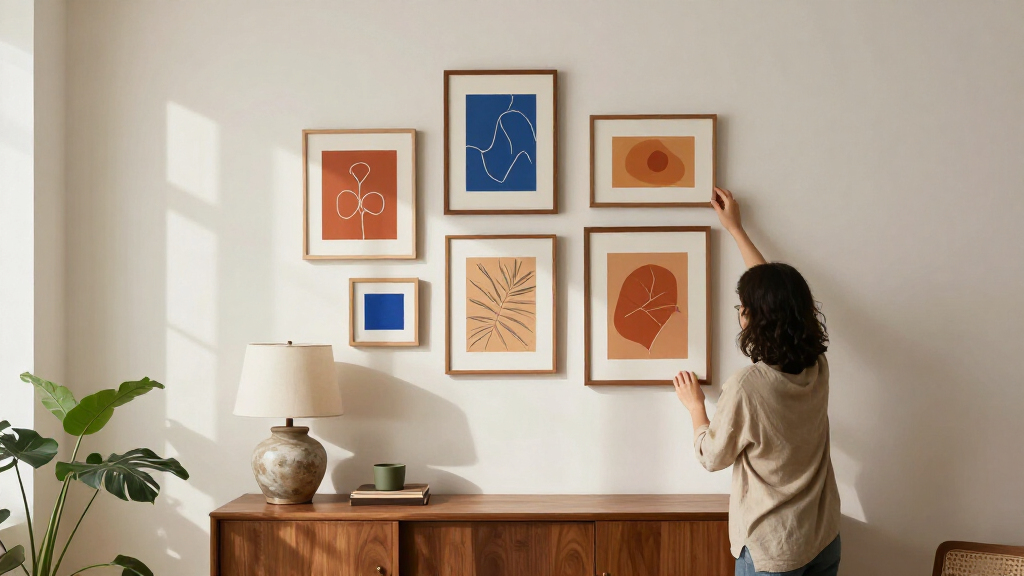
An article in Veranda reports that art at home may influence mood through color, shape and personal associations, drawing on comments from art historian Susie Hodge and decorator Cameron Jones. Their observations are guidance, not evidence that a particular artwork will produce the same emotional response in everyone.
Art at home may shape how people feel, but its effects are personal and cannot be predicted from color or style alone, according to art historian Susie Hodge and decorator Cameron Jones in a report published by Veranda. Their advice focuses on using art’s colors, forms and associations to support the mood residents want in different rooms.
Hodge, the author of How Art Can Change Your Life, says viewing art that someone finds pleasing can produce a dopamine response. She compares the feelings associated with art a person deeply likes to the euphoria of looking at someone they love. The report presents this as Hodge’s explanation; it does not provide study details or evidence that the response is universal.
Jones says she often begins design work by asking clients how they want a room to feel. For bedrooms, she suggests colors such as greens, blues, cream, white and taupe as options that may support a calm atmosphere. For breakfast rooms, yellow may bring energy, while red or orange can suit dining areas used for social gatherings. Artwork can introduce these colors without requiring a brightly painted wall, she says.
Both experts stress that personal experience affects interpretation. Hodge says a painting that one person finds pleasing may make another uneasy because of memories or associations. Jones reports that some clients respond calmly to abstract works with rounded shapes and softer lines. Hodge similarly describes soft colors, smooth lines and horizontal compositions as potentially calming, while sharp angles and bold patterns may feel energizing to some viewers and unsettling to others.
Choosing Art Around Daily Mood
The advice matters to people choosing artwork for spaces where they rest, work or gather with others. Rather than treating a color chart as a formula, the experts suggest considering the room’s intended use and the feelings a resident personally associates with particular images and forms. A small artwork can also add color to a mostly neutral room, giving people a way to change its visual character without repainting.
The report also places the viewer, rather than a design rule, at the center of the decision. Art that feels soothing or joyful to one person may have the opposite effect on someone else. That makes individual preference and memory relevant to home design, while limiting how confidently anyone can predict a work’s emotional impact.
Products Worth Considering

EGO Power+ 9-Gallon Cordless Wet/Dry Shop Vacuum (WDV0904) with 56V 5.0Ah Battery and Charger

EGO Power+ LB8803-2 Cordless Leaf Blower, 880 CFM, with Two 4.0Ah Batteries

Greenworks 40V String Trimmer and Blower Combo with 2.0 Ah Battery
As an affiliate, we earn on qualifying purchases.
Color, Form and Personal Associations
The report connects its advice to artists whose work has been discussed in relation to emotion. Hodge describes Agnes Martin’s blue painting Night Sea as an effort to encourage calm, positive thoughts. Martin, who lived with schizophrenia and depression, created the work as part of that aim, according to Hodge. The painting is on display at the San Francisco Museum of Modern Art, the report says.
Hodge also points to Henri Matisse’s remarks about color and Mark Rothko’s large, layered fields of pigment. Rothko said he sought to express basic human emotions, Hodge reports, and noted that some viewers cried in front of his paintings. These examples illustrate artists’ intentions and reported reactions; they do not establish that all viewers respond alike. The report also cites Andy Warhol’s repeated depictions of Campbell’s soup as an example of finding inspiration in an everyday object.
“When we see art that we find pleasing, it gives us a dopamine rush.”
— Susie Hodge, art historian and author
How Individual Responses Vary
The report does not cite research methods, sample sizes or clinical evidence establishing that specific colors or shapes cause predictable emotional changes. The reactions described are expert observations, artists’ stated intentions and examples of individual responses. It is also unclear how strongly factors such as lighting, room size, culture or a person’s mental health may alter the experience of a particular artwork.
Hodge and Jones both say responses differ from person to person. The report therefore does not support treating a color or art style as a guaranteed way to calm, energize or improve someone’s mood.
Testing Art in Your Own Space
The report does not announce a follow-up study or a policy change. For readers applying the advice, the experts’ comments point toward observing personal reactions: consider what a room is used for, try art that fits the mood you want, and notice whether the work feels comfortable over time. The source offers no timetable or formal method for measuring those effects.
Key Questions
Can artwork change how a room feels?
Hodge and Jones say art may influence mood through color, shape and personal associations. They emphasize that reactions differ among viewers, so no artwork is guaranteed to create a particular feeling.
What art might feel calming?
Jones says some clients feel calmer around abstract art with rounded shapes and soft lines. Hodge points to soft colors, smooth lines and horizontal emphasis as qualities that may feel peaceful. These are observations, not universal rules.
Which colors do the experts associate with different moods?
Jones suggests greens, blues and neutral shades for a restful bedroom, yellow for an energetic breakfast room, and red or orange for a dining area. Individual preference and room use should guide choices, she says.
Does everyone respond to the same artwork in the same way?
No. Hodge says viewers bring their own experiences to art, and Jones describes interpretation as deeply personal. A work that comforts one person may make another feel anxious or recall an unpleasant memory.
Source: veranda.com