TL;DR

Get home appliances delivered free with Prime
- Fast, free delivery on millions of items
- Prime Video, Amazon Music and more included
- Member-only deals all year
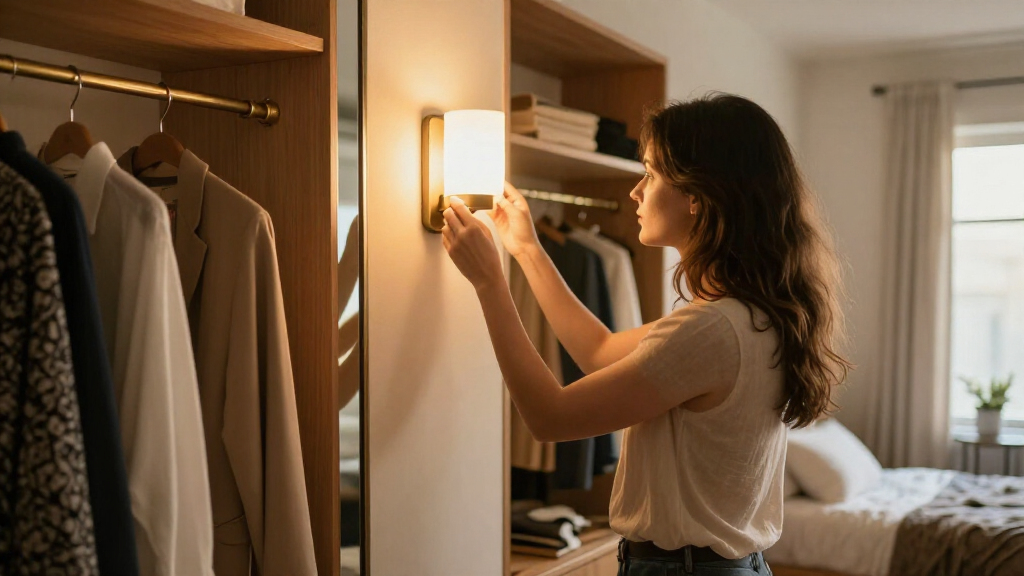
Interior designers Kate Marker and Jessica Kain Barton recommend combining a decorative ceiling fixture with task lighting, especially sconces near a mirror or vanity. They favor warm 2700K bulbs for general lighting, 3000K bulbs with strong color rendering at a vanity, and dimmers for adjustable light.
A Veranda report on dressing room design highlights a practical approach from interior designers Kate Marker and Jessica Kain Barton: combine a decorative ceiling fixture with task lighting, use warm bulbs and put decorative lights on dimmers. The advice addresses a room that needs to support getting dressed and grooming while avoiding the harsh, shadowy effect the designers associate with relying on overhead or recessed lighting alone.
Marker recommends layering ambient and task lighting so a dressing room feels inviting while remaining functional. She suggests a pendant or small chandelier as a decorative focal point, paired with sconces beside a mirror. Face-level light, she says, can reduce shadows while someone is getting ready. Barton also favors sconces, including small library-style fixtures beside a makeup vanity.
For overhead light, Barton suggests a chandelier, lantern or flush mount with at least three or four candle bulbs. The designers identify 2700K bulbs as their usual choice for general dressing room lighting. For vanity lighting, Marker recommends 3000K bulbs with excellent color rendering. These are the designers’ preferences, not a universal lighting standard.
Both designers caution against depending entirely on recessed lights. Marker says they can feel harsh and create unflattering shadows. If recessed lighting is needed, Barton recommends using no more than four fixtures, ideally mud-in style, and no wider than three inches in diameter. Marker also advises putting decorative lights on dimmers so their intensity can be adjusted.
Better Light for Getting Ready
The recommendations address two different needs in a compact room: enough light to choose clothes and complete grooming, and a comfortable atmosphere for a space used at the start and end of the day. A ceiling fixture supplies general illumination, while mirror-side sconces bring light closer to the face. The designers’ advice gives readers a way to think about those jobs separately rather than expecting one overhead fixture to do everything.
Color temperature and dimming matter because the room’s use changes. The designers favor a softer 2700K glow for general lighting but suggest 3000K with strong color rendering at a vanity. Dimmers add control over brightness. The source does not offer measurements or test results comparing these arrangements, so the guidance should be read as professional design advice rather than a guarantee that every setup will produce the same result.
Products Worth Considering

WORX 20V Brushless Cordless 18-Gauge Brad Nailer (WX838L.9)

Greenworks 24V 8-Tool Cordless Combo Kit with Power Bank Batteries and 65W Charger

EGO Power+ 9‑Gallon Wet/Dry Shop Vacuum with Remote Control (WDV0900) – Battery Not Included
As an affiliate, we earn on qualifying purchases.
From Private Room to Daily Dressing Space
The report places today’s dressing rooms in a longer history: private rooms for dressing and personal activities appeared in European and English homes and estates during the 17th century. The source describes these spaces as places for privacy and retreat as well as getting ready. Its focus, though, is on how contemporary designers approach lighting in a personal dressing area.
Marker describes the room as a personal boutique and argues for combining useful and decorative fixtures. Barton takes a simpler approach, favoring warm, uncomplicated lighting. Their shared recommendations are to avoid relying solely on recessed fixtures, add appropriate task lighting, and choose warm light. Marker has also released a lighting collection with Mitzi of Hudson Valley Lighting Group, as noted in the report; the article presents her design views alongside that professional background.
““My biggest must-do [when decorating a dressing room] is layering lighting.””
— Kate Marker, interior designer
Room Layouts Need Different Plans
The report does not specify a standard fixture layout, brightness level or number of sconces for every dressing room. The right arrangement will depend on room size, ceiling height, mirror and vanity placement, existing wiring and available daylight. Barton’s recommendation to limit recessed fixtures to four is her design guidance, not a code requirement stated in the source.
The source also does not provide independent testing of bulb temperatures or color-rendering performance, or a cost comparison between fixture types. Readers should treat the figures and recommendations as the designers’ preferences. Any electrical installation or changes to wiring should be handled by a licensed professional in line with local requirements.
Plan Fixtures Around the Mirror
The next step for anyone applying the advice is to map the room’s tasks before choosing fixtures: identify the mirror or vanity, decide where face-level light can go, and select a ceiling fixture for general illumination. Then confirm bulb specifications and whether the chosen decorative fixtures can be controlled by dimmers. The report does not announce a follow-up study or additional design guidance, so no further development is specified.
Key Questions
What lighting combination do the designers recommend?
They recommend combining a decorative ceiling fixture with task lighting, such as sconces beside a mirror or vanity. The goal is to provide both general illumination and light for grooming.
What bulb temperature is suggested for a dressing room?
Marker and Barton say they typically choose 2700K bulbs for general dressing room lighting. Marker recommends 3000K bulbs with excellent color rendering for a vanity.
Should a dressing room use recessed lighting?
The designers advise against relying on recessed lighting alone. Barton suggests no more than four recessed fixtures, ideally mud-in style and no wider than three inches, when they are needed.
Why add sconces near a mirror?
Marker says face-level lighting can help minimize shadows while getting ready. Barton also recommends sconces near a makeup vanity, including small library-style fixtures.
Are these recommendations building-code requirements?
No. The source presents them as interior designers’ recommendations, not electrical code rules. Have electrical work completed by a licensed professional and check applicable local requirements.
Source: veranda.com