
TL;DR
Livingetc’s design report highlights mid-century fireplaces as architectural focal points, with examples from a 1964 Tennessee home and a contemporary project featuring a corner-wrapping fireplace. Designers say their texture, materials and room-centered layouts offer an alternative to fireplaces treated as leftover features.
Livingetc has spotlighted mid-century fireplaces in a design report featuring original Tennessee marble hearths and a modern project with a wood-clad fireplace that wraps around a corner. The examples show how designers are treating fireplaces as architectural focal points, rather than incidental or unused features.

Get home appliances delivered free with Prime
- Fast, free delivery on millions of items
- Prime Video, Amazon Music and more included
- Member-only deals all year
One example is a tri-level home outside Knoxville, Tennessee, built in 1964 and featuring original Tennessee marble fireplaces in its living room and family room. Interior designer Lacy Apperson of Caroline Levenson Design describes the living-room fireplace as “the heart of the home” and the room’s “dramatic focal point.” The report says the house retains other period details, including terrazzo floors and green shag carpet.
Apperson’s team arranged an Eames lounge chair and ottoman and oversized cushions near the living-room hearth, using colorful and textured fabrics to soften the stone. In the family room, a custom green velvet sectional and walnut built-ins orient seating around the second fireplace. The report connects the use of Tennessee marble to Knoxville’s local stone history, noting the material’s association with the city.
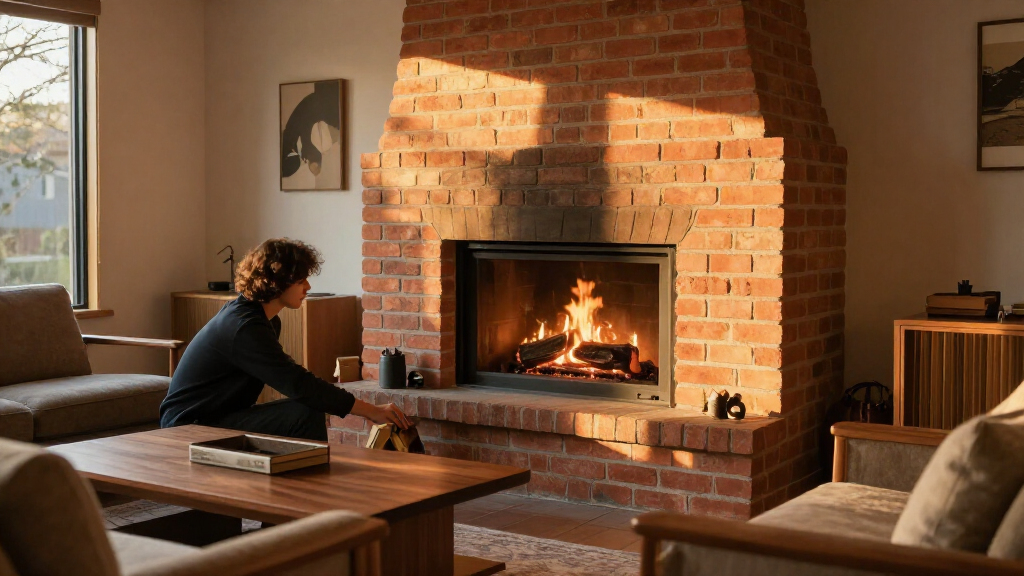
A second featured project uses a wood-clad fireplace that turns a corner. Designer Pieter Schoolaert says the clean lines of mid-century design inform his work. The fireplace faces both the seating area and dining table, while an extended ledge on the other side offers a place to sit or lie down. Livingetc presents this example as evidence that restrained forms can still bring warmth and dimension to a room.
Fireplaces as Room Anchors
The report’s design argument is that material, placement and craftsmanship can give a fireplace a stronger role in a home than simply providing heat. The examples combine stone or wood with seating arrangements that direct attention toward the hearth, making it part of how a room is used and organized.
That approach may interest homeowners renovating period properties as well as those planning new interiors. The featured Tennessee home shows how retaining an original fireplace can preserve a house’s character; Schoolaert’s project shows how a contemporary design can borrow the era’s geometry without copying a historic room. These are design examples, not evidence of a broad market shift, and the report does not compare costs, energy performance or resale effects.
Products Worth Considering

DEWALT 20V MAX XR Cordless Jig Saw (DCS334B)

EGO Power+ LV5000 Cordless Leaf Vacuum, Mulcher, and Blower

Metabo HPT Brad Nailer, 18 Gauge Cordless, 18V Kit, NT1850DG
As an affiliate, we earn on qualifying purchases.
Two Mid-Century Approaches
The examples cover different relationships to the period. In Knoxville, the owners inherited a house whose original details had largely survived, including its marble fireplaces. In the other project, the designer used a corner-spanning form and wood finish to create a new focal point. Together, they distinguish preservation from contemporary interpretation.
The Brownstone Boys, renovation specialists quoted by Livingetc, say fireplaces in many period homes once served as the room’s architectural center. They argue that later designs became too streamlined and that older examples retain texture and character. Their comments are professional opinion; the article does not provide research measuring how common either approach is.
“The living room fireplace is truly the heart of the home and the dramatic focal point of this room.”
— Lacy Apperson, Caroline Levenson Design
What the Examples Cannot Show
Livingetc features selected projects and does not establish whether mid-century fireplaces are becoming more popular across the housing or interiors market. It also does not report installation costs, heating efficiency, maintenance needs or whether the featured fireplaces are used regularly. The report gives limited information about the second project’s location and construction date, so it is not possible to compare it directly with the 1964 home.
The article’s claims about contemporary fireplaces becoming overly streamlined, and about older designs offering greater character, are attributed judgments rather than independently tested findings. Readers considering a similar renovation would need project-specific advice on the fireplace’s condition, materials and applicable building requirements.
How Homeowners May Apply It
The report does not announce a product launch, renovation program or upcoming industry milestone. Its immediate takeaway is a set of design references: retain distinctive original materials where practical, arrange seating to make the hearth part of the room, or use a fireplace’s shape and finish to define more than one area.
Anyone planning work on an existing fireplace should first establish whether it is functional and what repairs or approvals may be required. For changes involving a chimney, structure, fuel supply or electrical components, homeowners should consult qualified, licensed professionals and follow local codes. The next steps will depend on each property; Livingetc has not reported any broader follow-up beyond its design feature.
Key Questions
What mid-century fireplace designs does the report feature?
It highlights original Tennessee marble fireplaces in a 1964 Knoxville-area home and a separate wood-clad fireplace that wraps around a corner.
Why are the Tennessee marble fireplaces distinctive?
The fireplaces preserve original material in a home that retains several period features. Livingetc also links the stone to Knoxville’s history as a source of Tennessee marble.
What do the designers say makes these fireplaces work?
They emphasize texture, clean lines and room-centered layouts. In the Tennessee home, seating is arranged around the hearth; in Schoolaert’s project, the fireplace faces both the seating area and dining table.
Does the report show that mid-century fireplaces are a widespread trend?
No. It presents selected design examples and expert views, but provides no market data establishing how common or popular these fireplaces are.
Source: livingetc.com