
TL;DR

Get home appliances delivered free with Prime
- Fast, free delivery on millions of items
- Prime Video, Amazon Music and more included
- Member-only deals all year
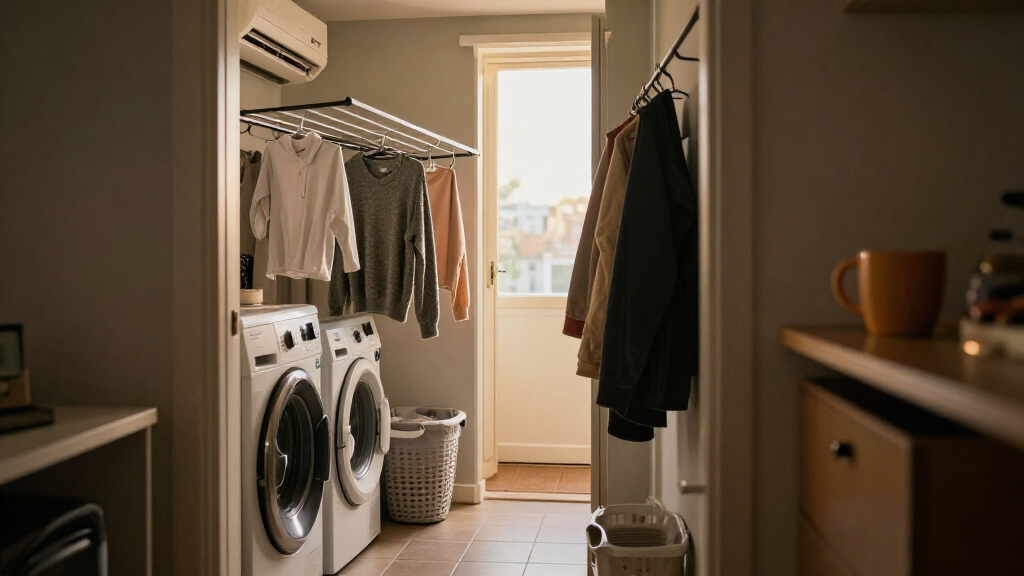
An Ideal Home report features a drying cupboard designed by London homeowner Hatty Parker, combining pull-out hanging rails, a dehumidifier, low-wattage heating and ventilated doors. The setup is intended to dry laundry while keeping it concealed, but the report provides no measured drying times, energy use or independent performance tests.
Ideal Home has featured a built-in drying cupboard created by London homeowner Hatty Parker, combining pull-out clothes rails with a dehumidifier, ventilation grilles and a low-wattage heating element. The design aims to keep wet laundry out of the room while helping clothes dry during colder weather, though the report does not provide measured drying times or energy-use figures.
Parker, a web designer renovating a Victorian terraced house, said her household had used a dehumidifier alongside a heated clothes airer before building the cupboard. She wanted to retain that approach in a permanent, concealed space. The cupboard sits beside a stacked washing machine and tumble dryer in a small laundry room created near the family bathroom.
According to Parker, the design has pull-out hanging rails, a dehumidifier connected to the washing machine and tumble dryer waste, and a low-wattage heating element. Ventilation grilles were cut into the cupboard doors to allow air to circulate. The report presents these features as part of one home’s design, not as a tested specification or a universal installation plan.
Ideal Home senior digital editor Jenny McFarlane said a dehumidifier or small radiator at the bottom of the cupboard is key to the concept. She recommended leaving sufficient ventilation and clearance around a dehumidifier so it can operate efficiently. The report also names several products, but does not compare them through published tests or provide independent evidence that one model is best for every home.
A Concealed Alternative to Airers
The cupboard addresses two familiar household problems in winter: slow-drying laundry and the space taken up by a drying rack. Pull-out rails make it possible to hang clothes inside a dedicated cabinet, while closing the doors can keep laundry out of sight when the room is in use.
For readers planning a renovation, the example shows how a laundry area might be designed around drying as well as washing and storage. Its usefulness will depend on the cupboard’s dimensions, airflow, appliance placement and the household’s laundry volume. A dehumidifier and heating element also use energy, and the report provides no consumption or running-cost data to establish how the arrangement compares with a standard airer or tumble dryer.
Products Worth Considering

EGO Power+ 9-Gallon Cordless Wet/Dry Shop Vacuum (WDV0904) with 56V 5.0Ah Battery and Charger

Metabo HPT NT1850DG 18V Cordless 18-Gauge Brad Nailer Kit

WORX 20V Cordless Oscillating Multi-Tool WX698L
As an affiliate, we earn on qualifying purchases.
How Parker Planned the Cupboard
Parker said the laundry room was created after the household reconfigured its family bathroom and an adjoining box bedroom, giving up a fifth bedroom to make space. She described locating the laundry room near the bathroom and bedrooms as a way to make the routine more convenient. The drying cupboard was placed next to the stacked washer and dryer.
The idea was inspired by a drying cupboard Parker found on Pinterest. She said her aim was to combine features of a traditional airing cupboard with a dedicated place for clothes to dry. The earlier experience with a heated airer and dehumidifier informed the design, while the rails, door grilles and connection to appliance waste were incorporated into the permanent build.
“The idea for the drying cupboard … came from wanting a cross between a traditional airing cupboard and a dedicated space where clothes could dry efficiently, but remain neatly out of sight.”
— Hatty Parker, homeowner
Performance and Costs Are Unreported
The report does not state how long clothes take to dry in Parker’s cupboard, how much energy the dehumidifier and heating element use, or how those costs compare with other drying methods. It also does not give detailed measurements, airflow rates, humidity readings or a full installation specification.
The design is one homeowner’s example, and its results may vary with room conditions, cupboard size, ventilation and the amount or type of laundry. The report does not establish whether the appliance-waste connection shown in this particular setup is suitable for other homes. Anyone adapting the idea would need to check the appliance instructions and the requirements for their own installation.
Planning a Similar Laundry Space
For now, the report is an example rather than an announcement of a new product or a tested drying system. Anyone considering a similar cupboard would need to plan the internal rails, appliance position, drainage arrangement and ventilation openings around their room and equipment. The source offers no follow-up testing or later performance figures.
McFarlane’s stated advice is to allow enough clearance and ventilation for the dehumidifier. Before building, homeowners can check the appliance manufacturer’s requirements and seek suitable professional advice for any changes involving electrical connections, plumbing or fixed heating. Until comparative data is published, claims about faster drying or lower costs should be treated as the homeowner’s reported experience rather than a verified result.
Key Questions
What is the laundry cupboard design?
It is a built-in cupboard with pull-out clothes rails, a dehumidifier, a low-wattage heating element and ventilated doors, designed to keep laundry concealed while it dries.
Who designed the cupboard featured in the report?
Hatty Parker, a web designer renovating a Victorian terraced house in London, described the cupboard to Ideal Home.
Does the report prove that the cupboard dries clothes faster?
No. Parker said her previous combination of a dehumidifier and heated airer worked well, but the report gives no measured drying times or independent tests of the cupboard.
Why does the cupboard need ventilation?
Ventilation grilles allow air to circulate, and Ideal Home’s Jenny McFarlane advised leaving sufficient airflow and clearance around the dehumidifier for it to operate efficiently.
Does the report say how much the setup costs to run?
No. It does not provide electricity-use figures, running costs or a comparison with other ways of drying clothes.
Source: idealhome.co.uk