
TL;DR

Get home appliances delivered free with Prime
- Fast, free delivery on millions of items
- Prime Video, Amazon Music and more included
- Member-only deals all year
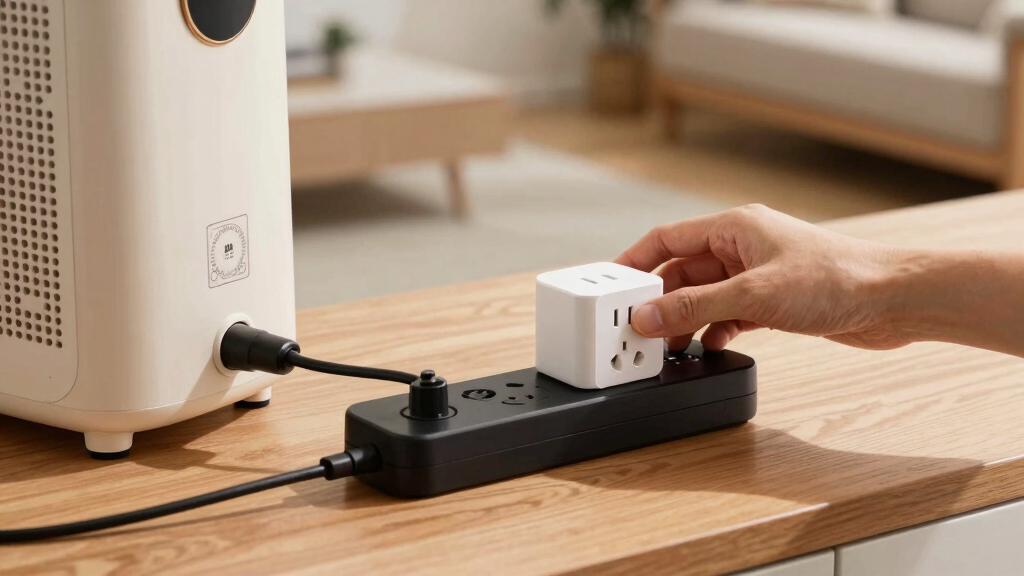
Most smart plugs can handle space heaters only if rated for the device’s wattage, typically up to 15A or 1800W. Using a smart plug beyond its capacity risks overheating or fire. Always check ratings and safety features first.
Imagine a chilly winter evening. You want to warm up your living room with a space heater, but manually turning it off or on feels outdated. That’s where smart plugs come in. But before you plug that heater into your shiny new device, you need to know if your smart plug can really handle the heat.
Many homeowners assume all smart plugs are created equal—yet, when it comes to high-power appliances, size and safety matter. If you pick the wrong one, you risk overheating, damage, or even a fire. In this guide, you’ll learn exactly what wattage limits mean for safe setup and how to choose the right smart plug for your space heater.
Always check your space heater’s wattage before plugging it into a smart device.
Most smart plugs handle up to 15A (1800W), but verify ratings to avoid hazards.
Opt for smart plugs with overload protection and safety certifications for high-power appliances.
Using a smart plug beyond its rated capacity risks overheating and fire.
High-capacity smart switches designed for heavy appliances are safer choices for space heaters.
Can a Smart Plug Handle a Space Heater?
Most smart plugs can handle space heaters only when their amperage and wattage ratings match the heater’s draw. The common safe target is a 15A plug rated for 1800W at 120V, with overload protection and certification.
TL;DR: A 1500W space heater can push a smart plug near its limit. Check the heater label, check the plug rating, and never exceed capacity.
Typical target for most residential space heaters on a 120V circuit.
Compact heaters often sit here, while larger units can approach the ceiling.
Convenience is only smart when the load stays inside the electrical rating.
Match the heater to the plug, not the other way around.
Space heaters are high-power appliances. Smart features like scheduling, voice control, and energy monitoring do not increase the electrical capacity of the device.
Read the heater label
Most portable heaters list wattage directly on the device. Common levels are 750W, 1200W, and 1500W.
Find the plug rating
Look for maximum amps and watts on the smart plug body, packaging, or manufacturer specifications.
Choose safety margin
For a 1500W heater, a 15A or 1800W smart plug is the practical minimum. Higher-rated switches offer more margin.
What to look for before you plug in.
A high wattage rating matters, but safety features matter too. Certifications and automatic protection reduce risk when controlling high-load appliances.
| Feature | Why It Matters | Best Choice | Risk Signal |
|---|---|---|---|
| Maximum wattage | Determines whether the plug can safely carry the heater’s load. | ✓ 15A / 1800W or higher | ✗ 10A / 1200W for a 1500W heater |
| Safety certification | Shows the device has passed recognized electrical safety testing. | ✓ UL or equivalent certification | ✗ No listed safety standard |
| Overload protection | Can cut power during abnormal heat, surge, or overload conditions. | ✓ Thermal cutoff and auto shutoff | ~ Remote control only |
| Appliance rating | Some smart plugs are designed for lights and small electronics, not heaters. | ✓ High-power appliance model | ✗ Mini plug with unclear rating |
Load Spectrum: where space heaters sit
The five-check chain for winter automation.
Think of every connection as part of one electrical path. The weakest rating in the chain becomes the real limit.
Heater label
Confirm the wattage printed on the appliance.
Plug rating
Verify amps and watts before connecting.
Safety features
Prioritize overload, thermal, and surge protection.
Outlet setup
Avoid daisy-chaining or shared high-load outlets.
Smart control
Use schedules only after the electrical match is safe.
The safety answers homeowners usually need first.
A smart plug can be useful for a heater, but only when the rating, appliance draw, and safety design line up.
Can I use one?
Only if it is rated for the heater’s wattage and amperage. A 1500W heater should not be placed on a 1200W plug.
What wattage?
Look for at least 15A or 1800W at 120V for most portable space heaters, plus safety certification.
Better option?
For large or industrial-style heaters, use a dedicated high-current smart switch or outlet designed for heavy appliances.
Bottom line: smart warmth starts with electrical limits.
Using a smart plug with a space heater is not just a convenience choice. Match the heater’s power draw to the plug’s rated capacity, choose overload protection, avoid outlet chaining, and step up to a dedicated high-load smart switch when the heater approaches the limit.
What’s the real wattage limit for smart plugs and why it matters
Most smart plugs are rated for a maximum of 10A or 15A, which translates to about 1200W to 1800W at standard household voltage (120V). Think of it like a weight limit on a bridge—exceed it, and you risk collapse. For example, a typical space heater draws around 1500W, pushing many smart plugs to their edge.
Understanding these limits matters because exceeding them doesn’t just cause a device to stop working; it significantly increases the risk of overheating, electrical failure, and potentially a fire. When a smart plug is pushed beyond its rated capacity, its internal components can overheat, leading to insulation breakdown or damage to the device itself. This can compromise safety and cause costly repairs or hazards. The tradeoff is between convenience and safety—using a device at or just below its rated capacity minimizes risks but requires careful attention to the power draw of your appliances. Always respecting these limits is essential for safe, long-term use of smart plugs with high-wattage devices.
As an affiliate, we earn on qualifying purchases.
How to know if your smart plug can handle your space heater
Here’s a quick step-by-step:
- Check your space heater’s wattage label—most list power draw between 750W and 1500W.
- Look at your smart plug’s maximum wattage and amperage ratings—these are usually printed on the device or in its specs.
- Compare the two—your smart plug should be rated for at least the wattage your heater uses. For example, if your heater draws 1500W, look for a smart plug rated for 15A or 1800W.
- If in doubt, choose a smart plug designed for high-power appliances or use a dedicated smart switch for heavy loads.
- Always follow safety guidelines—avoid daisy-chaining or overloading outlets.
For instance, if your heater is a compact model pulling 1200W, a smart plug rated for 15A is safe. But if it’s an industrial-style heater at 1800W, you’ll need something more robust. Choosing the right smart plug is about matching the device’s power needs with the device’s capacity, ensuring you don’t compromise safety for convenience. Proper matching reduces the risk of electrical faults and prolongs the lifespan of your smart home devices.
high wattage smart plug for space heater
As an affiliate, we earn on qualifying purchases.
As an affiliate, we earn on qualifying purchases.
Smart plugs rated for high wattage: what should you look for?
| Feature | Details |
|---|---|
| Maximum wattage | Look for devices rated for at least 15A (1800W) at 120V. Devices with higher ratings, such as 20A (2400W), provide additional safety margin for larger heaters or multiple appliances. |
| Safety certifications | Check for UL or equivalent safety standards—these certifications ensure the device has undergone rigorous testing for safety, reducing the risk of electrical faults or fires. |
| Overload protection | Features like thermal cutoffs, surge protection, or automatic shutoff are critical. They act as safeguards, preventing overheating by disconnecting power when abnormal conditions are detected, thereby preventing potential fires or damage. |
| Smart features | Schedules, energy monitoring, voice control—make sure these features do not compromise safety. For example, a smart plug with overload detection is more reliable for high-power devices. |
Recent models now include safety features like overload detection, thermal protection, and surge suppression. These enhancements are not just convenience features—they are crucial for safe operation when managing high-power appliances. They help prevent dangerous situations caused by overloads or component failures, giving you peace of mind and better control over your energy use.
For example, a smart plug with a built-in overload sensor will cut power if it detects excessive heat, reducing fire risk and protecting your device and home.
As an affiliate, we earn on qualifying purchases.
Frequently Asked Questions
Can I plug my space heater into a standard smart plug?
Only if the smart plug is rated for the heater’s wattage and amperage. Most standard smart plugs handle up to 15A (1800W), so check this before plugging in a heater drawing close to that limit.
What wattage should I look for in a smart plug for my space heater?
Look for a smart plug rated for at least 15A or 1800W. Many newer models are designed for high-power appliances and include safety features that make them safer for space heaters.
Are there smart plugs specifically designed for high-power appliances?
Yes, some smart plugs are rated for higher currents, such as 20A, and include safety features like overload protection. These are better suited for controlling space heaters and other large appliances.
Is it safe to control a space heater with a smart plug?
Only if the smart plug’s ratings match the heater’s power draw, and safety features are present. Always follow the manufacturer’s guidelines to prevent hazards.
What are the risks of using an undersized smart plug with a space heater?
Overheating, electrical failure, or fires. Undersized smart plugs aren’t built for high wattage and can overheat if pushed beyond their limits.
smart plug with overload protection
As an affiliate, we earn on qualifying purchases.
As an affiliate, we earn on qualifying purchases.
Conclusion
Using a smart plug with your space heater isn’t just about convenience—safety comes first. Always match the device’s power needs with the smart plug’s rated capacity. When in doubt, choose a device specifically designed for high wattage, and never ignore safety features.
Imagine controlling your warmth from your phone, knowing the device can handle the load safely. That’s the smart way to stay cozy—and safe.
Halloween Picks
halloween
As an affiliate, we earn on qualifying purchases.