
TL;DR

Get home appliances delivered free with Prime
- Fast, free delivery on millions of items
- Prime Video, Amazon Music and more included
- Member-only deals all year
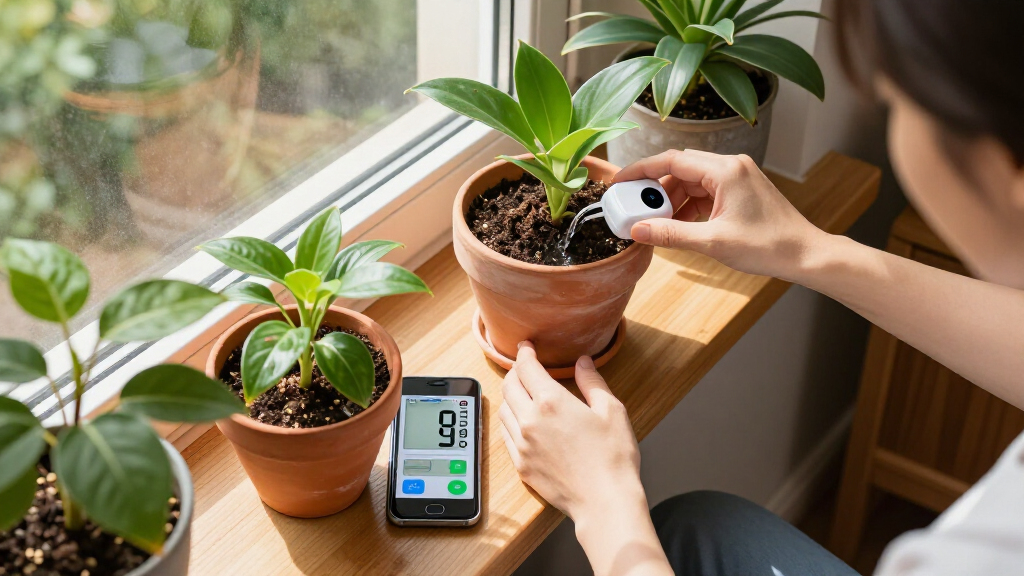
A Matter Alpha report describes using smart-home climate sensors and an automated humidifier to monitor and adjust indoor conditions for houseplants. The report says soil-moisture support is only beginning to emerge in Matter products, while plant-specific sunlight assessment still requires human judgment.
Matter-compatible climate sensors and a connected humidifier can help houseplant owners monitor indoor humidity and respond when it falls, according to a practical report from Matter Alpha. The report also cautions that smart-home devices do not yet solve every plant-care problem: soil-moisture options are just emerging, and judging whether a plant gets suitable sunlight still largely falls to the owner.
The report’s author says climate sensors have made it possible to track temperature and humidity around the home, including in rooms where plants are kept. That information can help someone decide whether a room is a good fit for a plant before buying it, or whether conditions need to change. The author names IKEA’s TIMMERFLOTTE as a personal favorite, while stressing that owners do not need a sensor in every room. A single device placed where a particular plant lives—or in a greenhouse—may provide useful readings.
When indoor humidity is too low, owners can turn on a humidifier manually and watch the sensor, or use alerts to know when a target level has been reached. The report describes a smart evaporative humidifier, such as SwitchBot’s, as a way to automate that response: it can start when needed and stop after conditions reach a chosen level. The author says the device still requires routine attention, including refilling its tank every few days or about once a week and cleaning it periodically.
Humidity is only one part of care. The report recommends pots with good drainage, since water can collect at the bottom even when the surface soil appears dry, and describes soil-moisture sensors as a way to check when watering is needed. It says Matter support for soil-moisture measurement was added in Matter 1.5, with the first products announced at IFA 2026. For now, the author points to bridging a Zigbee-based ThirdReality watering kit or building a DIY Matter sensor as alternatives.
Where Smart Plant Care Helps
The practical value is in making a plant’s indoor environment more visible and easier to manage. A humidity reading can alert an owner to conditions that may be unsuitable, while automation can reduce the need to repeatedly check a humidifier. That can be useful for people caring for plants with particular humidity needs, though the report does not provide controlled tests or evidence that these devices improve plant health across species.
The limits matter just as much. A sensor reading is not a full diagnosis of a plant’s needs, and automated humidity control does not determine whether watering, drainage, temperature, or light is appropriate. The report’s advice is best understood as a set of monitoring and convenience tools, not a guarantee that a plant will thrive.
Matter-compatible climate sensors for indoor plants
As an affiliate, we earn on qualifying purchases.
As an affiliate, we earn on qualifying purchases.
Matter’s Emerging Plant Sensors
Matter is a smart-home connectivity standard that allows compatible products from different makers to work with supported home platforms. In the report, the author focuses on using climate sensors and a humidifier within that setup to monitor and adjust indoor humidity. The examples include IKEA’s TIMMERFLOTTE and SwitchBot’s evaporative humidifier, but the article presents them as examples rather than as the only compatible choices.
The report describes soil-moisture measurement as a newer part of the Matter ecosystem, citing Matter 1.5 and product announcements at IFA 2026. It does not list tested Matter-native soil sensors or provide performance comparisons. Light is a different challenge: according to the author, ordinary smart-home light sensors are not designed to distinguish reliably between direct sun and partial or indirect sunlight for plant-care decisions.
““I can see before purchasing a plant if the humidity in a room will not be an ideal fit.””
— Matter Alpha report author
As an affiliate, we earn on qualifying purchases.
Limits of Automated Plant Care
The report does not specify the tested devices’ accuracy, the humidity targets used, or which plants benefited from the setup. It also does not provide comparative evidence that automated humidity control keeps plants healthier than manual care. Product availability and compatibility can vary, and the source does not identify which announced soil-moisture products are shipping or how they perform.
It is also unclear when Matter-native soil sensors will become widely available. The report says products were announced at IFA 2026, but an announcement does not establish retail release, broad platform support, or real-world reliability. No specific future Matter feature for assessing plant-relevant sunlight is confirmed.
soil moisture sensor for indoor gardening
As an affiliate, we earn on qualifying purchases.
As an affiliate, we earn on qualifying purchases.
What Owners Can Track Now
For now, owners can use a compatible climate sensor to check conditions in the room where a plant sits, then decide whether a humidifier or a different location is appropriate. Those considering automation should check that their sensor, humidifier, and chosen smart-home platform work together, and should continue to refill and clean the humidifier as directed.
For watering, the report points to existing Zigbee-based equipment that can be bridged into a Matter setup or a DIY sensor, while newer Matter soil-moisture products develop. Owners will still need to check drainage and observe how much light reaches a plant. The report does not give a timeline for wider sensor availability or for smart-home tools that can assess plant-specific sunlight.
As an affiliate, we earn on qualifying purchases.
Key Questions
Can Matter devices control humidity for houseplants?
They can help monitor and adjust it. A climate sensor can report indoor humidity, and a compatible smart humidifier may be set to turn on and off automatically. The report does not say that this guarantees healthy growth for every plant.
Do I need a climate sensor in every room?
No. The report’s author says a sensor can be placed in the room where a particular plant is kept, or in a greenhouse, to track local conditions.
Can Matter tell me when to water a plant?
Soil-moisture sensing is an emerging option in the report, which cites Matter 1.5 and product announcements at IFA 2026. The author also mentions bridging a Zigbee watering kit or building a DIY sensor, but the report does not establish broad availability of Matter-native products.
Can a smart-home light sensor tell whether a plant gets enough sun?
The report says ordinary smart-home light sensors are not designed to distinguish plant-relevant conditions such as direct versus partial sunlight. Owners still need to assess the light and place plants according to their needs.
Source: rss
Cold & flu season Picks
humidifiers
As an affiliate, we earn on qualifying purchases.