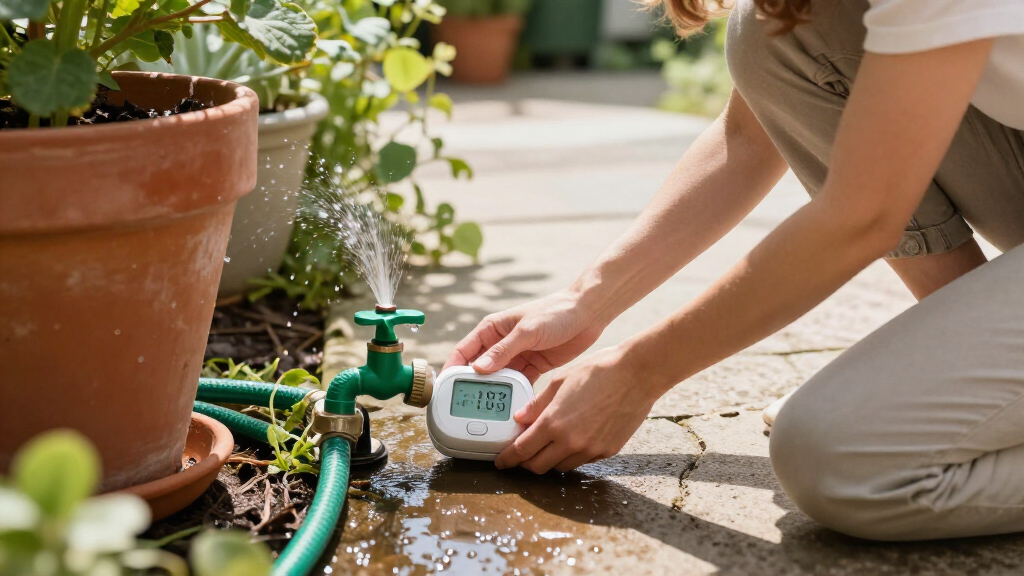

Programmable sprinkler timers range from simple hose-mounted controls to multi-zone irrigation systems. My best overall pick is the Orbit 6-Station Indoor/Outdoor Timer, Model 57896, for buyers who need to schedule several irrigation zones from one controller. The Orbit 62067 two-pack stands out for separately scheduling two hose locations, while the Rain Bird ARC8 WiFi controller suits larger systems where app-based control matters. The main tradeoff is between straightforward, low-complexity scheduling and broader zone coverage with more setup. Read on for the full breakdown, including which timer fits your watering layout and how much control you actually need.

Get home appliances delivered free with Prime
- Fast, free delivery on millions of items
- Prime Video, Amazon Music and more included
- Member-only deals all year
Complete the kit


Key Takeaways
- Zone count shapes the shortlist: The Orbit 57896 and Rain Bird ARC8 control built-in irrigation systems, while hose-end timers are aimed at individual taps or small groups of hose zones.
- Multiple outlets are not the same as multiple stations: Orbit‘s 3-outlet and 2-outlet timers, Melnor‘s four-zone timer, and the two-zone hose models suit different plumbing layouts and scheduling needs.
- The Rain Bird ARC8 is the standout for connected control: Its WiFi and eight-zone design target buyers managing a larger system, not someone who only needs to automate one hose.
- Mechanical simplicity has a tradeoff: The Orbit 62034 avoids digital scheduling complexity, while digital models offer more scheduling control for buyers with changing routines.
- Material and operating features affect fit: Brass-inlet hose models, rain-delay controls, and manual modes address different practical needs, so buyers should match these details to their water source and habits.
| Insoma Two-Zone Water Timer with Brass Inlet and Outlet |  | Best for Two-Zone Hose Setups | Zones: 2 independent zones | Inlet and outlet: Brass | Watering frequency: Every 1–23 hours or every 1–15 days | VIEW LATEST PRICE | See Our Full Breakdown |
| RAINPOINT Programmable Sprinkler Timer with Brass Inlet and Outlet |  | Best for Frequent, Fine-Grained Scheduling | Brand: RAINPOINT | Inlet and outlet material: Brass | Scheduled frequency: Every 1–12 hours or every 1–7 days | VIEW LATEST PRICE | See Our Full Breakdown |
| Intermatic R8806P101C Sprinkler Irrigation Timer |  | Best for Indexing Valve Systems | Model: R8806P101C | Voltage: 208/277 V | Amperage: 25 A/25 A | VIEW LATEST PRICE | See Our Full Breakdown |
| Orbit 62067 Programmable Digital Hose Watering Timer, 1 Outlet, 2-Pack |  | Best for Simple Two-Location Coverage | Model: 62067 | Pack count: 2 | Outlets per timer: 1 | VIEW LATEST PRICE | See Our Full Breakdown |
| Insoma Outdoor Garden Hose Water Timer with Rain Delay and Manual Modes |  | Best for Long Runs on a Single Outlet | Model: SGW05-TT-JU | Water inlet: Brass | Maximum water pressure: 116 psi | VIEW LATEST PRICE | See Our Full Breakdown |
| Orbit 6-Station Indoor/Outdoor Sprinkler Timer, Model 57896 |  | Best for In-Ground Systems | Stations: 6 | Installation: Indoor or outdoor | Programs: 3 | VIEW LATEST PRICE | See Our Full Breakdown |
| Insoma Programmable Garden Hose Timer, 1 Outlet |  | Best for Flexible Scheduling | Model: SGW05 | Outlets: 1 | Watering modes: Automatic, manual, and rain delay | VIEW LATEST PRICE | See Our Full Breakdown |
| Orbit Mechanical Water Timer, 62034 |  | Best Battery-Free Pick | Model: 62034 | Operation: Battery-free clockwork mechanism | Watering duration: 15–120 minutes | VIEW LATEST PRICE | See Our Full Breakdown |
| Orbit Programmable Digital Hose Watering Timer, Single Outlet, Model 62061 |  | Best for Simple Digital Scheduling | Model: 62061 | Outlet count: 1 | Power source: Battery | VIEW LATEST PRICE | See Our Full Breakdown |
| Orbit Programmable Digital 3-Outlet Hose Watering Timer |  | Best for Multiple Hose Connections | Model: 56082 | Outlets: 3 | Power: Battery-powered | VIEW LATEST PRICE | See Our Full Breakdown |
| RAINPOINT Programmable Sprinkler Timer, 1 Outlet |  | Best for Fine-Tuned Single-Zone Scheduling | Outlets: 1 | Watering duration: 1 minute to 3 hours 59 minutes | Watering frequency: Every 1 to 12 hours or every 1 to 7 days | VIEW LATEST PRICE | See Our Full Breakdown |
| Melnor AquaTimer 4-Zone Programmable Digital Water Timer |  | Best for Four Hose-Fed Zones | Zones: 4 | Scheduling: Hourly to weekly | Watering duration: 1 minute to 6 hours | VIEW LATEST PRICE | See Our Full Breakdown |
| Rain Bird ARC8 Indoor/Outdoor WiFi Smart Irrigation Controller, 8 Zones |  | Best Smart Controller for Large Irrigation Systems | Zones: 8 | Programs: 3 (A, B, C) | Start times: Up to 12 total | VIEW LATEST PRICE | See Our Full Breakdown |
| RAINPOINT Two-Zone Garden Hose Water Timer |  | Best Two-Zone Timer with Low-Battery Safeguard | Zones: 2 | Watering modes: Automatic, manual, and rain delay | Watering duration: 1 minute to 3 hours 59 minutes | VIEW LATEST PRICE | See Our Full Breakdown |
| Orbit Programmable Digital Hose Watering Timer, 2-Outlet |  | Best for Straightforward Two-Outlet Scheduling | Model: 58910Z | Outlets: 2 | Power: Battery-powered | VIEW LATEST PRICE | See Our Full Breakdown |
| programmable sprinkler timer | Rain delay | Model | Power |
|---|---|---|---|
| Insoma Two-Zone Water Timer wi | 1–15 days | — | — |
| RAINPOINT Programmable Sprinkl | 24, 48, or 72 hours | — | — |
| Intermatic R8806P101C Sprinkle | — | R8806P101C | — |
| Orbit 62067 Programmable Digit | 24, 48, or 72 hours | 62067 | Battery-powered |
| Insoma Outdoor Garden Hose Wat | 1–7 days | SGW05-TT-JU | 2 AA alkaline batteries, not included; listed life over 6 months |
| Orbit 6-Station Indoor/Outdoor | Supported | — | — |
| Insoma Programmable Garden Hos | 1 to 7 days | SGW05 | 2 AA alkaline batteries, not included |
| Orbit Mechanical Water Timer | — | 62034 | — |
| Orbit Programmable Digital Hos | 24, 48, or 72 hours | 62061 | — |
| Orbit Programmable Digital 3-O | 24, 48, or 72 hours | 56082 | Battery-powered |
| RAINPOINT Programmable Sprinkl | 24, 48, or 72 hours | — | 2 AA alkaline batteries, not included |
| Melnor AquaTimer 4-Zone Progra | Up to 7 days | — | 2 AA batteries, not included |
| Rain Bird ARC8 Indoor/Outdoor | — | — | 120 VAC input; internal transformer outputs 24 VAC |
| RAINPOINT Two-Zone Garden Hose | 24, 48, or 72 hours | TCRP205NH-Z | — |
| Orbit Programmable Digital Hos | 24, 48, or 72 hours | 58910Z | Battery-powered |
More Details on Our Top Picks
Insoma Two-Zone Water Timer with Brass Inlet and Outlet
For a hose-based setup that needs separate schedules for two areas, this Insoma offers more control than the single-outlet RAINPOINT Programmable Sprinkler Timer. Its two independent zones can run separately or at the same time, so you can assign different watering routines without adding another timer. The schedule spans intervals from every hour to every 15 days, and durations from 1 to 360 minutes, with manual watering and a 1–15-day rain delay for adjustments. Brass inlet and outlet fittings, a metal filter, and IPX5-rated construction suit outdoor use. The tradeoff is battery dependence: it needs AA alkaline batteries, and the listed 180-day life comes without usage details. Choose this over a single-zone timer for split hose circuits; skip it if you need a mains-powered irrigation controller.
Pros:- Two independently controlled zones can run separately or simultaneously
- Broad 1–360-minute duration range and schedules up to every 15 days
- Brass fittings, metal filter, and IPX5-rated weather resistance
- Rain delay, manual watering, and child lock add useful control
Cons:- Requires AA alkaline batteries
- The listed 180-day battery life has no accompanying usage conditions
Best for: Gardeners with two hose-fed watering areas that need independent schedules and occasional simultaneous operation
Not ideal for: Buyers seeking a wired controller for an in-ground multi-station irrigation system or who want battery-life expectations tied to a stated usage pattern
- Zones:2 independent zones
- Inlet and outlet:Brass
- Watering frequency:Every 1–23 hours or every 1–15 days
- Watering duration:1–360 minutes
- Rain delay:1–15 days
- Maximum water pressure:116 psi
- Battery:AA alkaline; listed life of 180 days
- Weather resistance:IPX5
- Dimensions:5.2 × 5.2 × 2.5 in
Our verdict“Choose this Insoma when two hose zones need flexible, independent schedules; choose a single-outlet timer for a simpler setup.”
RAINPOINT Programmable Sprinkler Timer with Brass Inlet and Outlet
The RAINPOINT is a strong fit when a single hose outlet needs frequent repeat cycles rather than the two-zone control offered by the Insoma Two-Zone Water Timer. It can schedule watering as often as every hour and set each scheduled run from 1 minute to 3 hours 59 minutes, giving gardeners useful precision for beds with changing needs. Manual watering extends to eight hours, while the 24-, 48-, or 72-hour rain delay provides shorter weather pauses than the Insoma’s multi-day delay. Brass fittings, a metal filter, and a UV-resistant weatherproof housing are practical outdoor details, and the LCD supports programming at the faucet. Its main compromise is the setup: the scheduling choices may take time to configure, and it controls just one outlet. I’d pick it for schedule flexibility, not for managing multiple zones from one timer.
Pros:- Hourly scheduling supports frequent watering cycles
- Scheduled runs can be set from 1 minute to 3 hours 59 minutes
- Brass inlet and outlet fittings with a metal filter
- Manual watering, three rain-delay choices, and UV-resistant housing
Cons:- Scheduling options may take time to configure
- Single-outlet design cannot independently control multiple zones
Best for: Gardeners with one hose-fed area who want frequent watering intervals and fine control over run duration
Not ideal for: Buyers managing multiple watering zones or those who prefer a minimal setup with fewer programming choices
- Brand:RAINPOINT
- Inlet and outlet material:Brass
- Scheduled frequency:Every 1–12 hours or every 1–7 days
- Scheduled duration:1 minute–3 hours 59 minutes
- Manual watering duration:1 minute–8 hours
- Rain delay:24, 48, or 72 hours
- Maximum water pressure:116 psi
- Display:LCD
- Dimensions:4.5 × 4.5 × 2.5 in
Our verdict“Pick the RAINPOINT for precise, frequent scheduling on one outlet, but choose the Insoma Two-Zone model when separate circuits matter more.”
Intermatic R8806P101C Sprinkler Irrigation Timer
This Intermatic serves a different kind of installation from the hose-mounted Orbit 62067: it is a mechanical irrigation timer intended for indexing valve systems, not a general-purpose faucet timer. Its 1–60 set points per 24 hours and 14-day skipper let an installer build frequent on/off cycles while periodically omitting watering days. A manual on/off/automatic switch makes it possible to pause operation without rewriting the schedule, and the NEMA 3R enclosure is designed for outdoor exposure. The tradeoff is a narrower fit than any of the hose timers here: it operates at 208/277 V, and rain-sensor compatibility requires a separately purchased sensor. Buyers who want an LCD-based timer with straightforward hose connections should choose the Orbit or RAINPOINT instead. This one belongs on a compatible, fixed irrigation system where its specialized scheduling makes sense.
Pros:- Supports up to 60 set points in a 24-hour period
- 14-day skipper option can omit scheduled watering days
- Manual on/off/automatic switch allows direct control
- NEMA 3R raintight housing and CSA listing
Cons:- Designed for indexing irrigation valve systems rather than general hose use
- Rain sensor is compatible but sold separately
- Requires a 208/277 V electrical supply
Best for: Property owners or installers with a compatible indexing irrigation valve system and a fixed 208/277 V supply
Not ideal for: Home gardeners seeking a battery-powered hose timer, a plug-and-play faucet attachment, or a unit for ordinary sprinkler valves
- Model:R8806P101C
- Voltage:208/277 V
- Amperage:25 A/25 A
- Switch type:DPST
- Set points:1–60 on every 24 hours
- Skipper:14-day option
- Housing:NEMA 3R raintight plastic
- Rain sensor:Compatible; sold separately
- Dimensions:3.75 × 5.5 × 9.375 in
Our verdict“Choose the Intermatic only for a compatible fixed indexing-valve system; for ordinary hose scheduling, the Orbit 62067 is the more suitable format.”
Orbit 62067 Programmable Digital Hose Watering Timer, 1 Outlet, 2-Pack
This Orbit bundle is the straightforward choice when you want to automate two separate hose faucets without programming two zones on one device. Each timer has one outlet and an LCD for setting start times, durations, and frequency; compared with the Insoma Two-Zone timer, the pair can cover distant faucets, but the schedules are managed on separate units. A 24-, 48-, or 72-hour rain delay and manual faucet use cover the basics, while program retention during battery changes avoids rebuilding a schedule after routine power maintenance. Tool-free installation also keeps setup simpler than the more schedule-heavy RAINPOINT timer. The tradeoff is limited detail in the supplied specifications: no watering-duration or frequency range is stated, and both units need batteries. Choose this pack for uncomplicated coverage at two taps, not for synchronized multi-zone control.
Pros:- Two one-outlet timers cover separate faucet locations
- LCD programming includes start times, durations, and frequency
- Program is retained when batteries are changed
- Rain delay and manual faucet use provide basic schedule flexibility
Cons:- Each unit requires batteries
- Supplied specifications do not state the available watering-duration or frequency ranges
- Two separate timers do not offer centralized control like a two-zone unit
Best for: Gardeners automating two separate faucets who want a basic LCD schedule at each location
Not ideal for: Buyers needing independently managed zones on one device, stated broad duration ranges, or a timer with no battery requirement
- Model:62067
- Pack count:2
- Outlets per timer:1
- Power:Battery-powered
- Display:LCD screen
- Rain delay:24, 48, or 72 hours
- Program retention:Retains program when changing batteries
- Installation:Tool-free
Our verdict“Choose this Orbit two-pack for simple schedules at two separate faucets; choose the Insoma Two-Zone timer for centralized control of two circuits.”
Insoma Outdoor Garden Hose Water Timer with Rain Delay and Manual Modes
For one hose-fed area that needs unusually long watering sessions, this Insoma allows durations up to 23 hours 59 minutes, far beyond the RAINPOINT timer’s scheduled-run limit of 3 hours 59 minutes. Its schedule can repeat from minute-based intervals through daily intervals up to seven days, while auto, manual, and rain-delay modes cover different watering needs. A large LCD and child lock help with programming, and the brass inlet, metal filter, and IP55-rated housing address outdoor use and sediment exposure. The tradeoff is that this is still a single-outlet timer, unlike the two-zone Insoma, and its two AA batteries are not included. The listed battery life is over six months, but the supplied details do not specify the usage conditions. Choose it for long runs on one circuit, not split-zone control.
Pros:- Watering duration extends to 23 hours 59 minutes
- Scheduling supports intervals from minutes through seven days
- Brass inlet and built-in metal filter
- Large LCD, child lock, and IP55-rated construction
Cons:- Two AA alkaline batteries are required and not included
- Single-outlet design does not provide the Insoma Two-Zone model’s separate schedules
Best for: Gardeners running a single hose-fed bed or planting area that needs long watering sessions and a clear display
Not ideal for: Buyers who need two independently scheduled zones, included batteries, or a timer specified for more than 116 psi
- Model:SGW05-TT-JU
- Water inlet:Brass
- Maximum water pressure:116 psi
- Watering frequency:1 minute–23 hours 59 minutes, or 1–7 days
- Watering duration:1 minute–23 hours 59 minutes
- Modes:Auto, manual, and rain delay
- Rain delay:1–7 days
- Display:LCD
- Power:2 AA alkaline batteries, not included; listed life over 6 months
Our verdict“Choose this Insoma for long watering runs on one outlet; select the RAINPOINT for shorter scheduled cycles or the two-zone Insoma for separate circuits.”
Orbit 6-Station Indoor/Outdoor Sprinkler Timer, Model 57896
For a wired irrigation setup, I rank the Orbit 57896 above hose-faucet timers because it controls up to six 24 VAC valve stations from an indoor or outdoor locking cabinet. Its three programs and four start times per program give different parts of a yard room for separate schedules, while runtime stacking helps manage overlapping demands. Rain delay and manual watering add useful control without requiring a smart-home connection. Compared with the Orbit 62061, this is a better fit for multiple in-ground zones, but it is not a quick faucet-mounted solution: installation requires sprinkler wiring, and a rain or freeze sensor is sold separately. Product information also lists conflicting station counts, so I would confirm the supported station total before buying.
Pros:- Supports indoor or outdoor installation in a locking cabinet
- Three programs with four start times per program
- Works with standard 24 VAC valves and 18-gauge sprinkler wire
- Rain delay, manual watering, and tool-less push wire terminals
Cons:- Rain and freeze sensor must be purchased separately
- Conflicting station-count information makes capacity worth confirming
- Wired installation is less straightforward than a hose-faucet timer
Best for: Homeowners with an existing wired irrigation system who need to schedule up to six valve-controlled zones.
Not ideal for: Renters or gardeners seeking a simple faucet timer; this controller needs compatible 24 VAC valves and sprinkler wiring.
- Stations:6
- Installation:Indoor or outdoor
- Programs:3
- Start times:4 per program
- Valve compatibility:24 VAC valves
- Wire compatibility:Standard 18-gauge sprinkler wire
- Rain delay:Supported
- Warranty:6 years, parts
Our verdict“Choose the Orbit 57896 for a multi-zone wired sprinkler system, not for simple hose-based watering.”
Insoma Programmable Garden Hose Timer, 1 Outlet
The Insoma SGW05 suits gardeners who want detailed scheduling at a single outdoor faucet. Its frequency and duration ranges both extend from 1 minute to 23 hours 59 minutes, so it accommodates short, frequent watering as well as much longer runs. Rain delay can pause the schedule for one to seven days and then resume automatically, a more flexible pause window than the Orbit 62061, which offers fixed 24-, 48-, or 72-hour delays. The large LCD and child lock make adjustments easier to manage, and included adapters help with faucet fit. The tradeoff is capacity: it has just one outlet, so separate connections need another timer. It also relies on two AA batteries that are not included.
Pros:- Adjustable watering frequency and duration from 1 minute to 23 hours 59 minutes
- Rain delay pauses watering for 1 to 7 days and resumes the schedule
- Large LCD and child lock help with setup and accidental changes
- Includes a reducing bushing, thread seal tape, and quick connector
Cons:- One outlet limits it to a single watering connection
- Two AA alkaline batteries are required and not included
- Plastic construction may be less appealing to buyers seeking a metal-bodied timer
Best for: Gardeners with one outdoor faucet who want adjustable schedules, long rain delays, and a clear display.
Not ideal for: Users who need to run multiple hose connections independently or prefer a timer that does not require replaceable batteries.
- Model:SGW05
- Outlets:1
- Watering modes:Automatic, manual, and rain delay
- Watering frequency:1 minute to 23 hours 59 minutes, or every 1 to 7 days
- Watering duration:1 minute to 23 hours 59 minutes
- Rain delay:1 to 7 days
- Power:2 AA alkaline batteries, not included
- Water resistance:IP55
- Water pressure range:7.25 to 116 psi
Our verdict“Pick the Insoma SGW05 when one faucet needs unusually flexible schedules and a multi-day rain pause.”
Orbit Mechanical Water Timer, 62034
The Orbit 62034 is the simplest option here for someone who wants a timed hose shutoff without programming a digital schedule. Its clockwork mechanism needs no batteries, and the oversized dial sets watering runs from 15 to 120 minutes. That makes it more direct than the programmable Orbit 62061, which can repeat scheduled watering but requires battery power and setup through an LCD. The difference is a real limit: the 62034 does not offer the listed automatic start-time and frequency programming found on digital timers, and each run tops out at two hours. Its manual bypass gives a way to draw water without relying on the timed cycle. I would choose it for straightforward, occasional watering—not for unattended recurring schedules or long irrigation sessions.
Pros:- Clockwork operation avoids batteries
- Dial sets watering durations from 15 to 120 minutes
- Oversized dial is designed for easy adjustment
- Manual bypass allows water use outside the timed cycle
Cons:- Maximum watering duration is 120 minutes
- Does not provide the programmable recurring schedules of digital models
- Manual dial operation offers less scheduling flexibility than the Orbit 62061
Best for: Gardeners who want a simple, battery-free timer for manually started watering sessions lasting up to two hours.
Not ideal for: Buyers who need recurring automated schedules, multiple start times, or watering runs longer than 120 minutes.
- Model:62034
- Operation:Battery-free clockwork mechanism
- Watering duration:15–120 minutes
- Controls:Oversized adjustable dial
- Manual bypass:Included
- Warranty:Six-year limited warranty for private use
Our verdict“Choose the Orbit 62034 for battery-free, manually set watering sessions rather than automated recurring schedules.”
Orbit Programmable Digital Hose Watering Timer, Single Outlet, Model 62061
I’d pick the Orbit 62061 when a single faucet needs recurring automatic watering without the added outlet capacity of a multi-hose timer. It programs start times, duration, and frequency, while the LCD and straightforward controls keep schedule entry more approachable than a wired controller such as the Orbit 57896. Its rain delay offers three clear pause options—24, 48, or 72 hours—rather than the Insoma SGW05’s adjustable one-to-seven-day window. That makes the Orbit easier to set in familiar increments, though less flexible for longer pauses. The main constraint is its single outlet; it cannot independently schedule several hose connections. Battery power also means it is not the choice for someone seeking a mechanical, battery-free timer like the Orbit 62034.
Pros:- Programs watering start times, duration, and frequency
- LCD screen and straightforward controls support schedule setup
- Rain delay offers 24-, 48-, or 72-hour options
- Water-resistant design and six-year limited warranty
Cons:- Single outlet limits it to one watering connection
- Battery-powered operation requires batteries
- Rain-delay choices are less adjustable than the Insoma SGW05’s 1-to-7-day range
Best for: Homeowners who want an LCD-based recurring schedule for one outdoor hose connection and a simple rain-delay control.
Not ideal for: Gardeners needing separate schedules for multiple outlets or a battery-free mechanical timer.
- Model:62061
- Outlet count:1
- Power source:Battery
- Display:LCD
- Programmable settings:Start times, duration, and frequency
- Rain delay:24, 48, or 72 hours
- Water resistance:Water-resistant
- Warranty:6-year limited warranty
Our verdict“Choose the Orbit 62061 for familiar digital scheduling at one faucet, but look elsewhere if you need multiple outlets.”
Orbit Programmable Digital 3-Outlet Hose Watering Timer
For buyers who want one faucet to serve several watering lines, the Orbit 56082 earns its place with three outlets and programmable start times, durations, and frequency. That capacity is its clearest advantage over the single-outlet Orbit 62061: it can connect more hose-based watering paths without adding another timer at the faucet. The LCD helps with schedule setup, and its 24-, 48-, or 72-hour rain delay gives a quick way to pause automated watering. It remains a battery-powered hose timer, not a wired multi-zone controller like the Orbit 57896, so buyers should not mistake three faucet outlets for six valve stations. The supplied information does not describe independent programming details for each outlet, so I would verify how its schedules apply before planning distinct watering routines.
Pros:- Three outlets support multiple hose connections from one faucet
- Programmable start times, durations, and watering frequency
- LCD screen simplifies schedule setup
- Rain delay offers 24-, 48-, or 72-hour pauses
Cons:- Requires batteries
- Rain delay is limited to three preset durations
- Provided product details do not specify whether each outlet can use an independent schedule
Best for: Gardeners who need one outdoor faucet to supply up to three hose connections through a digital timer.
Not ideal for: Users who need wired irrigation-zone control, battery-free operation, or clearly specified independent schedules for each outlet.
- Model:56082
- Outlets:3
- Power:Battery-powered
- Display:LCD screen
- Programmable settings:Start times, durations, and frequency
- Rain delay:24, 48, or 72 hours
- Water resistance:Water-resistant
- Warranty:6 years
Our verdict“Choose the Orbit 56082 when three hose connections matter more than the simpler one-outlet format of the Orbit 62061.”
RAINPOINT Programmable Sprinkler Timer, 1 Outlet
This single-outlet RAINPOINT suits gardeners who want to set a precise routine without moving up to a multi-zone controller. Its schedule can run as often as every hour or as rarely as once every seven days, while watering durations extend to 3 hours 59 minutes—more flexibility than the simpler two-outlet Orbit 58910Z specifies. A 24-, 48-, or 72-hour rain delay pauses and then resumes the schedule, and manual watering can run independently, so a quick hose-down need not disrupt the next programmed cycle. The tradeoff is capacity: unlike the RAINPOINT Two-Zone Garden Hose Water Timer, it can manage only one watering area. Its small 0.75-inch screen may also be less comfortable to read than a larger display. I’d pick it for one hose-fed bed or lawn section, not a yard that needs separate schedules.
Pros:- Schedules range from hourly to weekly, with watering durations up to 3 hours 59 minutes
- Rain delay pauses watering for 24, 48, or 72 hours and resumes the schedule afterward
- Manual watering does not interrupt the programmed schedule
- LCD shows watering details and battery power
Cons:- Controls only one outlet, unlike the RAINPOINT two-zone model
- Requires two AA alkaline batteries, which are not included
- The 0.75-inch screen is small
Best for: Gardeners automating one hose-fed lawn section or bed who want frequent scheduling options and independent manual watering.
Not ideal for: Buyers who need separate schedules for multiple areas; its single outlet cannot control additional zones.
- Outlets:1
- Watering duration:1 minute to 3 hours 59 minutes
- Watering frequency:Every 1 to 12 hours or every 1 to 7 days
- Manual watering:1 minute to 8 hours
- Rain delay:24, 48, or 72 hours
- Power:2 AA alkaline batteries, not included
- Dimensions:1.6 x 4 x 4 inches
- Warranty:1 year
Our verdict“Choose this RAINPOINT for a single watering area that needs a more adjustable schedule than the Orbit 58910Z, but skip it if you need multiple zones.”
Melnor AquaTimer 4-Zone Programmable Digital Water Timer
The Melnor AquaTimer earns its place by putting four independently controlled zones on a hose timer, a step up in coverage from the two-zone RAINPOINT TCRP205NH-Z. Hourly-to-weekly schedules and run times from 1 minute to 6 hours let you tailor watering across areas with different needs, while manual watering and a rain delay of up to seven days add flexibility when conditions change. That capacity is useful for a garden split among beds, containers, and lawn sections, but it also means a larger, more involved setup than a single-outlet timer such as the RAINPOINT B0917HZ6FN. The listed feature set does not specify a display size or a low-battery valve safeguard, so buyers focused on those details may prefer a simpler model with those functions stated. I’d choose Melnor for zone count and its 7-year limited warranty, not compactness.
Pros:- Controls four independent watering zones
- Hourly-to-weekly scheduling and run times up to 6 hours
- Rain delay can pause watering for up to seven days
- Backed by a 7-year limited warranty
Cons:- Requires two AA batteries, which are not included
- Larger and more involved than the single-outlet RAINPOINT B0917HZ6FN
- The supplied product details do not specify display size or a low-battery valve safeguard
Best for: Gardeners with up to four hose-fed areas that need independent schedules, such as separate beds, containers, and lawn sections.
Not ideal for: People watering only one area or seeking a compact, simple timer; four-zone control adds capacity they may not use.
- Zones:4
- Scheduling:Hourly to weekly
- Watering duration:1 minute to 6 hours
- Rain delay:Up to 7 days
- Manual watering:Yes
- Power:2 AA batteries, not included
- Dimensions:2.48 × 8.26 × 5.62 inches (D × W × H)
- Warranty:7-year limited
Our verdict“Choose the Melnor when four independently scheduled hose zones matter more than a compact, single-outlet setup.”
Rain Bird ARC8 Indoor/Outdoor WiFi Smart Irrigation Controller, 8 Zones
The Rain Bird ARC8 is the clear choice here for a built-in sprinkler system with many circuits: it controls eight zones, compared with four on the Melnor AquaTimer, and adds app-based remote scheduling over 2.4 GHz WiFi. Its three programs and up to 12 start times give a more layered schedule than hose timers are designed to provide. Weather-based adjustments can skip or modify watering, and Alexa and Google Assistant compatibility adds hands-free control. That capability comes with a different installation commitment: this is a powered indoor/outdoor controller, not a battery-operated faucet timer like the Orbit 58910Z. A compatible 2.4 GHz network is required, and the rain sensor is sold separately. I’d favor it for an established multi-zone sprinkler system; for a small garden using a hose, its connectivity and zone capacity are more than needed.
Pros:- Controls eight zones with three programs and up to 12 total start times
- Remote scheduling and control through the Rain Bird app
- Weather-based adjustments can skip or modify watering
- Sealed case supports indoor or outdoor installation
Cons:- Requires a 2.4 GHz WiFi network
- Rain sensor is sold separately
- More involved than battery-powered hose timers such as the Orbit 58910Z
Best for: Homeowners with an installed eight-zone sprinkler system who want app-based scheduling, weather adjustments, and voice-assistant control.
Not ideal for: Gardeners seeking a simple battery-powered hose timer or anyone without a compatible 2.4 GHz WiFi network.
- Zones:8
- Programs:3 (A, B, C)
- Start times:Up to 12 total
- Run time:1 minute to 6 hours
- Watering schedules:Days of week, odd/even days, or cycles every 1–14 days
- Connectivity:2.4 GHz WiFi (802.11b/g/n)
- Power:120 VAC input; internal transformer outputs 24 VAC
- Installation:Indoor or outdoor
Our verdict“Choose the ARC8 for an installed multi-zone system that benefits from remote and weather-aware control, not for a basic hose setup.”
RAINPOINT Two-Zone Garden Hose Water Timer
This RAINPOINT brings two independent schedules to a faucet-mounted timer, making it a practical middle ground between the single-outlet RAINPOINT B0917HZ6FN and the four-zone Melnor AquaTimer. Each zone can run for up to 3 hours 59 minutes on intervals from hourly to weekly, so a thirsty bed and a slower-growing area need not share one routine. Its 2.5-inch LED is larger than the small screen on the single-zone RAINPOINT, and the low-battery warning and automatic valve closure address a specific concern for unattended watering. It still depends on a 3/4-inch connection; rusty faucets or pipes may make the fit loose. The schedule range is also shorter than the Melnor’s maximum six-hour run time. I’d choose it for two distinct garden areas, especially when battery status matters.
Pros:- Controls two zones with separate schedules
- Supports hourly-to-weekly intervals and run times up to 3 hours 59 minutes
- Low-battery warning and automatic valve closure
- 2.5-inch LED display
Cons:- Requires a 3/4-inch connection
- Rusty faucets or pipes may cause a loose connection
- Maximum watering duration is shorter than the Melnor AquaTimer’s six-hour limit
Best for: Gardeners with two hose-fed areas that need separate schedules and want a visible low-battery warning with automatic valve closure.
Not ideal for: Buyers with rusty or incompatible faucet fittings, or those who need more than two zones or watering runs longer than 3 hours 59 minutes.
- Zones:2
- Watering modes:Automatic, manual, and rain delay
- Watering duration:1 minute to 3 hours 59 minutes
- Watering frequency:Every 1–12 hours or every 1–7 days
- Rain delay:24, 48, or 72 hours
- Display:2.5-inch LED
- Connection size:3/4 inch
- Model:TCRP205NH-Z
Our verdict“Choose this RAINPOINT over a single-outlet timer when you need two schedules and value its battery warning and valve closure.”
Orbit Programmable Digital Hose Watering Timer, 2-Outlet
The Orbit 58910Z is a straightforward pick for buyers who want two hose outlets and an LCD rather than the added schedule detail or safeguards found on some alternatives. It can automate watering from an outdoor faucet, pause for 24, 48, or 72 hours after rain, and is designed to resist outdoor exposure. Compared with the RAINPOINT Two-Zone Garden Hose Timer, its listed information is less specific: no watering-duration range, interval range, or separate-schedule details are provided. That makes the Orbit harder to match to a precise watering routine on paper, while the RAINPOINT also lists a low-battery warning and automatic valve closure. The Orbit’s 6-year warranty is a notable counterpoint, but battery power means ongoing battery replacement. I’d consider it for basic two-outlet automation, not for shoppers who need clearly defined programming limits.
Pros:- Provides two outlets for hose-based watering
- LCD screen and programmable digital controls
- Rain delay offers 24-, 48-, or 72-hour pauses
- Water-resistant design and a 6-year warranty
Cons:- Requires batteries
- The listed product details do not specify watering durations or schedule intervals
- Does not list the low-battery warning and automatic valve closure provided by the RAINPOINT two-zone timer
Best for: Homeowners who want a simple, battery-powered timer with two outlets, an LCD, and a stated six-year warranty.
Not ideal for: Buyers who need clearly specified run times, watering intervals, or a low-battery valve safeguard; those details are not listed here.
- Model:58910Z
- Outlets:2
- Power:Battery-powered
- Display:LCD
- Rain delay:24, 48, or 72 hours
- Water resistance:Water-resistant
- Warranty:6 years
Our verdict“Choose the Orbit for basic two-outlet automation and its stated warranty, but favor the RAINPOINT two-zone model when precise schedule limits matter.”

How We Picked
I compared these 15 programmable sprinkler timers by the job they are designed to do: automate a single hose, manage several hose outlets, or run an installed irrigation system. I weighed zone and outlet capacity, scheduling and manual-control options, indoor or outdoor suitability where specified, connection design, and the likely setup burden. I also considered whether a timer’s added complexity brings useful control for its intended buyer, rather than treating more features as an automatic advantage.
The ranking prioritizes useful control for the intended layout, then ease of choosing and operating the timer, versatility, and practical construction details. That puts the Orbit 6-Station model first for broad household irrigation scheduling, while the WiFi-enabled Rain Bird ARC8 ranks as the premium fit for larger connected systems. Hose-end models remain better matches for simpler watering jobs; their order reflects the differences in outlet count, included quantity, and named features, not a claim that every buyer needs a larger controller.
Factors to Consider When Choosing Programmable Sprinkler Timers
Before choosing a timer, I would map the watering setup rather than start with a feature list. A hose bib, a manifold serving several beds, and an installed sprinkler system can all use timed watering, but they need different kinds of controller. These factors help prevent buying a timer with too few outputs, unnecessary complexity, or a connection style that does not match the existing setup.
Match the Timer to the Watering Layout
Start by tracing where water needs to go: one hose, several hoses from one tap, or separate valves in a built-in irrigation system. A hose-end timer attaches at a faucet and is suited to container plants, beds, or a small lawn watered through a hose. A multi-station controller is designed to operate irrigation zones connected to valves, which is a different installation and may require compatible wiring. Do not equate outlet count with station count; outlets split hose connections, while stations generally refer to separately controlled irrigation zones. Count the independently scheduled watering areas before choosing, and leave room for a future zone only if expansion is likely.
Choose Scheduling Complexity You Will Actually Use
More scheduling flexibility can help when different areas need different watering times, but it can also make setup less intuitive. A simple routine may need only a start time and run duration, while varied beds or changing seasonal needs can justify more control. Check whether the timer supports the schedule pattern you want instead of assuming that “programmable” means every model offers the same options. Manual watering and rain-delay controls can be especially useful when you need to water outside the routine or pause it after rainfall. A common mistake is paying for advanced controls before deciding who will program and maintain them.
Think Through Power, Connectivity, and Placement
Timers at an outdoor faucet face weather, splashes, and regular handling, while indoor controllers may sit near the irrigation wiring and power source. Confirm the product’s stated placement and power requirements before choosing an installation spot; do not assume every timer can be mounted outdoors or operates the same way. WiFi can make remote schedule changes easier, but its value depends on a reliable connection where the controller is installed and a willingness to use an app. A non-connected timer may be the more practical choice if the schedule rarely changes. For any model, check how easy it will be to reach the controls when batteries, settings, or seasonal schedules need attention.
Treat Water Flow and Connections as Part of Compatibility
The timer must fit the faucet, hoses, and sprinkler or drip equipment already in place. Compare inlet and outlet connection details with your setup, and check whether the timer’s flow capacity is appropriate for the watering devices you plan to run. Brass connection parts can appeal to buyers prioritizing a sturdier-feeling connection, but material alone does not confirm compatibility or prevent leaks. Avoid adding several outlets just because they appear convenient: running multiple watering lines at once can affect available flow, while independently timed zones may need separate scheduling. If the connection or flow details are unclear, verify them before installation rather than relying on a product name.
Decide Whether to Prioritize Simplicity or Expansion
A mechanical timer can suit a buyer who wants fewer digital settings, but it may not provide the same scheduling flexibility as a programmable model. At the other end, a connected multi-zone controller can handle more elaborate systems but brings additional setup and maintenance expectations. Think about how often the garden layout or watering routine changes, and whether new zones are likely. If the current need is one hose, a large controller adds little value; if several installed zones need separate schedules, a single-outlet hose timer is likely to feel limiting. Choose for the system you have, with modest headroom only when expansion is realistic.
Frequently Asked Questions
Can I use a hose-end timer with an installed sprinkler system?
Usually, a hose-end timer is intended to control water from a faucet through a hose, not to operate the electric valves in a built-in irrigation system. An installed system generally needs a compatible irrigation controller connected to its zone valves, such as a multi-station unit. Check how your system is plumbed and whether it uses valve wiring before buying. If sprinklers connect directly to a hose, a hose timer may work for that setup. The deciding factor is the connection and control method, not simply whether the product is called a sprinkler timer.
Should I choose a two-outlet timer or a two-zone timer?
Look at what each outlet or zone controls and how independently it can be scheduled. A two-outlet hose timer is useful when you want to connect separate hose lines at a faucet; a two-zone timer may be intended to operate two watering areas on separate schedules. Product terminology varies, so confirm whether both outputs can run independently and whether they run sequentially or at the same time. Also consider whether your faucet can supply enough flow for the connected devices. Matching the timer to the plumbing matters more than the label alone.
Is WiFi worth choosing for an irrigation controller?
WiFi can be worthwhile if you expect to change schedules remotely or want to manage several installed zones without accessing the controller directly. It is less useful when the routine stays fixed and the controller is easy to reach. Check that the installation location has a suitable WiFi signal and that you are comfortable managing schedules through an app. Connected features do not replace checking valve compatibility or choosing enough zones. For a single hose, a simpler timer may provide the needed automation without adding app setup.
Do I need a rain-delay feature if my timer is programmable?
Programmable schedules and rain delay solve different problems: a schedule runs watering at set times, while a delay can pause that routine after wet weather. A rain-delay control is useful if you expect to suspend watering manually rather than reprogram the full schedule. It does not necessarily mean the timer detects rain automatically; check the product details before assuming it has a sensor or weather-based adjustment. If rainfall is irregular, a pause feature may reduce unnecessary watering and save repeated schedule edits. If you rarely need to change the routine, it may matter less.
How many zones should I buy for a yard I may expand?
Count the areas that need separate schedules now, then consider whether planned landscaping will add another independently watered area. Separate zones are useful when plants or sprinklers need different run times, but adding capacity without a real expansion plan can mean extra setup without a practical benefit. For hose-based watering, distinguish outlets from irrigation stations, since they may not provide the same control. For a built-in system, check how many valves are installed and whether the controller supports the wiring arrangement. A small amount of realistic headroom is more useful than choosing the largest controller by default.
Conclusion
For most buyers with several installed sprinkler zones, my best overall choice is the Orbit 6-Station Indoor/Outdoor Timer, Model 57896, because it targets multi-zone scheduling without requiring a WiFi-focused setup. The best premium fit is the Rain Bird ARC8 for buyers who want connected control across a larger, eight-zone system. For hose watering, the best value-style pick is the Orbit 62067 two-pack when two separate watering points matter, while the best choice for beginners is a single-outlet digital hose timer with only the scheduling controls they need. For specific needs, consider a brass-inlet hose model for connection-material preference, a rain-delay model for easy schedule pauses, or a mechanical timer when avoiding digital programming is the priority. Choose by matching the timer to your water source and number of independently controlled areas—not by choosing the model with the most features.
Fall yard work Picks
leaf blowers
As an affiliate, we earn on qualifying purchases.