
TL;DR
Ideal Home’s air purifier topic page brings together product testing and reviews with advice on allergies, odors, placement and appliance choices. The supplied page material does not announce a single new product or study, so specific health benefits and performance claims should be treated as questions for testing and expert guidance, not blanket conclusions.
Ideal Home’s air purifier topic page brings together product tests, buying advice and practical guidance on issues including pollen, household odors and where to place a purifier. Based on the supplied page material, it does not identify one newly announced product or research finding; its news value is a round-up of consumer questions as readers compare devices and claims about cleaner indoor air.

Get home appliances delivered free with Prime
- Fast, free delivery on millions of items
- Prime Video, Amazon Music and more included
- Member-only deals all year
Ideal Home’s listed first-person tests cover products from brands including Shark, Blueair, Levoit and Dyson, according to the review summaries on its topic page. Those summaries say staff tested devices in their homes, with examples involving small spaces, family households, cooking smells, dust, pet dander and fumes from wood-burning stoves. These are the reviewers’ reported experiences, not independent clinical findings or proof that every model will perform similarly in other homes.
Ideal Home says its testing process aims to translate technical specifications into consumer-facing comparisons. However, the supplied topic-page material does not include the full test protocol, measured results or a complete list of models and scores. Readers therefore cannot use the page alone to make direct, like-for-like performance comparisons.
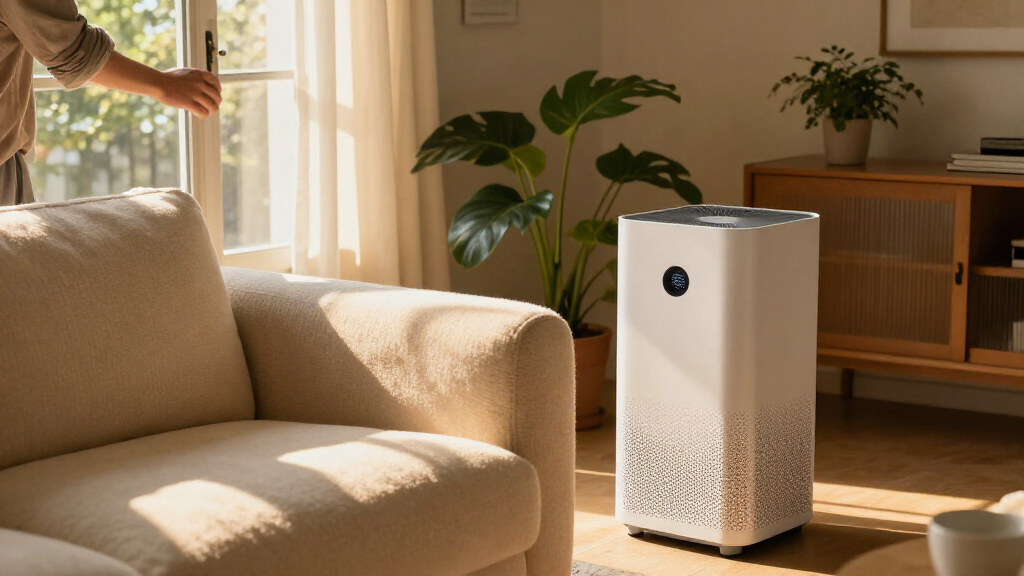
Other entries listed on the page discuss whether purifiers can help with hay fever or odors, how to position a unit, and whether to choose a purifier instead of a fan, heater, air conditioner, dehumidifier or humidifier. The summaries point to product features and appropriate use as relevant factors, but do not provide a universal answer for every home or establish that a purifier can replace ventilation or other equipment.
What Buyers Need to Compare
Ideal Home’s reviews and advice highlight that buying an air purifier involves more than choosing a brand or relying on a broad promise of cleaner air. Room size, intended use, product features and placement can affect whether a device suits a particular household. Its topic-page entries on odors, pollen and smoke point to the importance of matching a model’s capabilities to the problem a buyer wants to address.
The coverage matters because, as Ideal Home’s buying advice recognizes, technical specifications can be difficult for consumers to compare and household conditions vary. A review based on one home may help readers identify questions to ask, but it does not establish expected results for another room, building or person. Ideal Home’s hay-fever coverage discusses possible relevance to symptoms; the supplied material does not provide medical evidence or guarantee relief.
Readers weighing a multifunction appliance against separate devices also face a practical trade-off. Ideal Home raises that question in its listed coverage, but the supplied material does not establish that a combination product can meet every need as effectively as dedicated equipment. Buyers would need to check price, maintenance, noise and performance against detailed product information and testing.
Products Worth Considering

Metabo HPT Brad Nailer, 18 Gauge Cordless, 18V Kit, NT1850DG

Greenworks 24V 8-Tool Combo Kit with Batteries, Cables, and 65W Charger

DEWALT DWM120K 10-Amp Deep-Cut Portable Band Saw
As an affiliate, we earn on qualifying purchases.
How the Coverage Is Framed
The supplied source is an Ideal Home topic page listing articles rather than one standalone investigation. Its entries include staff product tests, buying guides and expert-led advice, as well as sponsored material. The page labels a Coway promotion as sponsored; that commercial relationship should be distinguished from its editorial reviews and guidance.
The topics listed on the page span seasonal concerns, including UK tree pollen and hot-weather use, as well as year-round issues such as household dust, cooking odors and fireplace emissions. The page also includes an air-quality sensor article and comparisons between purifiers and other appliances. It supplies no dates for individual entries, so the sequence and recency of specific reviews cannot be established from the material provided.
Some Ideal Home headlines make strong or playful product claims, but the supplied source excerpts consist of headlines and summaries rather than full articles. They indicate what reviewers say they tested, but do not provide enough evidence to verify every claim or assess the methods behind it.
Limits of the Available Evidence
The supplied Ideal Home topic-page material does not identify a single development with a clear announcement date, and it includes no complete test data, independent laboratory results or shared benchmark across the products mentioned. It is therefore unclear how much reported performance can be compared between models or reproduced in other homes.
The summaries also do not establish which models or features are most effective for particular pollutants, how long filters last under different conditions, or what ongoing costs buyers should expect. Although the page lists expert advice on allergies and odors, the supplied material does not reproduce the experts’ full statements or identify supporting studies. No broad health benefit should be inferred from article titles or individual reviewers’ experiences alone.
Questions Before Choosing a Model
Readers considering a purchase should consult Ideal Home’s full reviews and manufacturers’ product specifications, checking stated room coverage, filter type, replacement schedule, noise information and running costs. They should also look for details about how each review tested performance and whether results were measured or based on household observations.
For allergy or respiratory concerns, Ideal Home’s coverage is not a substitute for medical advice. Buyers can compare a device’s stated capabilities with the specific concern and room where it would be used, while treating product claims as claims unless supported by transparent test results. Further comparison would require the full articles and test data, which are not included in the supplied source material.
Key Questions
Does the source announce a new air purifier?
No single launch is announced. The supplied Ideal Home topic page is a collection of reviews, advice articles and product-related coverage, including tests of several brands.
Does the coverage prove that air purifiers relieve hay fever?
No. Ideal Home lists advice discussing whether a purifier may help with hay fever and the importance of choosing and using a suitable model, but the supplied material does not provide clinical evidence or guarantee symptom relief.
Can an air purifier remove household smells?
Ideal Home’s collection says odor removal depends on having suitable odor-related features. The supplied material does not provide enough detail to establish how well a particular model handles a specific smell.
Can the listed product reviews be compared directly?
Not from the supplied summaries alone. Ideal Home’s topic page does not include the full testing methods, measured results or common comparison criteria, so reported experiences should not be treated as standardized results.
Source: idealhome.co.uk