
TL;DR

Get home appliances delivered free with Prime
- Fast, free delivery on millions of items
- Prime Video, Amazon Music and more included
- Member-only deals all year
Proper outdoor timer setup requires weatherproofing, GFCI protection, and the right extension cords. These steps prevent shocks, protect equipment, and ensure your holiday lights shine safely year-round.
Ever had your holiday lights flicker out just when the party’s getting lively? Or worse, experienced a shocking jolt while adjusting outdoor decorations? The secret isn’t just in choosing the right lights — it’s in setting up your timers safely. Weatherproofing, GFCI outlets, and proper extension cords are your best defenses against outdoor electrical mishaps. This guide walks you through making your outdoor lighting setup both brilliant and safe, no matter what weather throws at you.
Imagine a cozy backyard scene: warm string lights glowing against a rainy sky, no worries about shorts or shocks. That’s the peace of mind you get when your outdoor timer setup is done right. Ready to turn your outdoor space into a safe, clever lighting masterpiece? Let’s dive in.
Always use outdoor-rated timers with weatherproof enclosures to prevent moisture damage.
Install GFCI outlets for all outdoor electrical connections — test monthly for safety.
Use heavy-gauge, outdoor-rated extension cords, and avoid daisy-chaining multiple cords.
Place timers and outlets in sheltered locations to minimize weather exposure.
Follow the manufacturer’s instructions and local electrical codes for a safe setup.
Why Weatherproofing Your Outdoor Timer Is Non-Negotiable
Outdoor timers are exposed to rain, snow, UV rays, and temperature swings. Without weatherproofing, moisture can seep in, causing shorts or corrosion. To keep your setup safe, use timers specifically designed for outdoor use, with sealed enclosures and weather-resistant materials.
For example, a homeowner in Vermont found her timer corroded after just one winter, losing control of her holiday lights. Switching to a timer with an IP65 rating — meaning it’s dust-tight and protected against water jets — kept her lights shining through snowstorms.
Understanding why weatherproofing matters goes beyond mere durability. Moisture infiltration can lead to electrical shorts, which pose fire risks and can damage your equipment. Corrosion from water or snow can also degrade internal components, leading to malfunction or failure over time. By choosing weatherproof timers, you ensure your system remains reliable season after season. Practical tips include installing timers in sheltered spots—like under eaves—to minimize direct exposure, and sealing all wire connections with outdoor-rated weatherproof covers or silicone to prevent moisture ingress. This careful approach extends the lifespan of your equipment and keeps your outdoor electrical system safe and functional, especially during harsh weather conditions.
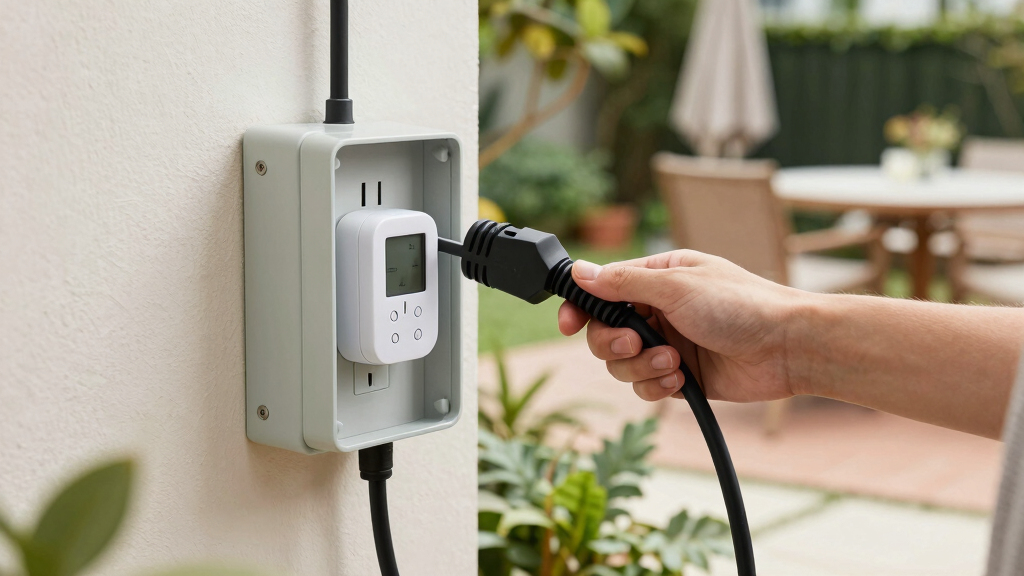
outdoor weatherproof timer with enclosure
As an affiliate, we earn on qualifying purchases.
As an affiliate, we earn on qualifying purchases.
How GFCI Outlets Protect You Outside — And Why They’re Essential
A GFCI (Ground Fault Circuit Interrupter) is your best friend for outdoor electrical safety. It detects tiny imbalances in current that could cause shocks and instantly cuts power. Any outdoor outlet used for your timer should have GFCI protection — either built-in or via an external breaker.
Imagine a rainy evening: water drips onto your extension cord, creating a potential shock hazard. A GFCI detects this imbalance immediately, shutting off power before anyone gets hurt. This rapid response is crucial because water is an excellent conductor of electricity, and even small amounts can cause serious shocks or electrocution. GFCIs are designed to trip within milliseconds of detecting current leakage, which is vital in outdoor environments where moisture and unexpected contact are common. Regular testing of GFCIs—monthly—is essential because over time, their sensitivity can diminish due to wear or dirt buildup. If a GFCI fails to trip during testing, it’s a sign that it needs replacement. Using GFCIs not only protects against accidental shocks but also reduces the risk of electrical fires caused by ground faults. For maximum safety, ensure your outdoor outlets include GFCI protection, and always test them regularly to confirm they are functioning correctly. Proper use and maintenance of GFCIs are key to preventing potentially fatal accidents in outdoor settings.
As an affiliate, we earn on qualifying purchases.
Extension Cords That Stand Up to Weather — And Your Needs
Outdoor extension cords aren’t all the same. Using the right gauge and ratings can make or break your safety. Heavy-duty, outdoor-rated cords with a 14 or 12-gauge wire are best for longer runs or high-power devices. Thin cords may overheat or short out unexpectedly.
Picture a family stringing lights across a sprawling backyard — their 16-gauge cord sags in the rain, risking damage. Switching to a 12-gauge, outdoor-rated extension cord with a proper rated jacket kept the lights bright and safe.
Choosing the correct extension cord involves understanding the trade-offs. Thicker cords (lower gauge number) can handle more current and are less likely to overheat during prolonged use, making them ideal for high-wattage devices or longer distances. However, heavier cords are less flexible and more cumbersome to manage. Lighter cords (higher gauge number) are easier to handle but have a higher risk of overheating if used improperly. Always select cords rated explicitly for outdoor use, with a bright, visible gauge number, and ensure they have a weather-resistant jacket. Avoid daisy-chaining multiple cords—this can create points of failure and increase fire risk—and instead use a single, heavy-duty cord of adequate length. Keep cords off the ground and away from water, snow, and physical damage to prevent wear and accidental shorts. Understanding these trade-offs helps you choose the safest, most reliable extension cords, ensuring your outdoor lighting remains bright and secure through all weather conditions.
heavy-duty outdoor extension cords
As an affiliate, we earn on qualifying purchases.
As an affiliate, we earn on qualifying purchases.
Frequently Asked Questions
Can I use regular indoor timers outside?
No, indoor timers aren’t designed to withstand moisture, UV rays, or temperature swings. Always choose timers rated specifically for outdoor use to avoid shorts and damage.How often should I test my outdoor GFCI outlets?
Test your outdoor GFCI outlets once a month by pressing the test button and confirming the power cuts off. Reset it afterward and ensure it’s functioning properly.Is it safe to leave extension cords outside overnight?
Only if they are rated for outdoor use, undamaged, and protected from water. Otherwise, unplug and store cords when not in use for maximum safety.What’s the biggest mistake homeowners make with outdoor timers?
Using indoor timers outside or neglecting weatherproof covers. Both increase the risk of shorts, shocks, and equipment failure.Do I need a licensed electrician to set up outdoor timers?
If you’re comfortable following safety guidelines and local codes, you can do basic setups. For complex wiring, GFCI installation, or if unsure, hire a licensed professional.As an affiliate, we earn on qualifying purchases.
Conclusion
Weatherproofing, GFCI protection, and proper cords aren’t just safety tips — they’re your ticket to carefree outdoor lighting. When you combine these elements, your holiday display stays bright, cheerful, and shock-free — rain or shine.
Think of your outdoor electrical setup as a sturdy, weather-resistant stage for your lights. Keep it sealed, grounded, and off the ground. That way, your festive glow lasts longer and stays safer for everyone around.
Fall yard work Picks
leaf blowers
As an affiliate, we earn on qualifying purchases.