
TL;DR
Listen free for 30 days with Audible
Thousands of audiobooks and originals — cancel anytime.
Start your free trialAs an affiliate, we earn on qualifying purchases.
Astronomical timers use accurate calculations based on your location and date to automatically turn outdoor lights on at sunset and off at sunrise. They boost efficiency, reduce energy waste, and adapt to seasonal changes, making outdoor lighting smarter and more eco-friendly.
Imagine walking into your backyard as dusk falls. Instead of fumbling with switches or setting manual timers, your outdoor lights turn on precisely when the sky deepens to navy blue. That’s the magic of astronomical timers. They automatically follow the sun, adjusting your lighting based on the real-time position of celestial events.
This guide reveals exactly how these devices work, why they’re a game-changer for energy efficiency, and how you can set one up in your own outdoor space. Whether you’re lighting a holiday display or just want smarter control, understanding astronomical timers helps you make better, greener choices.
What Are Astronomical Timers and Why Do They Matter?
At their core, astronomical timers are devices that automatically turn outdoor lights on or off based on local sunset and sunrise times. They use your geographic location and date to calculate these times with precision. Think of them as your outdoor lighting’s personal astronomer—adjusting every day as the seasons shift.
Why does this matter? Because natural lighting conditions vary widely throughout the year, affecting how safe and inviting your outdoor space feels. Manual timers or fixed schedules often fail to account for these changes, leading to over-lit or under-lit environments. Astronomical timers ensure your outdoor illumination is always aligned with the natural cycle, which enhances safety, aesthetics, and energy efficiency. The implications are significant: reduced electricity bills, a more harmonious outdoor ambiance, and less light pollution that can disturb local wildlife and night sky visibility. The tradeoff, however, is that these devices require correct setup and calibration to maintain accuracy, especially if you move or travel, which underscores the importance of choosing models with GPS or IoT capabilities that can adapt dynamically.

Intermatic DT200LT Digital Astronomic Landscape Timer, Indoor/Outdoor 3R
- Automatic Daylight Saving Time: Seamless DST adjustments with factory setting
- One-Push Programming Override: Easy quick adjustments for user convenience
- Wide Compatibility: Suitable for low-voltage transformers up to 1200W
As an affiliate, we earn on qualifying purchases.
As an affiliate, we earn on qualifying purchases.
How Do Astronomical Timers Know Exactly When the Sun Sets and Rises?
- They use your home’s geographic coordinates—latitude and longitude—to pinpoint your exact location.
- Inputting your location into the timer allows it to access precise astronomical data.
- The timer applies complex algorithms to calculate sunset and sunrise times based on celestial mechanics and your local time zone.
- Some high-end models incorporate GPS modules for instant, highly accurate location data.
Understanding the process reveals why these timers are so accurate. By leveraging the precise position of the Earth relative to the sun, they can adapt to subtle shifts in sunset and sunrise times—shifts that occur daily and seasonally. This precision prevents common issues like lights turning on too early or too late, which can disrupt your outdoor experience or waste energy. The tradeoff is that highly accurate timers may be more costly and require proper calibration or updates, especially if you relocate or change your environment. The use of GPS modules in advanced models minimizes these concerns by automatically updating location data, ensuring your outdoor lighting remains perfectly synchronized with natural light cycles.

Kasa Outdoor Smart Plug KP401, Smart Home Wi-Fi Outlet Timer
- Extended Wi-Fi Range: Up to 300 feet with weather resistance
- Weatherproof Design: IP64 waterproof cover included
- High Power Capacity: Supports up to 15A/1875W
As an affiliate, we earn on qualifying purchases.
As an affiliate, we earn on qualifying purchases.
What Are the Main Benefits of Using Astronomical Timers?
| Benefit | How It Helps |
|---|---|
| Energy Savings | Lights turn off during daylight, reducing electricity use. This not only cuts costs but also lessens environmental impact by decreasing carbon footprint. The automatic adjustment means you won’t forget to turn off lights, preventing unnecessary waste. |
| Convenience | No manual adjustments needed—lights follow the sun automatically, freeing you from seasonal reprogramming or daily planning. This seamless operation is especially beneficial during vacations or irregular schedules, ensuring your home remains lit appropriately without intervention. |
| Enhanced Safety | Consistent exterior lighting improves visibility and security at night, deterring intruders and preventing accidents. Because the lights adapt to seasonal changes, they provide reliable illumination year-round, which is crucial in areas with varying daylight hours. |
| Environmental Impact | Reduces light pollution and conserves resources by minimizing unnecessary illumination. This helps protect nocturnal wildlife and preserves the natural night sky, aligning your outdoor lighting with ecological sustainability. |
| Seasonal Adaptation | Adjusts automatically for changes in daylight hours, even with daylight saving time. This ensures your outdoor lighting remains in sync with natural light patterns without manual reprogramming, which is especially advantageous in regions with complex daylight saving rules or frequent schedule changes. |
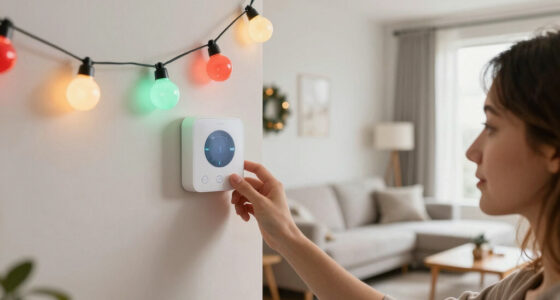
Imagine your holiday lights turning on just as the sunset paints the sky in shades of orange and pink. You get the cozy glow without lifting a finger—and save on energy bills. The deeper benefit lies in the consistent, natural ambiance that these timers foster, making your outdoor experience more harmonious with nature’s rhythm and less wasteful of energy resources.

Linkind Smart Solar Lights Outdoor SL5 with Motion Sensor,6 Pack, IP65
- Color Options: 16 million colors and tunable white
- Lighting Modes: Motion, Luminance, Continuous modes
- App Control: Adjust color, brightness, and white temperature
As an affiliate, we earn on qualifying purchases.
As an affiliate, we earn on qualifying purchases.
What Are the Latest Tech Advances Making Astronomical Timers Smarter?
Recent developments push astronomical timers into a new league of precision and connectivity. Many now include GPS modules for pinpoint location accuracy, even if you move or travel. They also connect with smart home systems and IoT platforms—allowing remote control via your smartphone or voice commands.
These advancements mean your timers are not just reactive but proactive. For example, a timer integrated with a weather service can preemptively adjust lighting if an unexpected cloudy day reduces natural light, or if daylight saving time begins unexpectedly. This level of automation minimizes manual intervention and enhances your outdoor lighting’s efficiency and responsiveness. The tradeoffs include increased complexity and cost, but the benefits of seamless integration and adaptive control often outweigh these concerns for tech-savvy users. Durability also improves, with weatherproof designs that withstand harsh conditions, ensuring your timers remain reliable year-round, which is essential for maintaining accurate synchronization and long-term savings.
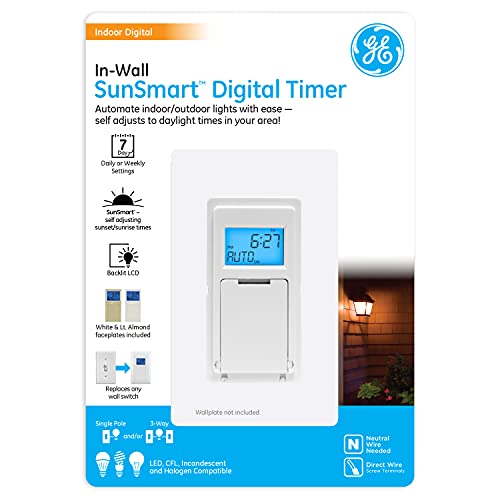
GE 7-Day in-Wall Digital Timer Switch, Auto Adjust Sunrise/Sunset Times
- SunSmart Technology: Adjusts for seasonal daylight changes
- Weekly Programming: Set up to seven ON/OFF schedules
- Security Randomization: Randomizes settings up to 30 minutes
As an affiliate, we earn on qualifying purchases.
As an affiliate, we earn on qualifying purchases.
How to Set Up Your Own Astronomical Timer in 4 Simple Steps
- Choose a timer compatible with your outdoor lighting system and check for GPS or Wi-Fi features.
- Input your exact location—either manually or via GPS if available.
- Set your preferences for manual overrides, additional schedules, or special events.
- Test the system at sunset and sunrise to confirm it’s working correctly. Adjust if needed.
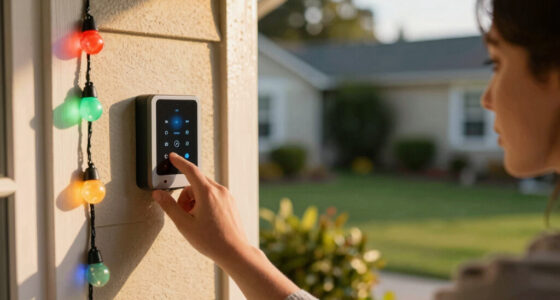
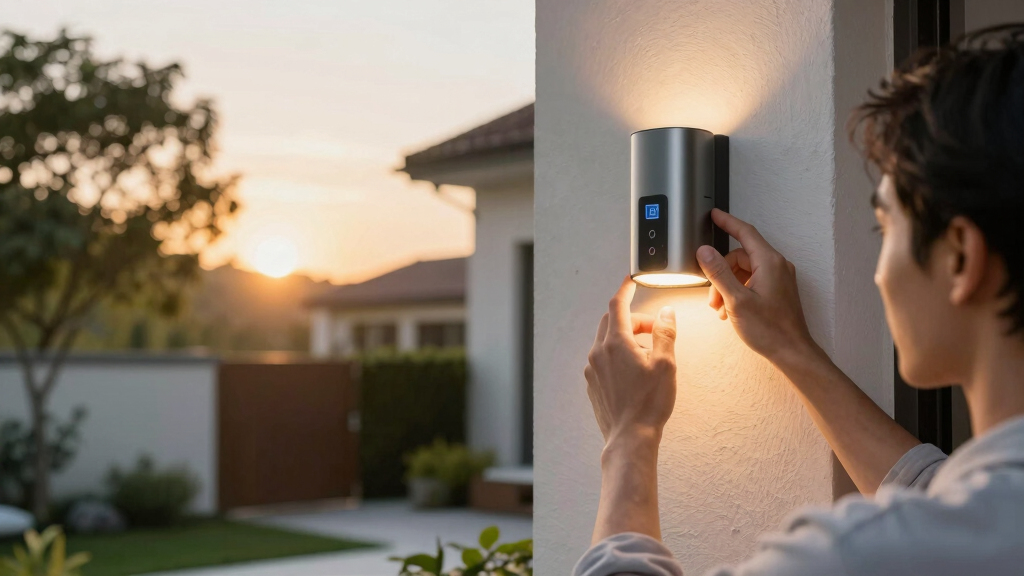
For example, install a timer on your porch light. Input your address or allow GPS to auto-detect, then program it to turn on at sunset. Watch as it lights up just as the sky darkens—no fuss. Proper setup ensures the timer’s calculations are accurate, which is critical for maintaining the benefits of automatic lighting. A poorly calibrated timer can lead to inconsistencies, so taking the time to verify operation during initial setup is well worth the effort for ongoing efficiency and convenience.
What Should You Know Before Buying or Installing an Astronomical Timer?
Compatibility is key. Ensure your outdoor lights can connect to the timer, and check if it needs a wired or wireless setup. Also, consider your climate—weatherproofing matters for durability.
Installation usually involves electrical work—power off the circuit, follow safety protocols, and, if unsure, hire a licensed electrician. Many models come with clear instructions, but safety always comes first.
Finally, check if the timer integrates with your existing smart home devices or apps for seamless control. Choosing a compatible device reduces setup hassles and ensures your system functions smoothly, maximizing the benefits of automation and precise timing.
Are Solar or Smart Options Better for Your Outdoor Lighting?
Solar-powered astronomical timers eliminate wiring, using sunlight to charge internal batteries. They’re easy to install and eco-friendly, perfect for remote areas or where wiring is tough.
Smart timers with Wi-Fi or Bluetooth connect to your home network, offering remote control, real-time adjustments, and energy monitoring. They’re more flexible but require power and a stable internet connection.
Choosing between them depends on your priorities: solar timers are excellent for off-grid reliability and simplicity, but may lack some of the advanced features of smart timers. Conversely, smart timers provide extensive control and integration capabilities, which can lead to more efficient energy use and customization, but at the cost of dependence on electricity and connectivity stability.
Key Takeaways for Smarter, Greener Outdoor Lighting
- Use astronomical timers to automate outdoor lights, saving energy and reducing manual effort.
- Choose models with GPS or IoT features for maximum accuracy and remote control.
- Install carefully—hire professionals if electrical work is involved—and follow safety guidelines.
- Consider solar options for off-grid setups or smart timers for full control and monitoring.
- Regularly check your timer’s settings and functionality to keep your outdoor space beautifully lit and energy-efficient.
Frequently Asked Questions
How precise are astronomical timers compared to manual timers?
Astronomical timers can calculate sunset and sunrise times within seconds of actual celestial events, thanks to advanced algorithms and GPS technology. This level of precision is far better than manual timers, which rely on fixed schedules or approximate times.
Can I override an astronomical timer if I want to turn lights on or off manually?
Yes, most modern astronomical timers allow manual overrides or temporary adjustments. This flexibility helps when you want special lighting at unusual times without disrupting the automatic schedule.
Are astronomical timers suitable for all outdoor lighting setups?
Generally, yes. They work with most outdoor lighting systems, but compatibility depends on the timer’s specifications and your fixtures. Always check if your lights can connect to or be controlled by the timer before purchasing.
How difficult is it to install an astronomical timer myself?
Installation involves wiring and programming, so if you’re comfortable with basic electrical work, you can do it yourself. Otherwise, hiring a licensed electrician ensures safety and proper setup, especially if local codes require it.
Do solar-powered astronomical timers really save energy?
Yes. They operate independently of your home’s electrical grid, using sunlight to power their functions. They’re an excellent choice for reducing energy bills and minimizing environmental impact.
Conclusion
In a world where energy efficiency and convenience matter, astronomical timers shine brightest. They effortlessly keep your outdoor lighting in sync with nature’s rhythm, saving you time, money, and energy. Imagine your porch glowing just as the sky darkens—every night, without lifting a finger.
Upgrade your outdoor lighting today, and let the sun’s schedule do the work. Your home—and the planet—will thank you for it.
Grilling season Picks
grills
As an affiliate, we earn on qualifying purchases.