TL;DR
Solar path lights are easy to install and eco-friendly but limited in brightness and weather-dependent. Timed low-voltage systems offer brighter, more controllable lighting but come with higher costs and installation complexity. Your choice depends on your needs, budget, and desired control.
Imagine walking your garden at dusk, the gentle glow guiding your steps. Whether you prefer the simplicity of solar lights or the control of low-voltage systems, choosing the right outdoor lighting can transform your space. But which option truly fits your lifestyle and needs? This guide breaks down the pros and cons of each, so you can light your yard smartly and efficiently.
From installation to maintenance, understanding how these systems work helps you avoid surprises and make the best investment. Ready to shed light on your choices? Let’s explore what each offers—and what pitfalls to watch out for.
Solar path lights are best for easy, low-cost, decorative lighting in sunny areas.
Timed low-voltage systems offer brighter, more reliable light with advanced control options but require more installation effort.
Weather conditions significantly impact solar performance; low-voltage setups are more consistent regardless of weather.
New tech like smart controls and wireless systems make low-voltage lighting more adaptable and easier to manage.
Choose based on your goals: convenience and eco-friendliness or brightness and control.
Solar Path Lights vs Timed Low-Voltage Lighting
Solar offers a quick, wire-free glow. Timed low-voltage delivers brighter, steadier illumination with far more control. The right choice depends on whether your priority is effortless ambiance or reliable performance.
Convenience or control?
Both technologies can make a garden feel welcoming. Their strengths diverge when lighting must do more than decorate: solar prioritizes simplicity, while low-voltage prioritizes brightness, scheduling and dependable coverage.
Solar path lights
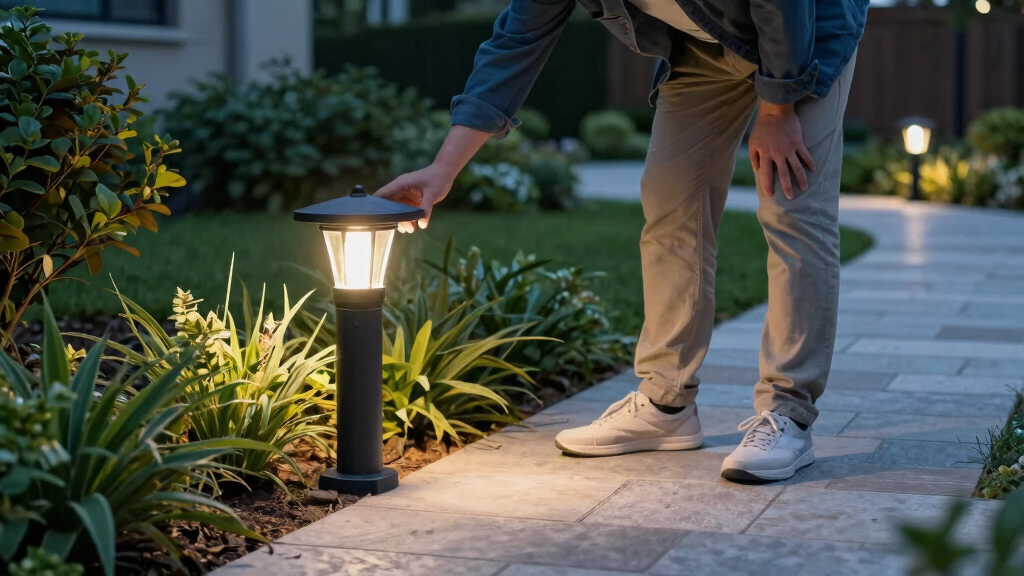
Independent fixtures charge by day and switch on automatically at dusk. They are ideal for quick upgrades, rental gardens and flexible decorative layouts.
- No trenching, transformer or electrical connection
- No ongoing grid-energy expense
- Easy to relocate as planting and pathways change
- Output depends on shade, season and cloud cover
Timed low-voltage
A transformer supplies wired fixtures at low voltage. The system takes more planning but supports coordinated schedules, dimming and stronger illumination.
- Reliable output through cloudy and rainy periods
- Timers, zones, dimmers and smart controls
- Suitable for steps, patios and security areas
- Higher equipment and installation cost

Eyrosa Solar Lights Outdoor, 12 Pack Waterproof Solar Landscape Lighting for Pathway Garden Yard Path Walkway Driveway Lawn Patio Outside Decor, Warm White
UNIQUE PATENTED SOLAR PATHWAY LIGHTS: 360° high transparent lampshade, which makes the light with strong transmission, bright light…
As an affiliate, we earn on qualifying purchases.
As an affiliate, we earn on qualifying purchases.
From power source to evening glow
Solar compresses the process into individual fixtures. Low-voltage adds infrastructure, but that shared system creates the precision and expandability that solar usually cannot match.
Choose the purpose
Ambiance, navigation, task lighting or security.
Map conditions
Check sun exposure, shade, routes and dark zones.
Install the system
Stake solar fixtures or route cable from a transformer.
Tune the result
Reposition solar or program low-voltage schedules.
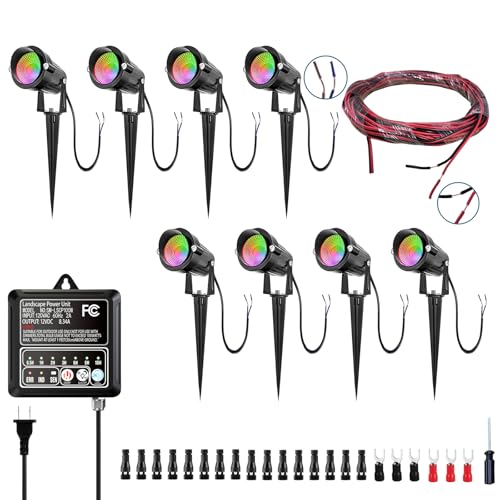
All-in-One RGB Landscape Lighting Kit, 5W Color Changing Low Voltage Landscape Lights with 12V100W Transformer and 80FT Wire, LED Multi-Color Landscape Spotlights for Holiday Yard Garden House, 8Pack
【Multiple functions】The product includes a constant-on timed menu and a light-sensing timed menu bar. The setting time menu…
As an affiliate, we earn on qualifying purchases.
As an affiliate, we earn on qualifying purchases.
The complete comparison
Use this matrix to separate decorative convenience from functional performance. A mixed rating means the result depends heavily on product quality, site design or local climate.
| Decision factor | Solar path lights | Timed low-voltage | Practical winner |
|---|---|---|---|
| Installation speed | ✓ Stake directly into suitable ground | ✗ Transformer, cable and layout required | Solar |
| Upfront cost | ✓ Low entry price per fixture | ✗ Typically higher system investment | Solar |
| Operating energy | ✓ Free sunlight | ~ Efficient, but grid-powered | Solar |
| Brightness | ~ Soft accent illumination | ✓ Strong, selectable output | Low-voltage |
| Weather consistency | ✗ Charge falls with poor sunlight | ✓ Stable in changing weather | Low-voltage |
| Timing and dimming | ✗ Usually dusk-to-dawn only | ✓ Timers, zones and smart scenes | Low-voltage |
| Maintenance | ✓ Clean panels; replace batteries | ~ Inspect cable, bulbs and transformer | Solar |
| Long-term expansion | ~ Add standalone fixtures | ✓ Extend planned zones and controls | Low-voltage |
| Safety and security | ✗ May underperform after weak charging | ✓ Dependable high-visibility coverage | Low-voltage |

GIGALUMI 6 Pack Solar Lights Outdoor Waterproof, LED Solar Garden Lights, Outdoor Decorations, Garden Decor for Yard, Patio, Landscape, Planter, Walkway (Warm White)
【Unique and Enchanting Design】Solar outdoor walkway lights are designed to provide an attractive pattern, also as a focal…
As an affiliate, we earn on qualifying purchases.
As an affiliate, we earn on qualifying purchases.
Where each system earns its place
These relative scores summarize the practical trade-offs described above. They are decision aids rather than laboratory measurements: site conditions and fixture quality still matter.
Relative strengths
Solar is shown in amber; timed low-voltage is shown in navy.
Ambiance to utility
Match the system to the consequence of insufficient light.

SUNVIE All-in-One LED Low Voltage Landscape Lighting Kit, 12-Pack Landscape Lights with Transformer 100FT Wire and Connectors, 3000K Waterproof Low Voltage Landscape Lights for Garden Yard House Tree
【Complete Landscape Lighting Kit】Includes 1 × 60W light-sensing transformer, 1 × 100ft landscape wire, 12 × 3W aluminum…
As an affiliate, we earn on qualifying purchases.
As an affiliate, we earn on qualifying purchases.
Turn your priorities into a system
A good choice starts with the job the light must perform, then traces that requirement through exposure, infrastructure and control to the final nighttime experience.
The verdict: choose by consequence
If reduced brightness is merely less atmospheric, solar is an easy, economical choice. If reduced brightness creates a trip hazard, security gap or unusable patio, timed low-voltage is the stronger investment.
Choose solar when…
You want low-cost decorative lighting, receive dependable direct sunlight, value wire-free installation and expect to reposition fixtures as the garden evolves.
Best fit: flower beds · casual paths · temporary layoutsChoose low-voltage when…
You need bright, consistent illumination, precise timing, dimming, smart-home integration or dependable coverage in shaded and safety-critical areas.
Best fit: steps · patios · entrances · security zonesPower Sources & Installation: What’s Easier and Faster?
Solar path lights run on sunlight, charging during the day and automatically lighting up at night. They require no wiring—just stake them into the ground and let nature do the work. Installing a handful of solar lights can be as simple as planting flowers. This ease of setup means even homeowners with little DIY experience can enhance their yard quickly, making solar lights a popular choice for quick beautification.
In contrast, timed low-voltage lighting depends on a transformer connected to your home’s electrical system. Installing these involves running wires underground or along the surface, which can be a DIY project or one for a professional. While this requires more effort upfront, it provides a more robust, customizable setup. For example, if you want a pathway that lights up brighter during the night or dims at certain hours, low-voltage wiring and controls can be tailored to fit those needs, offering a level of precision solar can’t match.
Understanding the installation process is crucial because it impacts your time, effort, and potential costs. Solar lights, with their plug-and-play nature, are ideal for quick upgrades or temporary setups, but they may require replacement or repositioning if your landscape changes. Low-voltage systems, though more involved initially, offer long-term flexibility—allowing you to expand or modify your lighting scheme without replacing fixtures, which can be a significant advantage for evolving outdoor spaces.
Cost & Efficiency: Which Saves You More Money?
Solar path lights cost less initially—sometimes just a few dollars per fixture—since they don’t require wiring or electrical work. Over time, they save on energy bills, relying solely on free sunlight. This makes them ideal for homeowners on a tight budget or for those who want a decorative touch without much hassle. However, their brightness and operational hours depend heavily on weather and sunlight exposure; for example, a cloudy week can significantly reduce their effectiveness, which might lead to disappointment if consistent lighting is needed.
Timed low-voltage lighting involves buying a transformer, wiring, and fixtures, which adds to the upfront costs—often $200 to $500 for a well-planned system. While this initial investment can seem steep, it offers significant long-term savings in terms of reliability and energy efficiency. Brighter, more consistent illumination reduces the need for frequent replacements or adjustments, which can save money over the lifespan of the system. Additionally, because low-voltage lights can operate efficiently in various weather conditions, they tend to provide a more dependable lighting experience, which is especially valuable for security or safety-critical areas.
The tradeoff here is between initial expenditure and ongoing reliability. If budget constraints are tight, solar lights are attractive but may require more frequent maintenance or replacement due to weather impacts. Conversely, investing in low-voltage wiring and fixtures offers peace of mind through durability and consistent performance, especially in challenging weather, making it a smarter choice for larger or more critical outdoor spaces.
Control & Customization: How Much Flexibility Do You Get?
Most solar path lights turn on at dusk and off at dawn automatically. You get little control over brightness or timing, which suits homeowners seeking simple, hassle-free ambiance. For example, if your goal is to create a cozy garden nook, solar lights provide a gentle glow without the need for programming or adjustments.
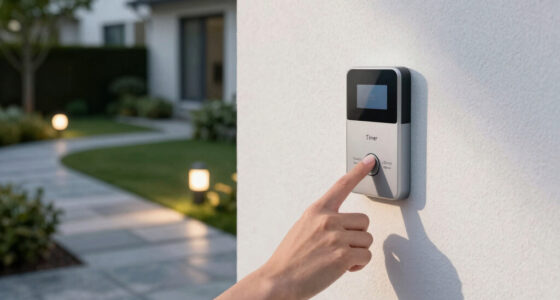
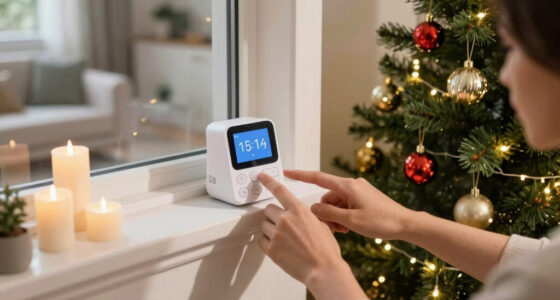
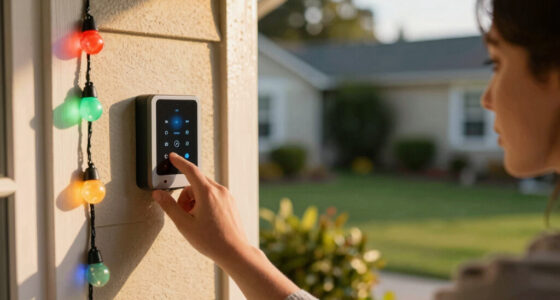
Timed low-voltage systems can be programmed with timers, dimmer switches, and even smart controls. Want your pathway to glow softly after 10 pm? Or dim the lights during late-night hours? You can do that easily with a programmable low-voltage setup. For instance, a homeowner can set different schedules for security lighting versus decorative lighting, providing flexibility to adapt to changing needs or seasons, such as dimming lights during holidays or special events.
This level of control allows you to tailor your outdoor lighting to specific occasions or practical needs, enhancing both convenience and ambiance. Smart controls further expand possibilities—integrating with home automation systems means you can adjust your lighting remotely, set scenes, or automate schedules based on your routines, significantly elevating your outdoor experience.
Light Quality & Brightness: What Will Your Yard Look Like?
Solar lights generally emit a softer, more decorative glow. They’re great for accent lighting—highlighting flower beds or lining a walkway. For example, placing solar lights along a garden path creates a charming, inviting atmosphere. But their brightness varies with sunlight, and cloudy days can dim their glow, which might leave certain areas underlit during overcast weather, affecting safety or aesthetic appeal.
Low-voltage lights can be much brighter and more consistent. They’re suited for illuminating stairs, security zones, or large patios where clarity and safety matter. With higher wattages and better bulbs, they produce a more powerful, reliable light. For instance, a security light on a back porch that stays bright all night can deter intruders and ensure safety, especially in areas with frequent cloud cover or limited sunlight.
The key consideration here is how the quality and brightness of light impact your outdoor environment. Softer solar lighting creates a relaxed, cozy atmosphere ideal for decorative or ambient purposes, but may fall short in safety-critical areas requiring high visibility. Bright low-voltage lighting, though less charming in a decorative sense, provides the clarity needed for security and functional tasks, making it crucial for areas where safety is paramount.
Durability & Maintenance: What Lasts Longer & Takes Less Work?
Solar lights are low-maintenance—just occasional cleaning of solar panels and battery replacements every few years. They’re weather-resistant but can falter in extremely cloudy or rainy climates. For example, in regions with frequent storms or heavy overcast, solar lights may need more frequent battery replacements or may not perform as well, which impacts longevity and reliability.
However, their simplicity means fewer parts are prone to failure, and they lack complex wiring that could deteriorate over time. This generally results in a straightforward maintenance routine—cleaning panels and replacing batteries—making them suitable for homeowners who prefer hassle-free setups. Their durability can be affected by extreme weather, so placement strategies—such as shielding from heavy rain or wind—can prolong their lifespan.
Low-voltage systems require periodic checks of wiring, transformer, and bulbs. They’re more complex, but with proper upkeep, they can last decades. Expect to replace fixtures less often than batteries. For example, a well-maintained low-voltage system in a busy backyard can last 15-20 years, providing consistent illumination and reducing long-term replacement costs. The durability of these systems depends on quality installation and regular maintenance, but their modular nature makes repairs and upgrades more manageable, extending their functional lifespan significantly.
The tradeoff is that low-voltage systems may require more hands-on maintenance, but their robustness can justify the effort, especially for high-use areas or long-term installations.
Latest Trends & Tech: What’s New in Outdoor Lighting?
Advancements in solar tech now allow for higher brightness and longer run times, even in less sunny areas. Smart controls let you turn lights on or off remotely, set schedules, or adjust brightness—perfect for busy households. For example, you can control your garden lighting from your smartphone, ensuring it’s on only when needed, saving energy and extending battery life.
Wireless low-voltage systems are gaining popularity. They cut down on wiring hassles and can integrate with home automation platforms, making outdoor lighting smarter and easier to manage. Imagine adjusting your landscape lighting with a voice command or setting it to turn on automatically when you arrive home—that’s the convenience wireless and smart technology bring to outdoor lighting.
These innovations are not just about convenience—they also improve energy efficiency, reduce installation time, and open up new possibilities for creative outdoor lighting designs. As technology advances, expect even more seamless integration, better battery performance, and smarter control options, making outdoor lighting more adaptable to individual needs and lifestyles.
Quick Comparison: Solar vs Low-Voltage in a Nutshell
| Feature | Solar Path Lights | Timed Low-Voltage Lighting |
|---|---|---|
| Ease of installation | Very simple—stake and go | |
| Cost | Lower upfront, no energy bills | |
| Brightness | Moderate, softer glow | |
| Weather dependence | High; cloudy days dim lights | |
| Control & scheduling | Limited | |
| Durability | Good, but batteries need replacement | |
| Ideal for | Decorative, accent lighting | |
| Best for | Brighter, security, larger areas |
Frequently Asked Questions
Which lighting option is more cost-effective over time?
Solar path lights cost less upfront and have no ongoing energy bills, making them cheaper in the long run for decorative use. Low-voltage systems, though pricier initially, offer more durability and control, which can be cost-effective for larger or security-focused lighting schemes.Can solar path lights work in shaded areas?
Solar lights need direct sunlight to fully charge. In shaded or heavily wooded areas, their brightness and run time decrease significantly. For shaded yards, low-voltage lighting might be a better choice for consistent illumination.How complicated is installing low-voltage lighting?
Installation varies. Basic setups can be DIY-friendly if you’re comfortable with basic wiring and digging. Complex systems with longer runs or smart controls might require professional help to ensure safety and proper functioning.Are solar lights suitable for security purposes?
Generally, solar lights are less bright than low-voltage security lighting. They’re perfect for decorative pathways but not ideal for illuminating large areas or deterring intruders. For security, a brighter, controlled low-voltage setup is recommended.What maintenance do each systems require?
Solar lights mainly need battery replacements and occasional cleaning of solar panels. Low-voltage systems require wiring checks, transformer maintenance, and bulb replacements. Proper upkeep extends the lifespan of both options.Conclusion
Deciding between solar path lights and timed low-voltage lighting hinges on your priorities—simplicity versus control, cost versus brightness. Both have their place, but the right choice depends on your yard’s needs and your willingness to tinker or invest.
Picture your perfect evening scene—whether it’s the soft glow of solar or the powerful beam of low-voltage. Lighting should serve your style, your safety, and your wallet. Make that choice confidently, and your yard will shine just right.