TL;DR
Open a free Amazon Business account
Business pricing, bulk buying and tax-exempt orders.
Create a free accountAs an affiliate, we earn on qualifying purchases.
Single-zone timers control one area, ideal for small, uniform lawns. Multi-zone timers manage multiple areas independently, perfect for larger or varied landscapes. Choose based on your yard’s size and complexity to maximize efficiency.
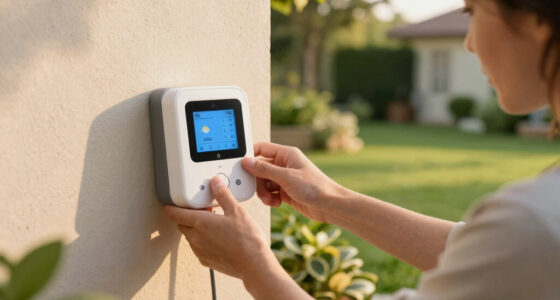
Imagine the rich, green glow of a perfectly watered lawn, thriving without you lifting a finger. Automated irrigation can turn that dream into reality—saving water, time, and hassle. But the big question isn’t just about timers; it’s about which one fits your yard: single or multi-zone.
If your garden is a simple patch with uniform needs, a single-zone timer might be all you need. But if your yard boasts a vegetable garden, flower beds, and a sprawling lawn—all with different watering demands—a multi-zone system could be your watering wizard. Let’s explore how to make that choice clear and simple.
How to Tell if Your Yard Needs One or Multiple Zones
Start by looking at your yard like a map—different areas have different needs. A small, flat lawn with the same grass type? One zone will do. But a backyard with a vegetable patch, flower beds, and a large lawn? You’re looking at multiple zones.
Think about the watering schedules. Do you want to water everything at once or prefer specific times for different zones? If the latter, multi-zone timers are your best friends. For example, you might want to water your vegetable garden early in the morning while the lawn gets a late afternoon soak.
Assess the layout—separate areas with different soil types, sun exposure, or plant needs naturally suggest multiple zones. This prevents overwatering some areas while under-watering others, saving water and promoting healthier plants.
Understanding these distinctions is crucial because it directly impacts water efficiency, plant health, and your time management. Overwatering can lead to root rot or fungal diseases, while under-watering stresses plants and reduces growth potential. Proper zoning allows tailored watering schedules that match each area’s unique needs, leading to healthier plants and less water waste. Ignoring these differences and opting for a one-size-fits-all approach often results in inefficient water use and increased costs.
As an affiliate, we earn on qualifying purchases.
The Real Difference: Single vs Multi-Zone Timers, Side by Side
| Feature | Single-Zone Timer | Multi-Zone Timer |
|---|---|---|
| Number of zones managed | One | Multiple (2 or more) |
| Installation complexity | Simple; connects to one hose or sprinkler | More involved; requires wiring or multiple connections |
| Customization | One schedule for the entire yard | Independent schedules for each zone |
| Cost | Lower upfront | Higher upfront but more flexible |
| Ideal for | Small, uniform lawns | Larger, diverse landscapes |
Choosing between these options depends on your landscape’s complexity. A single-zone timer is straightforward and cost-effective, but it assumes uniform watering needs, which might not be true for larger or varied landscapes. Multi-zone timers, although more complex and initially more expensive, provide the flexibility to tailor watering schedules to specific plant types and soil conditions. This tailored approach can significantly improve water efficiency and plant health, especially in diverse gardens. The tradeoff is that multi-zone systems require more planning and maintenance, but the long-term savings and healthier landscape often justify the investment.
As an affiliate, we earn on qualifying purchases.
Benefits and Drawbacks of Each System
- Single-Zone: Easy to set up, budget-friendly, perfect for simple yards. But it lacks flexibility—watering everything at once might waste water or overwater some plants. This can lead to inefficient water use and increased bills, especially if parts of your yard have different needs. Overwatering can drown roots, promote disease, or waste resources, while under-watering can stress plants and reduce growth. So, while simple, it’s a tradeoff between convenience and precision. For small, uniform landscapes, this simplicity can be a significant advantage, saving you time and effort. However, if your yard has varied plantings, this approach may cause water wastage and plant stress, ultimately affecting your landscape’s health and your water bills.
- Multi-Zone: Offers tailored watering, saves water, and adapts to complex landscapes. By customizing schedules, you ensure each plant or area gets what it needs without excess. This precision reduces water bills and promotes healthier, more resilient plants. However, the setup complexity and initial cost can be higher, and it requires more planning and maintenance. But in the long run, the ability to manage water more efficiently often outweighs these drawbacks, especially in larger or more diverse gardens. The key is understanding that this system allows you to optimize water use based on real needs, reducing waste, and supporting plant health—a critical advantage as landscapes become more complex.
As an affiliate, we earn on qualifying purchases.
Frequently Asked Questions
Can I upgrade from a single-zone to a multi-zone timer later?
It depends on your current system. Some timers are modular and expandable, but many require replacing the entire unit. Consider future needs now to avoid extra costs down the line.
Are smart timers difficult to install or program?
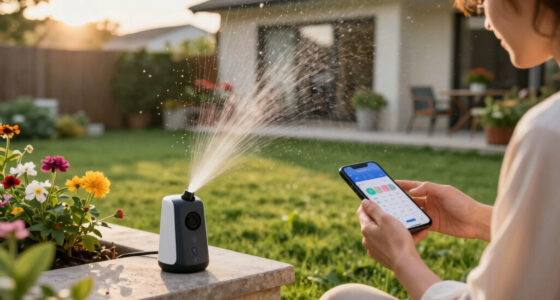
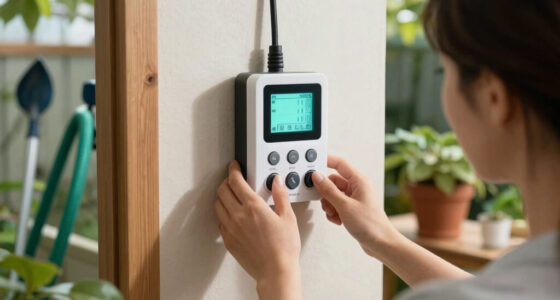
Most modern smart timers are designed for DIY setup. They typically come with step-by-step instructions and can be controlled via smartphone apps, making installation and programming straightforward.
How often should I check or update my timer settings?
Check your system at least once a season—early spring, midsummer, and fall—to adjust for weather changes, plant growth, or seasonal needs. Regular maintenance keeps your irrigation efficient.
Will a multi-zone timer save me water and money?
Yes. By customizing watering schedules for each zone, you avoid overwatering and runoff, leading to water savings of up to 50% according to recent studies.
Do I need a professional for installation?
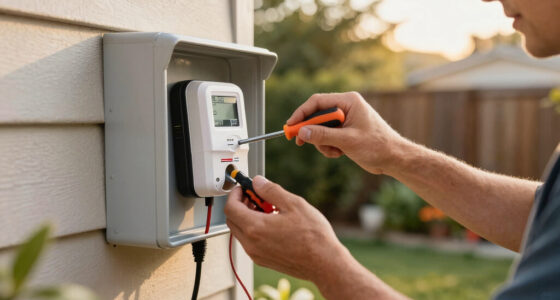
For simple setups, DIY is often enough. But if your system involves complex wiring or integration with existing home automation, hiring a professional can ensure everything runs smoothly and safely.
As an affiliate, we earn on qualifying purchases.
Conclusion
Choosing between a single or multi-zone hose timer boils down to your yard’s complexity and your desire for control. Imagine your garden thriving exactly how you want—without wasting water or your time. A smart, well-matched timer makes that a simple reality.
Remember: the right timer is an investment in a healthier yard and a more relaxed summer. Your plants—and your schedule—will thank you for it.
College move-in / dorm season Picks
dorm essentials
As an affiliate, we earn on qualifying purchases.