
TL;DR

Get home appliances delivered free with Prime
- Fast, free delivery on millions of items
- Prime Video, Amazon Music and more included
- Member-only deals all year
Automating landscape lighting with a transformer timer is straightforward and enhances energy efficiency. Modern digital and smart timers offer flexible scheduling and remote control, making outdoor lighting hassle-free and more secure.
Picture your garden glowing softly at dusk, lights turning on just as the evening falls. Now, imagine that happening automatically, without you lifting a finger. That’s the power of a transformer timer — turning a simple outdoor lighting system into a set-it-and-forget-it part of your home.
In this guide, you’ll learn how to set up, choose, and troubleshoot a transformer timer for your landscape lighting. Whether you’re aiming for convenience, energy savings, or just a more beautiful yard, this is your step-by-step route to smarter outdoor lighting.
Choose your timer based on control needs: mechanical for simplicity, smart for remote access.
Always turn off power before wiring or servicing your system to stay safe.
Regular maintenance prevents issues and keeps your landscape glowing beautifully.
Match your timer’s voltage and weatherproof features to your outdoor setup.
Smart timers can integrate with home systems, enabling voice control and automation routines.
What is a landscape lighting transformer and why does it need a timer?
A landscape lighting transformer is the hub that converts your home’s standard 120V power into a safe, low-voltage current—usually 12V or 24V—that powers your outdoor lights. This transformation is crucial because low-voltage systems are safer, more energy-efficient, and easier to control, especially in outdoor environments.
Without a timer, you have to turn your lights on and off manually, which can be inconvenient and lead to unnecessary energy use—like leaving lights on longer than needed. Using a transformer timer automates this process, ensuring your yard stays illuminated during desired hours, which not only enhances safety and security but also reduces your electricity bills. The timer also helps prevent overuse, extends the lifespan of your lights, and supports environmentally friendly practices by avoiding unnecessary energy consumption.
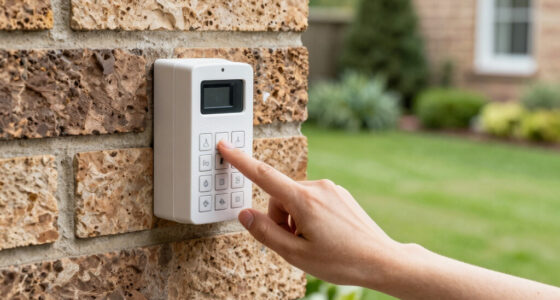
outdoor landscape lighting transformer timer
As an affiliate, we earn on qualifying purchases.
As an affiliate, we earn on qualifying purchases.
How to pick the right transformer timer for your landscape setup
Choosing the right transformer timer involves understanding both your landscape’s specific lighting needs and the features available. For instance, mechanical timers offer simplicity but lack flexibility, which might be sufficient for straightforward schedules. Digital timers provide more precise control, allowing multiple on/off settings and seasonal adjustments, making them suitable for more complex lighting schemes. Smart timers connect to Wi-Fi and can be managed remotely via apps, offering unmatched convenience and integration with other smart home devices.
Consider how many lighting zones you want to control—if your yard has distinct areas like a patio, garden beds, and walkway lighting, a timer that supports multiple zones can simplify management. Compatibility with your existing transformer’s voltage rating (commonly 12V or 24V) is non-negotiable to ensure safe and reliable operation. Weatherproofing is equally important; outdoor timers must withstand moisture, temperature fluctuations, and other environmental factors to avoid malfunction or damage over time. Lastly, assess your comfort with technology—if you prefer hassle-free control, investing in a smart timer might be worth the higher initial cost for long-term convenience and energy savings.
As an affiliate, we earn on qualifying purchases.
Step-by-step: How to install and set up your transformer timer
- Turn off your main power supply to prevent electrical shocks. Safety first—ensure the power is disconnected before handling any wiring.
- Disconnect the existing timer or wiring from your transformer. Carefully note the wiring connections to facilitate correct reinstallation.
- Connect the new timer’s wiring terminals to your transformer, following the manufacturer’s instructions meticulously. This typically involves attaching the power input wires and the load wires to the timer’s designated terminals.
- Secure the timer in a weatherproof box or mount it outdoors if it’s designed for outdoor installation. Proper mounting prevents damage and ensures consistent operation.
- Restore power and access the timer’s programming interface—either via a digital display or mobile app.
- Set your desired ON/OFF schedule based on your routine. For example, program the lights to turn on at sunset and off at sunrise or late at night, considering seasonal variations.
- Test the system thoroughly. Observe whether the lights turn on and off at the scheduled times, and make adjustments as needed for accuracy.
Remember: if you’re unsure about wiring, electrical safety, or local codes, it’s best to hire a licensed electrician. Proper grounding, weatherproofing, and adherence to electrical standards are vital for safety and longevity of your system.
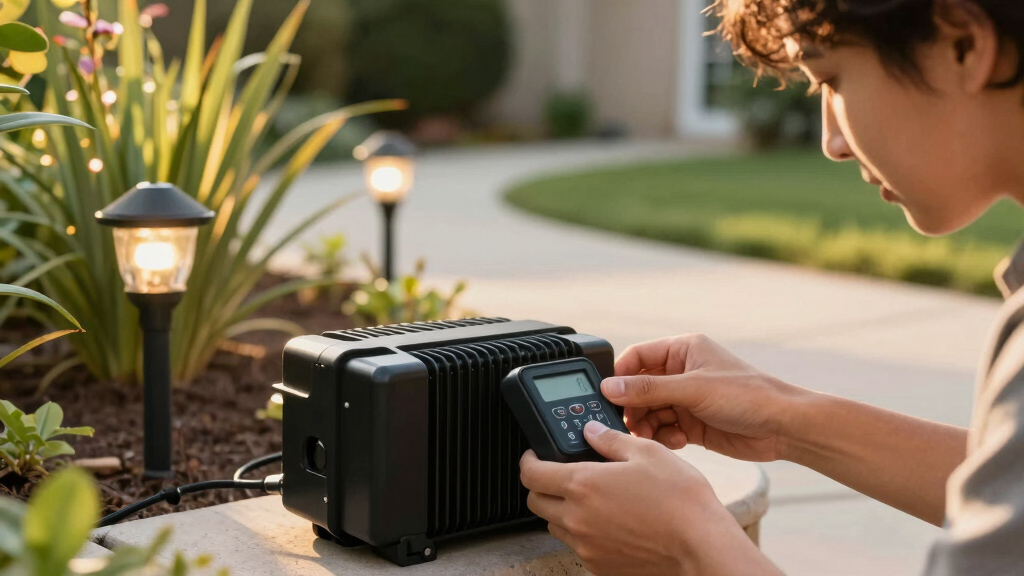
low voltage landscape lighting timer
As an affiliate, we earn on qualifying purchases.
As an affiliate, we earn on qualifying purchases.
Compare smart, digital, and mechanical timers — which fits you best?
| Feature | Mechanical Timer | Digital Timer | Smart Timer |
|---|---|---|---|
| Ease of Use | Simple dial; limited flexibility | Programmable with buttons; more options | Controlled via app; remote access |
| Features | Basic on/off schedule | Multiple schedules, sunrise/sunset options, seasonal adjustments | Voice control, customizable scenes, automation routines, integration with smart home systems |
| Connectivity | None | Usually no Wi-Fi, but some have Bluetooth for local control | Wi-Fi or Zigbee/Z-Wave protocols for remote management and automation |
| Price Range | Lower cost, basic features | Moderate, with more advanced options | Higher, reflecting added technology and features |
Choosing the right timer depends on your tech comfort level, control preferences, and landscape complexity. If you prefer simplicity and minimal setup, a mechanical timer is sufficient. For more flexibility, scheduling multiple events, or seasonal adjustments, digital timers are a step up. If you want ultimate convenience, remote management, and integration with your smart home ecosystem, a smart timer is the best choice. Consider your long-term needs and budget to find the best fit for your outdoor lighting system.
weatherproof outdoor lighting timer
As an affiliate, we earn on qualifying purchases.
As an affiliate, we earn on qualifying purchases.
Tips to keep your landscape lighting running smoothly year-round
- Regularly inspect and tighten connections to prevent loose wiring, which can cause flickering or outages. Keep fixtures clean from dirt, debris, and insects to maintain optimal light output.
- Update your timer settings seasonally—extend evening hours in summer and shorten them in winter to match daylight changes, ensuring lights are on only when needed.
- Protect wiring and connections from weather elements by sealing with weatherproof conduit or junction boxes. Proper sealing prevents moisture ingress, which can cause corrosion or short circuits.
- Test your system monthly by manually activating the timers to verify operation. Address any issues promptly to avoid longer outages or damage.
- Replace bulbs or LEDs as needed to maintain consistent brightness and color quality. Using high-quality bulbs can also improve energy efficiency and lifespan.
Imagine a crisp fall evening, your yard softly lit, with everything working flawlessly because of a quick seasonal tune-up. Regular maintenance not only preserves your system’s performance but also extends its lifespan, ensuring your outdoor oasis remains inviting and safe for years to come.
Frequently Asked Questions
Can I upgrade my existing timer to a smart timer?
Yes, if your current timer connects directly to your transformer and has compatible wiring, upgrading is often straightforward. You’ll need to replace the old timer with a smart model and follow the setup instructions. For complex systems, consulting an electrician is recommended.
How difficult is it to install a transformer timer myself?
If you have basic electrical skills and follow safety procedures—turning off power, using proper tools—installation can be a manageable weekend project. However, hiring a licensed electrician is wise if you’re unsure or dealing with complex wiring.
Are smart timers compatible with all landscape lights?
Most low-voltage landscape lights are compatible as long as the timer’s output matches your transformer’s voltage. Check your lights’ specifications, and ensure the timer can handle the total load. Compatibility is generally straightforward with standard systems.
What security risks come with Wi-Fi-enabled timers?
Smart timers are connected devices, so they can be targeted by hackers if not properly secured. Use strong, unique passwords, keep firmware updated, and network your devices on a separate Wi-Fi network for added security.
Conclusion
Automating your landscape lighting with a transformer timer turns your yard into a stunning, effortless show. You’ll save energy, boost security, and enjoy a cozy glow every evening—without lifting a finger.
Think of it as giving your home a little more magic, one scheduled light at a time. Why not make your outdoor space smarter today?
Fall yard work Picks
leaf blowers
As an affiliate, we earn on qualifying purchases.