
TL;DR

Get home appliances delivered free with Prime
- Fast, free delivery on millions of items
- Prime Video, Amazon Music and more included
- Member-only deals all year
Using timers to schedule hot tub heating saves up to 50% on energy costs. Setting the right schedule based on your usage patterns and environment ensures comfort and savings. Modern timers, especially digital and smart ones, offer precise control for maximum efficiency.
Imagine stepping into your hot tub after a long day, the water warm and inviting. Now, picture that warmth being carefully managed to save you money without sacrificing comfort. That’s what smart timer scheduling can do. It’s not just about convenience — it’s about making your hot tub more energy-efficient and budget-friendly.
In this guide, you’ll learn how to set effective heating schedules with timers, the difference between mechanical and digital options, and how new tech makes it easier to cut costs. Whether you’re a weekend warrior or a soak-every-day type, these tips help you enjoy your hot tub while keeping energy bills in check.
Using timers to schedule hot tub heating can cut energy costs by up to 50%.
Digital and smart timers offer more control and adaptability than mechanical ones.
Pre-heating just before your typical soak times makes your hot tub ready without wasting energy.
Adjust your schedule seasonally and according to utility rates for maximum savings.
Investing in smart timers with eco-modes can boost savings and reduce environmental impact.
Why Using a Timer Is Your Best Friend for Hot Tub Savings
Hot tub timers are simple devices that control when your heater turns on and off. They prevent unnecessary heating when you’re not around, cutting down on wasted energy. This matters because energy waste not only increases your bills but also contributes to environmental impact. By precisely scheduling heating, you ensure the hot tub is warm when you want it—no more wasting power keeping it heated during idle periods.
For example, running your hot tub 24/7 can double your electric bill compared to a well-scheduled setup. Timers help you avoid heating during the day when no one’s using it, and only warm the water just before your scheduled soak. This balance between comfort and efficiency can significantly reduce ongoing costs, but it requires understanding the tradeoff: too infrequent heating might mean waiting longer for the water to reach temperature, which could be inconvenient. Finding the right schedule is about optimizing this balance based on your lifestyle and energy costs.
Products Worth Considering

DEWALT 15 Amp 8-1/4-Inch Compact Portable Jobsite Table Saw (DWE7485)

DEWALT DWE7491RS 10-Inch Jobsite Table Saw with Rolling Stand

EGO Power+ 15-Inch Battery-Powered String Trimmer with Powerload Technology
As an affiliate, we earn on qualifying purchases.
Different Types of Timers — Which One Fits Your Hot Tub Best?
Choosing between mechanical and digital timers impacts how you control your heating schedule. Mechanical timers are straightforward, with a dial and pins or switches. They are reliable and inexpensive, making them suitable for those who prefer simplicity. However, their limited flexibility means you need to manually change settings if your schedule varies, which can be inconvenient if your routine changes frequently.
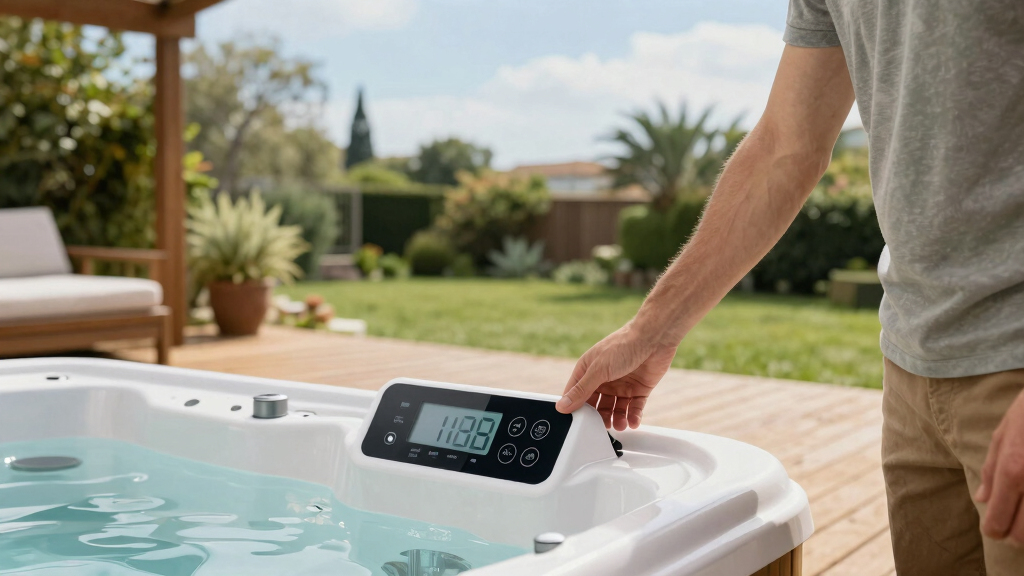
Digital timers, on the other hand, offer advanced features like programmable schedules, remote control, and Wi-Fi connectivity. This flexibility allows you to set different on/off times for each day, adapt quickly to changes in your routine, and even control your hot tub remotely. This can lead to better energy savings, especially if your usage pattern varies or if you want to fine-tune heating periods to match fluctuating utility rates or seasonal changes. The tradeoff is the higher initial cost and a slight learning curve, but the long-term savings and convenience often outweigh these factors.
Understanding these differences helps you choose a timer that balances your need for simplicity with your desire for control. For many, investing in a digital or smart timer provides the greatest return in both energy savings and ease of use, especially as technology continues to improve and become more user-friendly.
How to Create an Effective Heating Schedule in 3 Simple Steps
Setting your hot tub’s heating schedule isn’t just about turning the heater on and off; it’s about understanding your routine and the implications of your choices. An optimal schedule ensures your hot tub is ready when you want it, without wasting energy during idle times. By thoughtfully planning your schedule, you can strike a balance between convenience and cost-saving, but missteps—like setting too long a pre-heating period or neglecting seasonal adjustments—can lead to unnecessary energy consumption.
- Identify your usage times. Determine when you typically soak—morning, evening, weekends—and recognize patterns. This helps you avoid heating during times you don’t plan to use it, but also ensures the water is warm when needed, which is crucial for comfort and efficiency.
- Decide on pre-heating. Schedule the heater to turn on an hour or so before your usual soak time. This ensures the water reaches a comfortable temperature without keeping the heater running all day. The tradeoff here is between having the hot water ready and minimizing unnecessary energy use; setting it too early wastes energy, while too late results in a cold soak.
- Adjust for seasons and utility rates. In colder months, you might need to pre-heat more frequently or for longer durations. If your utility offers lower rates at night, schedule heating during those off-peak hours. This seasonal adjustment maximizes savings but requires awareness of your local energy pricing and your hot tub’s insulation efficiency.
For example, if you only use the hot tub twice a week in the evening, program the timer to heat just before those times, preventing unnecessary energy expenditure during idle hours. Regularly reviewing and adjusting your schedule based on changing seasons and usage patterns ensures ongoing efficiency and comfort.
Smart Tech: How Modern Timers Make Saving Easier
Smart timers are a game-changer because they go beyond simple scheduling. They connect to Wi-Fi, learn your habits over time, and adjust heating schedules automatically. This means your hot tub can be pre-heated just before you plan to use it, without manual intervention, optimizing energy use based on actual patterns rather than fixed schedules. This adaptability reduces waste and enhances comfort, but it also requires understanding that these systems can sometimes misinterpret irregular habits or require initial setup time.
These systems often include smartphone apps, giving you the ability to tweak schedules remotely and receive alerts about maintenance or issues. They can also incorporate weather data, adjusting heating cycles based on forecasted temperatures—saving energy during milder days and ensuring warmth during colder snaps. This proactive approach minimizes unnecessary heating, which is a significant factor in reducing overall energy costs. The tradeoff is the upfront investment and the need for a reliable Wi-Fi connection, but the long-term benefits—both in savings and convenience—are substantial.
According to recent studies, integrating smart technology can improve energy savings by an additional 15-20% over traditional timers, making your hot tub not only smarter but also more environmentally friendly and cost-efficient.
Key Factors to Consider When Planning Your Heating Schedule
Every hot tub setup is unique, and understanding the implications of your choices can significantly impact your savings and comfort. For instance, if you soak daily, your schedule must prioritize frequent, shorter heating cycles to maintain consistent water temperature without excessive energy use. Conversely, infrequent use allows for longer pre-heating periods but risks higher energy costs if not timed carefully.
Climate plays a crucial role—colder regions require more frequent or longer heating cycles to maintain comfort, which increases energy consumption. Warmer climates may only need minimal pre-heating, reducing costs but possibly leading to less optimal water temperature if not managed well. Recognizing these environmental factors helps you tailor your schedule to balance energy efficiency with comfort.
Electricity rates also influence your scheduling decisions. If your utility offers lower rates during off-peak hours, scheduling pre-heating during these times can lead to substantial savings. Additionally, setting water temperature goals—usually around 100-102°F—avoids unnecessary heating that doesn’t improve comfort but adds to costs. Understanding these tradeoffs allows you to design a schedule that maximizes savings while maintaining your preferred comfort level.
For example, in a colder climate, you might program the heater to come on early mornings and evenings, ensuring the water is warm when needed. In a mild climate, once-daily heating may suffice, but you should monitor and adjust as seasons change to prevent over- or under-heating, which impacts both cost and comfort.
The Future of Hot Tub Heating — Tech That Saves Even More
New tech is making hot tub heating smarter and greener. Eco-friendly heaters now use less energy, and some systems adapt their cycles based on weather forecasts and usage patterns. Think of it as your hot tub ‘learning’ when to save power and when to give you that warm soak. These innovations can significantly reduce energy waste, but they also introduce complexity—requiring understanding of new features and sometimes additional setup or calibration.
According to Timer One, integrating these advanced features with your scheduling can cut overall energy costs by an extra 10-15%. This not only benefits your wallet but also reduces your environmental footprint, aligning with growing trends toward sustainability. The tradeoff involves initial investment and the need for some technical familiarity, but the long-term savings and environmental benefits make it a worthwhile consideration for eco-conscious hot tub owners.
Frequently Asked Questions
How do I set up a heating schedule for my hot tub?
Start by noting your typical soak times. Then, program your digital or smart timer to turn on an hour before, ensuring the water reaches your preferred temperature. Adjust seasonally and based on utility rates for best results.
Can I use a timer to prevent my hot tub from overheating?
Absolutely. Timers can limit the hours the heater runs, preventing overheating and reducing energy waste. Combine with temperature controls for optimal safety and savings.
What is the best time of day to heat my hot tub to save money?
Off-peak hours, typically late at night or early mornings, are ideal if your utility offers lower rates. Set your timer to heat during these times for maximum savings.
Are smart timers worth the investment?
Yes. They automatically learn your habits, adapt schedules, and often include eco-modes. Though more expensive upfront, they deliver greater savings and convenience over time.
How often should I adjust my heating schedule?
Review and tweak your schedule seasonally or if your usage changes. Regular adjustments ensure you’re not heating unnecessarily and always enjoy a warm soak.
Conclusion
Think of your hot tub as a beloved friend — it’s happiest when it’s ready exactly when you want it, not all day long. Proper scheduling with the right timer setup turns that wish into reality, saving you money and energy.
Next time you set up your hot tub, remember: a little planning today keeps your energy bills from soaking your budget tomorrow. Why not give it a try and enjoy a warm soak that’s as smart as it is relaxing?