
TL;DR
Listen free for 30 days with Audible
Thousands of audiobooks and originals — cancel anytime.
Start your free trialAs an affiliate, we earn on qualifying purchases.
Most modern variable speed pool pumps have internal timers or scheduling features, often removing the need for external timers. They save energy, extend equipment life, and simplify pool management. External timers may still help if your pump lacks these features or for added control.
Imagine flipping a switch and your pool’s filtration kicks in just when you want, quietly humming away at the perfect speed. Variable speed pool pumps have transformed how we manage pool energy use, offering smarter, quieter, and more efficient operation. But with all these new features, the question arises: do you still need a timer?
Understanding whether an external timer is necessary depends on the capabilities of your pump and your control preferences. This guide will clarify when built-in features suffice and when an extra timer might still come in handy.
Most modern variable speed pumps include built-in timers, often making external timers unnecessary.
External timers are still useful if your pump lacks scheduling features or for managing multiple devices.
Using the pump’s scheduling capabilities can save energy, reduce wear, and simplify maintenance.
Always check your pump’s manual and local regulations before installing additional timers or automation controls.
Layered control—combining internal schedules with external timers—can offer maximum flexibility for complex pool setups.
Why Modern Variable Speed Pumps Might Make External Timers Obsolete
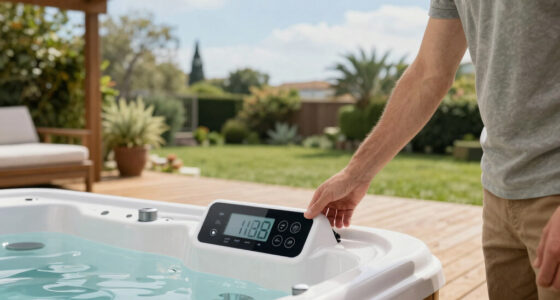
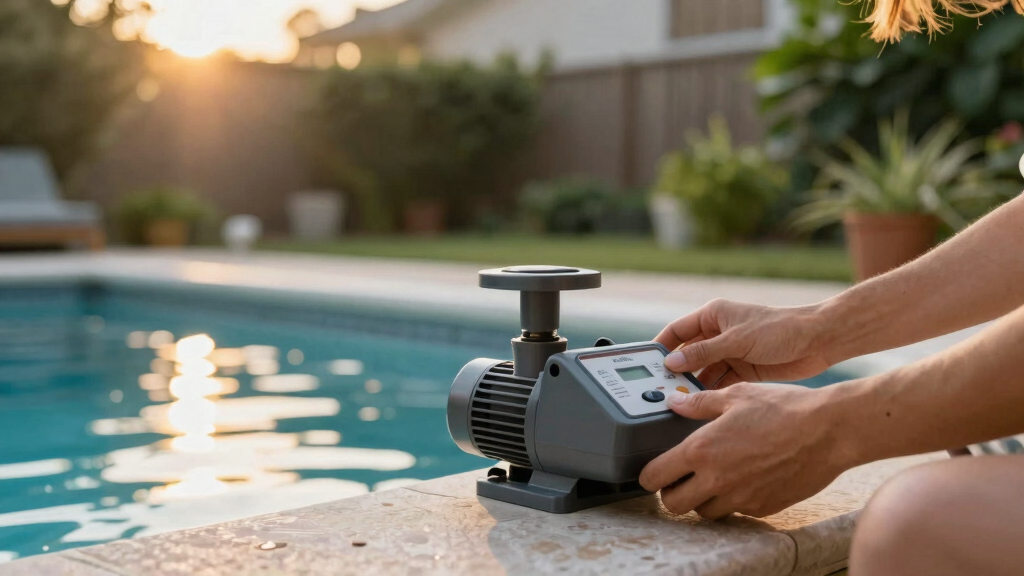
Most new variable speed pumps come with integrated timers or programmable scheduling. That means you set your preferred run times directly on the pump’s control panel or smartphone app. For example, a typical model might let you schedule filtration for early mornings and evenings, all without a separate device.
Imagine waking up on a summer Saturday and knowing your pump is already running at just the right speed, saving energy and keeping your pool crystal clear. Since these pumps can automate start and stop times, they often eliminate the need for an external timer altogether.
From a practical standpoint, this integration reduces clutter and potential points of failure in your pool system. However, it’s crucial to understand that the effectiveness of these built-in controls depends on their reliability and your ability to program them correctly. If your pump’s software is intuitive and stable, you gain convenience and efficiency. But if you encounter bugs or limitations, you might still prefer the backup or flexibility an external timer provides.
According to Timer One, over 80% of new models now include built-in scheduling, making external timers less common in modern pool setups. The tradeoff here is simplicity versus customization. Built-in timers are easier but may lack the advanced features or multi-device control that external timers can offer.

1.8HP Variable Speed Pool Pump for In Ground and Above Ground Pools 220V
- Efficient Pool Circulation: Provides smooth water flow for residential pools
- Quiet and Energy Efficient: Operates quietly with reduced power consumption
- Adjustable Speed & Timer: Customizable flow and automatic scheduling
As an affiliate, we earn on qualifying purchases.
As an affiliate, we earn on qualifying purchases.
When External Timers Still Make Sense for Your Pool
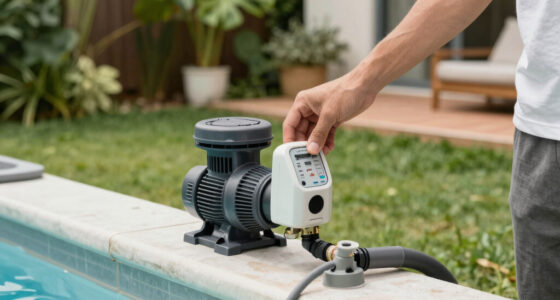
While many pumps come with internal scheduling, there are scenarios where an external timer adds value—especially considering the tradeoffs involved. For example, if your pump lacks digital controls or if you want a dedicated device that can control multiple systems simultaneously, an external timer provides enhanced flexibility and redundancy.
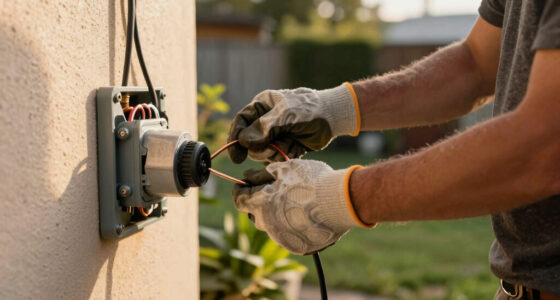
Think about situations where your pool setup involves multiple zones or equipment—such as spa jets, lighting, or heating systems—that need to be coordinated. An external timer can serve as a central hub, ensuring all devices operate harmoniously without relying solely on the pump’s internal controls. Additionally, external timers can be more durable in harsh outdoor environments, especially if rated for outdoor use.
Furthermore, external timers enable you to implement complex schedules—like multiple start/stop cycles or specific seasonal adjustments—that might be cumbersome or impossible with built-in controls. This layered approach ensures you have a fallback in case your pump’s software fails, or if you need to override automatic scheduling temporarily.
In practical terms, using an external timer can extend your system’s flexibility, giving you more precise control over energy consumption and equipment lifespan. It also allows for easier troubleshooting and manual adjustments without navigating digital menus, which can be advantageous for less tech-savvy users.

DEWENWILS Pool Pump Timer, Outdoor Smart WiFi Timer Box, 40A 240VAC 3HP
- Versatile Timer Modes: Schedule, random, countdown, astronomical modes
- Energy Saving: 15 ON/OFF settings to prevent overuse
- Remote & Voice Control: Control via app, Alexa, Google Assistant
As an affiliate, we earn on qualifying purchases.
As an affiliate, we earn on qualifying purchases.
Comparison Table: Built-in Timer vs External Timer
| Feature | Built-in Timer | External Timer |
|---|---|---|
| Ease of use | Integrated, simple setup via pump controls or app; ideal for straightforward schedules | Requires additional device and setup; best for users needing multi-device control or backup |
| Flexibility | Limited to the scheduling options provided by the pump’s firmware | Can control multiple devices and create complex, multi-zone schedules |
| Reliability | Dependent on pump’s software stability and updates; potential for glitches | Generally more robust; can serve as a backup if the pump’s controls fail |
| Cost | Included with the pump, no extra expense | Additional purchase, but can be reused across multiple systems |
| Control granularity | Usually simple start/stop times with limited customization | Supports detailed programming—multiple schedules, override options, and fallback modes |

TiFFCOFiO Outdoor Timer Outlet, 24 Hour Mechanical Outdoor Timer for Pool Pump, Outdoor Light Timer Waterproof, 2 Grounded Outlets for Home and Garden, 15A 1/2HP, Heavy Duty, CSA Listed (1 Pack)
- Daily Repeat Mechanical Timer: 48 ON/OFF settings in 24 hours
- Heavy Duty Plug-in Timer: 2 grounded outlets with 6-inch cords
- Simple Manual Operation: Pull or push pins to set ON/OFF times
As an affiliate, we earn on qualifying purchases.
As an affiliate, we earn on qualifying purchases.
How to Decide if You Need an Extra Timer
Deciding whether to add an external timer involves evaluating your system’s complexity, control preferences, and reliability needs. Here’s a practical decision framework:
- Assess your pump controls: Does your pump have a digital interface or smartphone app? If yes, you’re likely covered for basic scheduling.
- Determine your control needs: Do you need to run your pump during specific off-peak hours to save energy? If yes, check if your pump’s built-in schedule can accommodate this.
- Manage multiple systems: Are you controlling additional equipment like lighting, spa jets, or heaters? An external timer can centralize control and simplify management.
- Backup and redundancy: Do you want a failsafe in case the digital controls malfunction? External timers can serve as a reliable backup.
Based on this framework, if your answers lean toward managing multiple devices, requiring complex schedules, or needing backup control, an external timer is worth considering. Otherwise, leveraging your pump’s internal features may be sufficient and more straightforward.

Intelicenter 523910. InteliCenter Lite System i5PS(Pool and Spa). Wi-Fi Antenna Included. Two Acuator Valves, No Breaker Panel.
- Model Number: Intelicenter 523910 i5PS
- System Type: Lite Pool and Spa Control
- Breaker Panel: No breaker panel included
As an affiliate, we earn on qualifying purchases.
As an affiliate, we earn on qualifying purchases.
Practical Tips for Setting Up Your Pool’s Automation
- Read your pump’s manual thoroughly to understand its scheduling capabilities and limitations. This knowledge helps you avoid misconfigurations that could lead to inefficient operation or equipment wear.
- Use a smartphone app if available, as it allows for quick adjustments, remote control, and real-time monitoring—enhancing your ability to fine-tune schedules based on changing needs.
- Schedule your pump to run during off-peak hours when electricity rates are lower, maximizing savings without sacrificing water quality.
- If opting for an external timer, choose one rated for outdoor use, rated for the power load of your pump, and compatible with your electrical wiring. Proper installation ensures safety and longevity.
- Test your automation setup for at least a week, observing how well it maintains your pool’s cleanliness and energy efficiency. Adjust schedules as needed to optimize performance and convenience.
Frequently Asked Questions
Can I program my variable speed pump without an external timer?
Absolutely. Many modern pumps come with digital controls or smartphone apps that let you set schedules directly. This makes external timers optional for most routine operations.Is it worth installing an external timer if my pump has scheduling features?
In most cases, no. The built-in scheduling is usually sufficient. However, external timers might add extra flexibility or serve as a backup, especially if you manage multiple devices.What should I consider before adding a new timer to my pool system?
Check your pump’s compatibility, whether it’s rated for outdoor use, and if it supports your desired schedule. Also, ensure any external timer complies with local electrical codes and safety standards.Are external timers compatible with smart pool automation systems?
Many external timers can integrate with smart home systems, but verify compatibility first. Some smart pumps include their own scheduling, reducing the need for separate timers.How do I know if my pump’s internal timer is reliable enough?
Test your pump’s schedule over a few days. If it consistently runs as planned, it’s reliable. For critical operations or backup, consider adding an external timer for peace of mind.Conclusion
With new tech packed into each pump, the days of relying solely on external timers are fading. Most owners can now enjoy automatic, energy-efficient operation right from the pump’s control panel or app.
Focus on your pump’s built-in features first—they’re designed to handle your routine needs. But if you crave deeper control or backup plans, external timers still have a place—just like a trusty safety net. Your pool’s perfect balance of convenience and savings is within reach; it’s all about choosing the right tools for your lifestyle.
Labor Day sales Picks
labor day deals
As an affiliate, we earn on qualifying purchases.