
TL;DR
Open a free Amazon Business account
Business pricing, bulk buying and tax-exempt orders.
Create a free accountAs an affiliate, we earn on qualifying purchases.
Proper lighting schedules prevent stress and algae, promote plant growth, and keep aquatic life balanced. Modern timers offer customizable options that make maintaining the perfect photoperiod easier than ever.
Imagine your aquarium as a tiny slice of nature, alive with movement, colors, and subtle rhythms. The secret to keeping it thriving? Consistent, well-timed lighting.
Proper lighting isn’t just about visibility — it influences fish behavior, plant health, and algae control. With the right timer, you set a natural rhythm, even when you’re away or busy. This guide will walk you through choosing the best timers, understanding light needs, and creating the perfect photoperiod for your aquatic ecosystem.
Set a consistent daily schedule of 8-12 hours of light based on your species’ needs.
Choose a timer type that matches your setup — mechanical for simplicity, digital or smart for flexibility.
Use gradual sunrise and sunset effects to mimic natural environments and reduce stress.
Modern timers with app control and spectrum adjustment help optimize plant and coral health.
Regularly monitor your tank’s response and adjust lighting to prevent algae and promote growth.
Why a Proper Light Schedule Matters for Fish and Plants
Think of your aquarium as a miniature world that follows a daily cycle. Fish and invertebrates thrive when they experience consistent day and night, just like in nature. These natural rhythms regulate their behavior, feeding, and reproductive cycles, which are crucial for their overall health. Plants require specific light periods to photosynthesize efficiently; too little light hampers growth, while too much can lead to algae overgrowth that competes for nutrients and oxygen. Understanding these nuances helps prevent stress-related illnesses and promotes a balanced ecosystem. When the lighting schedule aligns with the natural needs of your inhabitants, it reduces the likelihood of stress-induced behaviors, disease, and algae blooms, creating a more stable and vibrant environment. The tradeoff lies in balancing sufficient light for growth without crossing into overexposure, which can cause long-term issues. A well-planned schedule minimizes these risks, ensuring your tank remains healthy and sustainable.
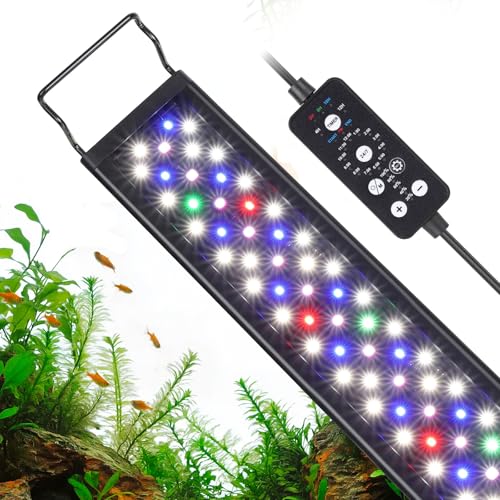
hygger 18W LED Aquarium Light, 18-24 Inch Fish Tank Light with Timer Auto On/Off, Sunrise Sunset Mode, Adjustable Brightness and Colors, Full Spectrum Light with Extendable Brackets for Freshwater
- 24/7 Natural Cycle Simulation: Customizable sunrise to starry night lighting
- Gradual Light Transition: On/off over 15 minutes to avoid fish spook
- DIY Lighting Modes: 3 timers, 9 colors, 10 brightness levels
As an affiliate, we earn on qualifying purchases.
As an affiliate, we earn on qualifying purchases.
Pick the Right Timer Type: Mechanical, Digital, or Smart?
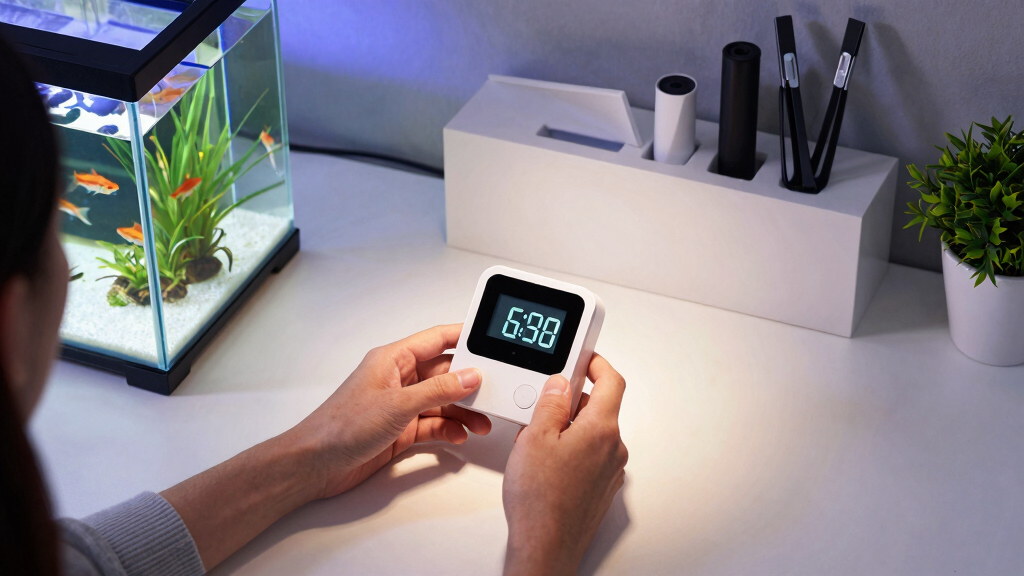
Choosing the right timer depends on your setup and needs. Mechanical timers are straightforward, with a dial that you turn to set on and off times, making them reliable and easy to use. However, their simplicity means limited flexibility; they lack advanced features like multiple program cycles or remote control, which can be a limitation if your setup requires more nuanced lighting control. Digital timers offer a significant upgrade—they allow precise programming, multiple on/off cycles per day, and easy adjustments, which is especially beneficial for complex tanks with varying lighting needs. Smart timers integrate with home automation systems via Wi-Fi or Bluetooth, enabling remote control and sophisticated scheduling, such as sunrise/sunset simulations or lunar cycles. These features can significantly enhance the natural feel of your tank, promoting healthier behavior in sensitive species. The tradeoffs involve cost and complexity; while smart timers provide maximum flexibility, they might be unnecessary for simple setups. Selecting the right timer involves weighing your tank’s complexity, your budget, and your desire for automation, ensuring you can maintain optimal lighting conditions with minimal effort.

NICREW Aquarium Light Timer & Dimmer, Fish Tank Light Controller
- Sunrise and Sunset Simulation: 3 default lighting modes
- Easy On/Off Programming: Program with power button
- Manual Brightness Control: Adjust from 10% to 100%
As an affiliate, we earn on qualifying purchases.
As an affiliate, we earn on qualifying purchases.
How to Set the Perfect Photoperiod in 3 Simple Steps
- Determine your species’ needs. Most freshwater fish and plants do well with 8-12 hours of light daily, but some species have specific requirements that influence their behavior and health. For example, certain plants may need longer periods to thrive, while some fish are more sensitive to sudden changes in light, which can cause stress. Understanding these needs helps you tailor the photoperiod, reducing risks of overexposure or underexposure that can lead to health issues or algae problems.
- Choose a timer type that fits your setup and budget. The right timer ensures your schedule is consistent and reliable, preventing accidental light fluctuations that could harm your aquatic life. Consider the complexity of your lighting zones; a simple tank might do well with a mechanical timer, while a reef tank with multiple lighting phases benefits from a programmable or smart timer that can simulate natural dawn, dusk, and lunar cycles. This choice impacts not only the health of your aquatic inhabitants but also your ease of maintenance and control over the environment.
- Program your timer to turn lights on and off at consistent times, gradually adjusting if needed. Use dawn/dusk simulations for a natural effect, especially in reef or planted tanks. This gradual transition mimics natural sunlight patterns, reducing stress and encouraging natural behaviors such as feeding, breeding, and resting. Proper scheduling can also help prevent algae blooms by avoiding prolonged or intense light exposure, which often results from abrupt changes or inconsistent lighting. Fine-tuning these settings based on your observations ensures a balanced environment tailored to your specific tank inhabitants.
For instance, if you have a planted tank, set your timer to mimic sunrise gradually over 30 minutes, then keep full light for 8-10 hours, and fade out for sunset. This not only promotes healthy growth but also minimizes stress, allowing your plants and fish to thrive naturally.

Lominie Programmable WiFi Controller 2.0 LED Aquarium Light with Ramp Timer Dimmer Remote Control
- WiFi-enabled Aquarium Light Controller: Lominie Programmable WiFi Controller 2.0
- Adjustable LED Aquarium Light: Ramp Timer Dimmer for customizable lighting
- Remote Control Included: Wireless control for convenience
As an affiliate, we earn on qualifying purchases.
As an affiliate, we earn on qualifying purchases.
Latest Tech in Aquarium Lighting: What’s New?
Modern timers now bring smart features that make life easier. Many are compatible with home automation systems, letting you schedule or adjust lights from your phone, which means you can fine-tune your lighting even when you’re away. Some advanced models simulate natural lunar cycles, providing subtle moonlight phases that can encourage natural behaviors such as breeding or nocturnal activity. These innovations help replicate the natural environment more accurately, which is especially important for sensitive species or reef tanks.
Energy-efficient LED lights are evolving rapidly, offering customizable spectra, dimming options, and even weather-based effects. Apps associated with these systems enable real-time adjustments, giving you control over your tank’s ambiance and health. For example, you might set a moonlight cycle at night or adjust the intensity of daylight to simulate seasonal changes, promoting natural feeding and breeding behaviors. Embracing these technologies allows hobbyists to create more dynamic and naturalistic environments, enhancing both aesthetic appeal and biological health.
Key Facts About Aquarium Lighting Schedules
Consistency is king. Regular lighting prevents stress and promotes natural behaviors, which are essential for the well-being of your aquatic life. An anonymous researcher notes that a stable 8-12 hour cycle closely mimics natural conditions, supporting healthy feeding, breeding, and resting patterns. Maintaining this consistency helps avoid stress responses such as erratic swimming, aggression, or illness, which can occur with irregular lighting schedules. Overexposure to light can lead to algae blooms by providing excess energy for algae to proliferate, while insufficient light hampers photosynthesis, stunting plant growth and weakening coral health. The key is to find a balanced schedule tailored to your species’ needs, ensuring they receive enough light for health without tipping into harmful overexposure. Timers are invaluable tools here—they guarantee your schedule remains uninterrupted, even during busy or unpredictable days. Recent studies also highlight that gradual light transitions reduce the shock to fish and invertebrates, fostering a more natural environment and supporting their long-term health.
Questions You Might Have About Lighting Your Aquarium
- How do I know what photoperiod my fish and plants need? Most freshwater species thrive with 8-12 hours daily, but specific requirements can vary widely. Researching your particular species helps you tailor the schedule to their natural habitat, which can significantly impact their health and behavior. For example, some plants require longer light periods to photosynthesize effectively, while certain fish may become stressed with abrupt changes. Observing your tank for signs of algae overgrowth, sluggish behavior, or stress can guide adjustments, ensuring your lighting supports healthy growth and activity.
- Can I use a regular household timer? Yes, but with caveats. Household timers are typically designed for simple on/off cycles and may lack the precision or programmability needed for complex lighting setups. They might also be less durable in humid environments. For straightforward tanks, they can suffice, but for reef tanks or those with sophisticated lighting needs, investing in digital or smart timers provides better control, consistency, and peace of mind.
- What’s the best timer for a reef or planted tank? A programmable or smart timer that allows spectrum control, dimming, and multiple on/off cycles is ideal. These features enable you to mimic natural daylight variations, lunar cycles, and seasonal changes, which are crucial for sensitive corals and plants. Properly adjusting these parameters promotes natural behaviors, enhances growth, and prevents stress, making your tank more resilient and visually appealing.
- How do I prevent algae overgrowth? Stick to recommended light durations based on your species, avoid overly intense or prolonged lighting, and perform regular tank maintenance. Using timers helps automate this process, ensuring consistency. Additionally, controlling nutrient levels and performing water changes reduce excess nutrients that algae feed on, creating a balanced environment where plants outcompete algae for resources.
- Are smart timers worth it? If you value convenience, precise control, and the ability to simulate natural conditions, then yes. They enable remote adjustments, detailed scheduling, and integration with other smart devices, which can greatly simplify maintaining a healthy environment. For busy hobbyists or those aiming for high precision, smart timers represent a worthwhile investment that enhances both the aesthetic and biological health of your tank.
Conclusion
In the end, a well-chosen timer does more than just automate your lighting — it creates a stable, natural rhythm for your underwater world. That stability translates into healthier fish, thriving plants, and a vibrant tank that’s a joy to watch.
Invest in the right timer, set it thoughtfully, and let your aquarium’s natural beauty flourish. After all, a tiny slice of nature deserves the best rhythm you can give it.
College move-in / dorm season Picks
dorm essentials
As an affiliate, we earn on qualifying purchases.