TL;DR

Get home appliances delivered free with Prime
- Fast, free delivery on millions of items
- Prime Video, Amazon Music and more included
- Member-only deals all year
Most pools benefit from running the pump 8 to 12 hours daily, depending on size, climate, and features. Using smart or variable-speed pumps can cut costs and improve water quality with tailored schedules.
Ever wonder if your pool pump is running too long or not enough? You’re not alone. Many homeowners struggle to find that sweet spot—enough circulation to keep water sparkling, but not so much that energy bills skyrocket.
In this guide, you’ll learn how to determine the perfect daily run time for your pool pump. We’ll explore how pool size, climate, and technology influence your schedule. Plus, real-world tips to keep your water clear and costs in check.
Most pools run their pump 8 to 12 hours daily, but this varies with pool size and climate.
Longer run times don’t always mean cleaner water; overdoing it wastes energy and shortens equipment life.
Variable-speed and smart pumps can cut energy use significantly while maintaining water quality.
Regularly monitor water clarity and filter pressure to fine-tune your schedule.
Adjust run times seasonally and during different weather conditions for best results.
How to Know the Perfect Daily Pump Time for Your Pool
Running your pump 8 to 12 hours a day is the general rule for most pools. But that’s just a starting point. The ideal length depends on your pool’s size, usage, and local climate.
For example, a small backyard pool might only need 8 hours if it’s shaded and used occasionally. A large, sunny pool with lots of swimmers could need closer to 12 hours. The goal? Circulate and filter all the water efficiently without wasting energy.
Test your system by observing water clarity, algae growth, and filter pressure. If algae appears or the water gets murky before your scheduled run ends, consider extending the time. If your water stays clear and your energy bills spike, try shortening it.
Understanding these indicators allows you to optimize your schedule, balancing water quality with energy costs. Over-circulating can lead to unnecessary energy use and equipment wear, while under-circulating risks water quality and health. Finding that balance is crucial for both clean water and cost savings.
As an affiliate, we earn on qualifying purchases.
Why Running Your Pool Pump Too Long Is a Waste (and When It’s Not)
Running your pump longer than necessary wastes energy and raises costs. Plus, it wears out your equipment faster. But run it too short, and your water won’t circulate enough, leading to algae and bacteria buildup.
For example, if you run your 20,000-gallon pool only 4 hours daily, debris and contaminants might not get filtered out fully, risking water quality issues and potential health hazards. Conversely, running it 24 hours isn’t just overkill — it can make your energy bill look like a small mortgage, and unnecessarily tax your equipment, reducing its lifespan.
The trick? Find a balance. Usually, 8 to 12 hours is enough for most pools, but adjust based on your pool’s specific needs and observed water conditions. This balance ensures effective filtration while conserving energy and prolonging equipment life. Think of it as a tradeoff: more run time can improve water clarity but at increased costs and equipment wear; less run time saves money but risks water quality. Fine-tuning this balance is essential for optimal pool maintenance.
As an affiliate, we earn on qualifying purchases.
How Pool Size and Features Change Your Pump Schedule
| Pool Size & Features | Recommended Run Time |
|---|---|
| Small pool (under 10,000 gallons), minimal features | 8 hours or less |
| Average backyard pool (10,000–20,000 gallons) | 8-10 hours |
| Large pool (over 20,000 gallons), with features like waterfalls or spas | 10-12 hours, or more |
Large pools and those with features like waterfalls need longer circulation to keep everything flowing smoothly. For instance, a 30,000-gallon pool with a waterfall might require 12 hours to ensure everything stays clear and debris-free.
However, these are starting points. The actual needs depend on factors like water temperature, usage frequency, and environmental conditions. Regularly check water clarity and filter pressure to determine if your schedule needs adjustment. For example, if your waterfall creates extra debris, you might need to extend run times during certain seasons. Conversely, if your water remains clear with minimal filter pressure, you could reduce run times slightly. This dynamic approach helps maintain water quality efficiently without unnecessary energy expenditure.
As an affiliate, we earn on qualifying purchases.
Smart and Variable-Speed Pumps Make Scheduling Easier
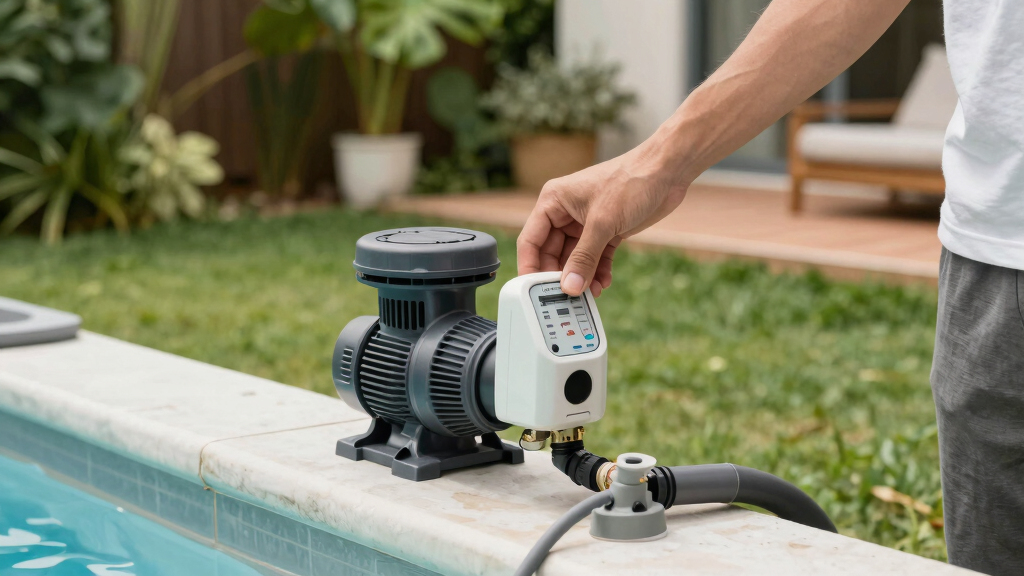
Smart and variable-speed pumps are game-changers. They adapt to your pool’s needs, running at lower speeds for longer periods to save energy while maintaining water quality.
For example, a homeowner with a variable-speed pump set it to run 10 hours at a low, energy-efficient speed. The result? Clean water with a fraction of the energy cost compared to a traditional pump running at high speed for 8 hours.
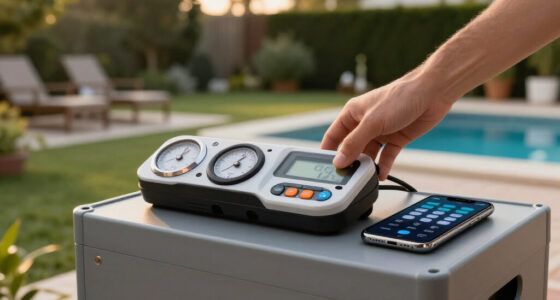
These pumps can automatically adjust based on weather, water temperature, and usage—saving you both money and effort.
While the initial investment is higher, the long-term savings and convenience are worth it. They also allow for more precise control over circulation, which can be tailored to your pool’s specific needs, reducing unnecessary run times and optimizing energy use. Over time, this fine-tuning can lead to significant savings and better water quality management, making them a smart investment in modern pool maintenance.
As an affiliate, we earn on qualifying purchases.
Quick Tips to Optimize Your Pool Pump Schedule
- Run the pump during off-peak electricity hours—late at night or early morning—when rates are lower, which can significantly reduce your energy bills.
- Use a timer to avoid forgetting or over-running the pump. Proper scheduling ensures your pool gets sufficient filtration without unnecessary energy consumption.
- Adjust run times seasonally: longer in summer when evaporation and usage are higher, shorter in winter when less circulation is needed. This seasonal adjustment helps optimize energy use and water quality.
- Consider upgrading to a variable-speed pump for better efficiency and more precise control over circulation, which can lead to substantial savings over time.
- Regularly check your water clarity and filter pressure to tweak your schedule. If water remains clear and filter pressure stays within normal ranges, you can reduce run times; if not, extend them slightly.
Frequently Asked Questions
How do I determine the ideal pump run time for my specific pool?
Start with 8 to 12 hours daily, then monitor water clarity, algae growth, and filter pressure. Adjust based on your pool’s size, usage, and local climate. Regular testing helps you find that sweet spot.
Can I run my pool pump too long or too short? What are the risks?
Running it too long wastes energy and accelerates equipment wear. Too short, and your water won’t circulate enough, risking algae and bacteria. Balance is key—aim for that 8-12 hour window for most pools.
How does the size of my pool affect the recommended run time?
Larger pools require longer run times—up to 12 hours or more—because they hold more water and need more circulation. Smaller pools can often get by with less, around 8 hours.
Are there energy-efficient options that can reduce costs?
Yes. Variable-speed pumps and smart timers adapt to your pool’s needs, running at lower speeds for longer periods. These options cut energy costs significantly while keeping your water clean.
Should I run my pump continuously or on a schedule?
Scheduling is usually best. Continuous operation isn’t necessary and can be costly. Use timers or smart controls to run your pump during the most effective times—usually when energy rates are lowest and water circulation is needed most.
Conclusion
Finding the right pump run time is about balancing water quality with energy costs. Modern pumps and smart timers make this easier than ever—set it, forget it, and enjoy crystal-clear water without a hefty bill.
Next time you hear your pump humming in the early morning, think about whether it’s running just enough. A little tweak can make a big difference—and keep your pool sparkling all season long.
Fall yard work Picks
leaf blowers
As an affiliate, we earn on qualifying purchases.