
TL;DR

Get home appliances delivered free with Prime
- Fast, free delivery on millions of items
- Prime Video, Amazon Music and more included
- Member-only deals all year
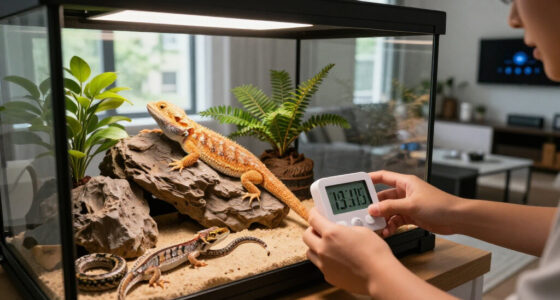
Timers automate heat and light cycles in your reptile’s terrarium, mimicking natural conditions. Modern digital and smart timers offer precise control, reducing errors and improving reptile well-being.
You’ve probably noticed your reptile basking in the same spot, day after day. That’s no coincidence. Reptiles thrive on predictable cycles of heat and light—just like the sun and seasons provide in the wild.
Using timers isn’t just about convenience; it’s about mimicking nature to keep your pet healthy and stress-free. In this guide, you’ll learn how to choose the right timers, set up naturalistic cycles, and keep everything running smoothly—saving energy and avoiding mishaps.
Choose timers rated for your device’s wattage to prevent failures.
Program light and heat cycles to mimic natural day and night, typically 12-14 hours of light.
Use digital or smart timers for more precise, flexible control and automation.
Regularly test your timers to catch malfunctions early.
Incorporate sensors and automation when possible to fine-tune environmental conditions.
Why Timers Are the Secret to Happy Reptiles
Timers do the heavy lifting by cycling your heat and light sources on a schedule that mimics the natural day. Without them, you might forget or accidentally leave lights on too long, stressing your reptile or causing health issues.
Imagine the rich, warm glow of a basking light turning on at sunrise, then gradually dimming at night. That steady rhythm helps your reptile regulate its activity and appetite. According to an anonymous researcher, consistent light and heat cycles improve feeding, activity levels, and even reproductive success.
As an affiliate, we earn on qualifying purchases.
Choosing the Right Timer for Your Reptile Setup
Not all timers are created equal. For reptiles, reliability and precision matter. You’ll want a timer that can handle the wattage of your heat emitter or UVB light, which can range from 40W for small enclosures to 250W or more for larger tanks.
Here’s a quick comparison:
| Type | Pros | Cons |
|---|---|---|
| Mechanical (Analog) | Simple, reliable, inexpensive | Limited programming, no randomization |
| Digital | Precise, programmable, multi-cycle | Slightly more expensive, potential for digital failure |
| Smart Wi-Fi | Remote control, app scheduling, sensors | Higher cost, requires Wi-Fi connection |
Choosing the right timer depends on your setup’s complexity and your comfort with technology. For simple on/off cycles, mechanical timers are often sufficient and reliable. If you want to mimic dawn/dusk transitions or have multiple devices, digital or smart timers provide more flexibility. The key is to balance ease of use with the level of control needed, so your reptile’s environment remains stable and naturalistic, which directly impacts their health and behavior.
As an affiliate, we earn on qualifying purchases.
How to Set Up Naturalistic Light & Heat Cycles in 3 Easy Steps
- Plan your schedule: Decide on 12-14 hours of light during the day and 10-12 hours of darkness at night. Consider your reptile’s specific needs and natural habitat. Proper timing helps regulate their circadian rhythm, which influences feeding, activity, and reproductive cycles. Inconsistent cycles can lead to stress or health issues, so precise planning is crucial.
- Connect your timers: Attach your lights and heat sources to timers rated for their wattage. Using surge protectors is essential to prevent electrical surges from damaging your equipment. Proper connections ensure that your setup remains reliable, avoiding unexpected outages that could disrupt your reptile’s environment.
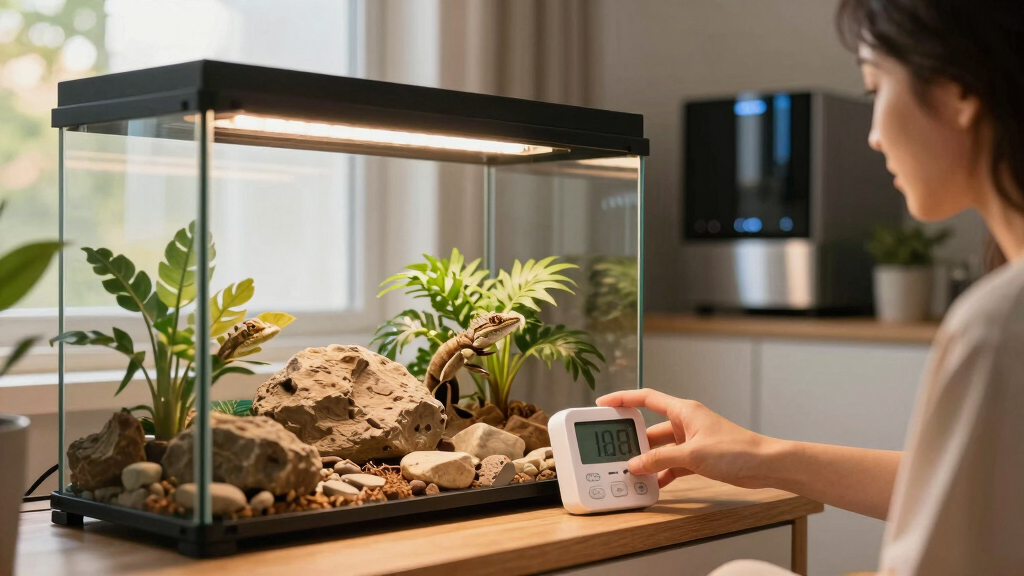
- Program the timers: Set the on/off times to match your schedule, ensuring the light cycle aligns with natural day length. For example, turn on at 7 a.m. and off at 9 p.m. To replicate dawn and dusk, consider using timers with dimming features or smart timers that can gradually increase or decrease light intensity. If you have night heat sources, program them to stay on during the dark period, providing consistent warmth without disturbing your reptile’s sleep cycle. Proper programming is critical because abrupt changes or incorrect timing can cause stress or disrupt biological rhythms, impacting health and behavior.
Imagine waking up to a gentle sunrise glow, then watching the basking light fade as evening falls. This gradual transition closely mimics natural conditions, encouraging your reptile to behave naturally, feed well, and remain active during appropriate times. Consistent environmental cues are key to their overall well-being.
reptile lighting and heating automation
As an affiliate, we earn on qualifying purchases.
As an affiliate, we earn on qualifying purchases.
Smart & Automated Timers: The Future of Reptile Care
Modern timers are more than just switches. Wi-Fi-enabled models let you control and adjust your setup remotely, providing unparalleled flexibility. You can modify schedules on the fly, monitor usage to prevent energy waste, or even add sensors that auto-adjust based on temperature or humidity levels. This integration helps create a more stable environment, reducing the risk of human error and ensuring your reptile’s conditions remain optimal even when you’re away.
For example, a smart timer can simulate dawn by gradually increasing light intensity at sunrise, then dimming it at dusk. Sensors can detect temperature drops and automatically activate heating elements, maintaining a consistent thermal gradient that’s vital for thermoregulation. These features enable you to fine-tune your setup, enhance your reptile’s health, and reduce daily maintenance, making reptile care more efficient and precise.
reptile enclosure temperature controller
As an affiliate, we earn on qualifying purchases.
As an affiliate, we earn on qualifying purchases.
Safety Tips to Keep Your Reptile Safe & Your Setup Reliable
Timers are generally safe, but a few precautions prevent mishaps. Always use timers rated for the wattage of your devices to avoid overheating or electrical failures. Regularly test your timers by observing their cycles over several days—this ensures they turn on and off at the correct times and that no malfunctions occur. Place timers in a dry, cool spot to prevent moisture damage, which can lead to short circuits or corrosion. Inspect cords periodically for signs of wear or damage, and replace any frayed wires immediately. Never overload a timer beyond its capacity, as this can cause overheating and potential fire hazards. Proper safety measures are essential because a malfunctioning timer can disrupt your reptile’s cycle, cause overheating, or even pose electrical risks, jeopardizing both your pet’s health and your home’s safety.
For example, if your basking light stays on all night unexpectedly, it could be a sign that your timer is malfunctioning. Routine testing and maintenance help catch issues early, preventing emergencies and ensuring your setup remains dependable. Investing time in safety checks not only protects your reptile but also gives you peace of mind.
Frequently Asked Questions
How do I choose the best timer for my reptile setup?
Match the timer’s wattage rating to your heat and light devices. For simple on/off cycles, a reliable mechanical timer works well. For complex schedules or multiple devices, consider digital or smart timers with programmable features.
What are the best practices for setting up heat and light cycles?
Maintain a consistent schedule, typically 12-14 hours of light and 10-12 hours of darkness. Use timers to automate these cycles, and adjust based on your reptile’s species-specific needs. Regularly check and fine-tune the schedule as your reptile grows or seasons change.
Can I control multiple devices with one timer?
It depends. Basic mechanical timers usually control a single device. For multiple devices, use a digital or smart timer with multiple outlets or channels. This setup helps synchronize UVB lights, basking lights, and heat sources efficiently.
How can I simulate natural day/night cycles exactly?
Set your timers to follow a realistic schedule—around 12-14 hours of light during the peak hours, with gradual transitions if possible. Using timers with dimming features or smart timers that mimic dawn/dusk can create a more natural environment.
What safety precautions should I take when using timers?
Always use timers rated for your device’s wattage. Place timers in dry, cool locations. Regularly test their operation and inspect cords for damage. Never overload a timer beyond its capacity—this prevents overheating and potential hazards.
Conclusion
Well-programmed timers turn your reptile’s environment into a natural, stress-free habitat. They reduce your daily chores and keep your pet thriving.
Imagine a perfect sunrise and sunset routine—every single day. Your reptile will thank you with vibrant activity, healthy appetite, and peaceful slumber. Set your timers today, and watch your setup come alive with natural rhythm.
Fall yard work Picks
leaf blowers
As an affiliate, we earn on qualifying purchases.