
TL;DR

Get home appliances delivered free with Prime
- Fast, free delivery on millions of items
- Prime Video, Amazon Music and more included
- Member-only deals all year
Setting your pool pump on a well-planned schedule can cut your electric bill by up to 50%. Use timers to run the pump during off-peak hours and avoid waste. Proper programming extends pump life too.
Your pool’s motor hums louder than your neighbor’s lawnmower—yet, many homeowners don’t realize how much energy that little machine consumes. Properly timing your pool pump isn’t just about water clarity, it’s a smart move to slash your electric bill. A few minutes of setup can save you hundreds over the season, turning your pool from a money drain into a cost-effective luxury.
If you’re tired of paying sky-high bills or just want to extend your pump’s lifespan, this guide breaks down how to set your timer wisely and leverage new tech to maximize savings. Ready to cut costs without sacrificing a crystal-clear pool? Let’s dive in.
Run your pool pump 8-12 hours daily—less than that can lead to poor water quality, more than that wastes energy.
Schedule your pump during off-peak hours to save up to 30% on electricity costs.
Use a timer to prevent human error and keep your pump running efficiently.
Upgrade to a variable-speed pump and smart timers for maximum savings over time.
Consider pairing your timer setup with solar power to slash costs further.
Know Your Pool Pump and Timer to Save Big
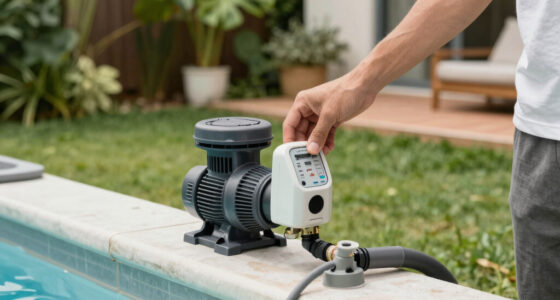
Understanding your pool pump and timer is the first step. Most modern pumps come with built-in timers, but if yours doesn’t, external timers are a straightforward upgrade. Check your pump’s voltage, amperage, and flow rate—these details matter when selecting a timer. For example, a typical residential pump runs at 115 volts and 1.5 horsepower, which a compatible timer can handle easily.
Set the pump to run 8-12 hours daily—most pools don’t need more. Knowing your equipment’s specs prevents overloads and ensures safe operation. When you match the timer to your pump’s requirements, you’re laying the foundation for energy efficiency.
Matching the timer to your pump isn’t just about compatibility; it’s about ensuring your system operates within its safe limits. Using an undersized timer can lead to overheating or electrical failures, while an oversized one might be unnecessarily expensive. Properly rated timers also help you avoid costly repairs and downtime, which can offset initial savings. Additionally, understanding your pump’s flow rate and head pressure helps you set the right run times, preventing under-circulation that can cause algae growth or over-circulation that wastes energy and wears out your equipment prematurely.
As an affiliate, we earn on qualifying purchases.
Choose the Best Times to Run Your Pool Pump for Savings
The secret to cutting your electric bill? Timing. Electricity costs vary throughout the day, especially if your utility charges peak rates during certain hours. Running your pump during off-peak times—early morning or late evening—can cut energy costs significantly.
For instance, if peak rates are from 2 pm to 8 pm and off-peak from midnight to 6 am, scheduling your pump to run overnight could save over 30% on your energy bill. Plus, cooler nighttime temperatures slow evaporation and help the water stay fresher longer. This not only reduces energy costs but also minimizes water loss, which can lead to additional expenses for refilling and chemical balancing. Timing your pump to coincide with off-peak hours also reduces strain on the electrical grid, contributing to a more sustainable energy use pattern. However, consider your local climate and water temperature—running the pump during cooler times can also help prevent algae growth and maintain water clarity, making your pool safer and more inviting.
Understanding utility rate structures is crucial because it allows you to align your pool’s operation with the times when electricity is cheapest. Many utility companies offer time-of-use rates, which means electricity costs are higher during peak hours and lower during off-peak periods. By scheduling your pump to operate during these cheaper times, you’re effectively reducing your operational costs. The tradeoff, however, is that running the pump during off-peak hours might require a timer that can handle multiple start-stop cycles or more complex programming, adding initial cost but providing long-term savings. Additionally, in regions with variable weather patterns, you might need to adjust your schedule seasonally to optimize both energy savings and water quality maintenance.
As an affiliate, we earn on qualifying purchases.
Set Your Timer for the Perfect Pool Circulation Schedule
Most pools need 8-12 hours of circulation daily. Overdoing it wastes energy; underdoing it causes murky water and algae. Here’s a simple step-by-step:
- Determine your pool size and water turnover needs—large pools might need closer to 12 hours.
- Decide on your off-peak time window, say midnight to 8 am.
- Divide your total run time into two or three sessions if your timer supports multiple settings—morning, afternoon, evening—to prevent stagnation.
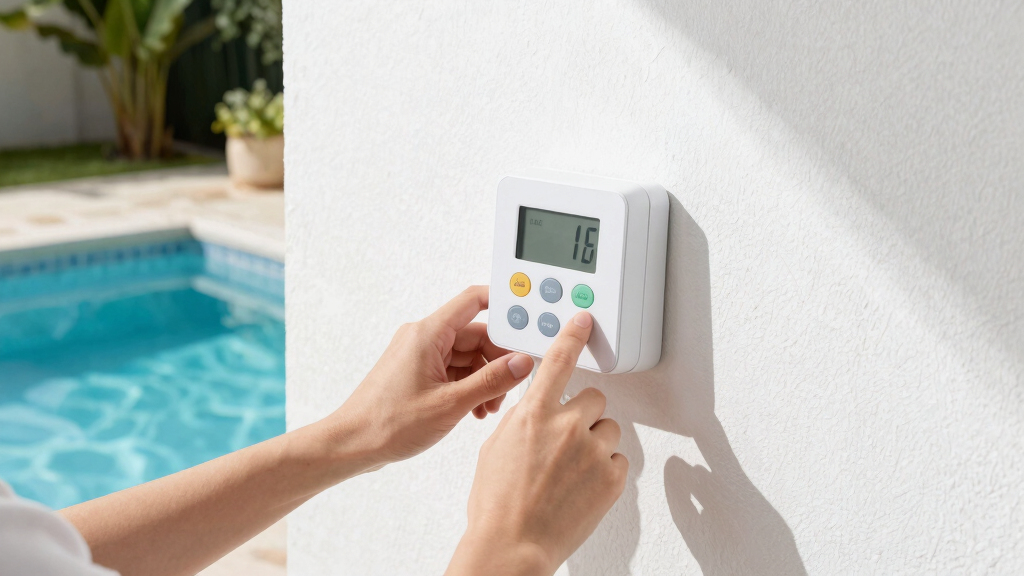
- Set the timer to turn on and off automatically—no manual fuss needed.
- Monitor water clarity and adjust run times if needed.
For example, a 20,000-gallon pool might run 4 hours in the early morning and 4 hours late at night, maintaining clarity while saving energy. Proper scheduling ensures that your water is constantly circulated, which is essential for preventing stagnation and maintaining water quality. It also allows your pump to operate at its most efficient point, reducing unnecessary wear and tear. The key is to find a balance: too little circulation can lead to algae and bacteria growth, while too much wastes energy and accelerates equipment aging. Consider seasonal adjustments as well—during hotter months, longer run times may be necessary, whereas cooler months might require less. Regularly check your water clarity and chemical levels to fine-tune your schedule, ensuring optimal water quality and energy efficiency.
As an affiliate, we earn on qualifying purchases.
Compare Traditional and Smart Timers to Maximize Savings
| Feature | Traditional Timer | Smart Timer |
|---|---|---|
| Control | Manual scheduling via dial or basic programming | Remote control via smartphone app, voice commands |
| Learning Ability | None | Can learn usage patterns to optimize run times |
| Integration | Limited to timer alone | Integrates with home automation systems and solar panels |
| Cost | Lower initial investment | Higher upfront, but potential savings offset |
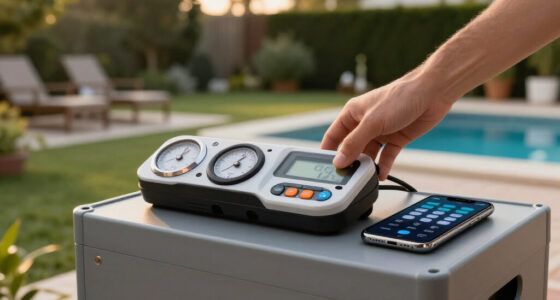
If you want maximum convenience and savings, a smart timer paired with a variable-speed pump can cut energy use by up to 70%. These advanced timers not only allow remote operation but also adapt to your usage patterns—learning when your pool needs circulation and when it doesn’t. This means your pump runs only as long as necessary, reducing unnecessary energy consumption. The ability to adjust schedules based on weather forecasts, water temperature, or your swimming habits ensures your pool operates at peak efficiency without manual intervention. Although the initial cost is higher, the long-term savings on energy bills from optimized operation, combined with less wear on your equipment, make smart timers a worthwhile investment for proactive pool owners seeking to maximize their energy savings and convenience.
As an affiliate, we earn on qualifying purchases.
Upgrade to Energy-Efficient Pumps and Save Even More
Old single-speed pumps guzzle energy—up to 3,000 kWh annually for a typical pool. Upgrading to a variable-speed pump isn’t just a luxury; it’s a game-changer. These pumps can operate at lower speeds, using 50-70% less energy.
For example, switching from a single-speed to a variable-speed pump with a timer set for off-peak hours can cut your pool’s energy consumption by nearly half. Plus, they last longer and reduce noise—imagine a whisper-quiet pump humming at night, saving you money and peace.
Choosing a variable-speed pump also means you can fine-tune your circulation, reducing unnecessary energy use during times when full power isn’t needed. This flexibility allows you to customize your pool’s operation, balancing energy savings with water quality. While the initial cost is higher, the reduced operational costs and extended lifespan make it a wise investment in both savings and sustainability.
Pair Your Timer Strategy with Solar Power for Ultimate Savings
Some homeowners are taking a step further—pairing timers with solar energy. Solar-powered pool pumps run on free, renewable energy, drastically reducing or eliminating electricity costs.
For example, a solar pump paired with a timer running during peak sunlight hours can operate for free during the day, with the timer ensuring night-time circulation is minimal. This setup can slash your overall energy bill and reduce your carbon footprint. Additionally, integrating solar with your existing timer system can provide a more resilient and sustainable operation, especially in sunny regions. While the upfront costs may be higher, the long-term savings and environmental benefits make solar-powered solutions an attractive option for eco-conscious pool owners.
Frequently Asked Questions
How long should I run my pool pump each day?
Most pools need 8-12 hours of circulation daily. Larger pools or those in hotter climates might need closer to 12 hours, while smaller or shaded pools may do fine with less. Monitoring your water clarity and chemical levels is essential because it helps you determine if your current schedule maintains water quality. Proper circulation ensures that chemicals are evenly distributed, debris is filtered out, and algae growth is minimized. Overly short run times can lead to murky water and algae, while excessive operation wastes energy and accelerates equipment wear. The optimal duration often depends on your specific environment, pool size, and usage patterns, so regular testing and adjustments are key to finding the perfect balance.
Can I set my existing pump to a timer?
If your pump doesn’t have a built-in timer, adding an external timer compatible with your pump’s voltage and amperage is a practical way to improve efficiency. When selecting a timer, consider its durability, ease of programming, and compatibility with your pump’s electrical requirements. Installing an external timer is usually straightforward, involving plugging the pump into the timer and setting the schedule. This upgrade allows you to automate your pool’s circulation, prevent human error, and optimize energy use. A well-chosen timer can also provide safety benefits by preventing the pump from running beyond safe limits, reducing the risk of electrical or mechanical failure. Properly installed, it becomes an essential tool for maintaining water quality while reducing operational costs.
What is the best time of day to run my pool pump?
The most cost-effective times are typically during off-peak hours—late at night or early morning—when electricity rates are lower. Running your pump during these times not only reduces your energy bill but also lessens the environmental impact by alleviating stress on the electrical grid during peak demand. This strategy becomes even more effective when combined with timers that automatically start and stop your pump. The key is to align your pump operation with your utility’s rate schedule, which varies by region. Additionally, running the pump during cooler times can help prevent water evaporation and algae growth, especially in warmer months. Balancing cost savings with water quality considerations is essential; for example, in hot climates, longer or more frequent cycles might be necessary despite higher costs.
Are smart timers worth the investment?
Yes. Smart timers offer advanced features like remote control, learning usage patterns, and integration with home automation systems. These capabilities enable more precise and adaptive scheduling, which can significantly reduce energy consumption—up to 70% in some cases—by ensuring your pump runs only when necessary. Smart timers also provide convenience, allowing you to adjust schedules remotely, monitor energy use, and receive alerts if issues arise. Over time, the savings on electricity bills and the reduced wear on your equipment can offset the higher initial cost. Furthermore, they help you implement more sustainable practices, such as optimizing run times based on weather forecasts or water temperature, making them a valuable investment for eco-conscious homeowners aiming to maximize efficiency and ease of use.
How do variable-speed pumps compare to single-speed pumps?
Variable-speed pumps are significantly more energy-efficient than traditional single-speed models, often using 50-70% less energy. They operate at different speeds depending on your needs, which means you can run them at lower speeds during most of the day and only increase power when necessary, such as during heavy use or cleaning cycles. This flexibility not only reduces energy costs but also extends the lifespan of your pump by reducing mechanical stress. Additionally, they tend to operate more quietly and allow for more precise control over water circulation, improving water quality and comfort. While the initial investment is higher, the savings in operational costs and the longer lifespan make variable-speed pumps a smart choice for long-term savings and sustainability.
Conclusion
Setting your pool pump on a smart schedule isn’t just about saving a few dollars—it’s about making your pool smarter and your energy bill leaner. A well-timed, efficient pump keeps your water sparkling and your costs down. The image of a quiet, energy-efficient pool humming at night—costs minimized, water pristine—should be your new normal.
Remember, a small investment in timers and better equipment pays off fast. Your wallet, and the environment, will thank you.
Fall yard work Picks
leaf blowers
As an affiliate, we earn on qualifying purchases.