
TL;DR
Open a free Amazon Business account
Business pricing, bulk buying and tax-exempt orders.
Create a free accountAs an affiliate, we earn on qualifying purchases.
Running your pool pump at night often cuts energy costs thanks to lower rates and cooler temperatures, while daytime operation can aid UV sterilization. Balancing cost and chemistry is key for healthy, clear water.
Ever wondered if you’re wasting money by running your pool pump during the day or night? Maybe you’ve noticed your water looks cloudy or algae blooms seem to appear faster than you’d like. The truth is, the timing of your pump runs impacts both your energy bill and water chemistry — big time.
In this guide, you’ll learn whether night or day is better for your pool pump, how it affects your water quality, and what recent technology can do to help you optimize both. Stay with me — making this simple switch could save you money and keep your pool sparkling longer.
Running your pool pump during off-peak night hours can cut energy costs by up to 50%.
Daytime operation benefits from natural UV sterilization but may require more chlorine due to sunlight breakdown.
Using timers and smart pumps helps optimize your schedule for both savings and water quality.
Cooler night temperatures can reduce equipment wear and evaporation, extending your pump’s lifespan.
Always monitor your water chemistry — balancing pH and chlorine is key regardless of when your pump runs.
Running Your Pool Pump at Night vs Day
Timing changes more than the electric bill. Off-peak rates, sunlight, temperature, chlorine stability, filtration and neighborhood noise all shape the best circulation schedule for a clear, healthy pool.
Possible when nighttime electricity rates are meaningfully lower than daytime rates.
An eight-hour night window can align circulation with cooler conditions and off-peak pricing.
pH, chlorine and alkalinity matter regardless of when the pump runs.
Two schedules, two different strengths
Night operation often wins on price and chemical stability. Day operation circulates water during peak sunlight and swimmer activity, but sunlight can accelerate chlorine loss. Neither schedule replaces adequate filtration or regular testing.
Lower rates. Cooler operation.
Running after sunset can reduce operating cost where time-of-use pricing applies. Cooler air may also reduce heat stress, evaporation and chemical loss.
- Potentially 30–50% lower electricity cost during qualifying off-peak hours
- Less sunlight-driven chlorine degradation while circulation is active
- Cooler conditions may be gentler on motors and seals
- Pump noise and local quiet-hour rules require attention
Circulation when demand peaks.
Daytime pumping moves and filters water during the hottest, sunniest hours. Sunlight can contribute limited direct UV action, while also breaking chlorine down faster.
- Circulation coincides with sunlight, heat and common swimming hours
- Useful for distributing sanitizer after daytime dosing when product directions allow
- Faster chlorine loss can require closer monitoring and adjustment
- Peak electricity rates and hot equipment conditions may raise cost and stress
What matters most
The best choice depends on the local tariff, climate, pool load, equipment noise and chemistry. A split schedule can capture part of both benefits.
| Feature | Night run | Day run | Decision signal |
|---|---|---|---|
| Energy cost | Strong Up to 30–50% lower when off-peak rates apply. |
Mixed Often higher under peak time-of-use pricing. |
Check the utility’s exact rate windows before changing the timer. |
| Water chemistry | Stable Less UV exposure means slower sunlight-driven chlorine breakdown. |
Monitor Sunlight increases sanitizer demand and may require more frequent dosing. |
Test pH, free chlorine and alkalinity; adjust from measured results. |
| Equipment wear | Cooler Lower ambient temperatures may reduce thermal stress. |
Warmer Hot weather can increase operating temperature around the motor. |
Keep vents clear and follow the pump maker’s operating guidance. |
| Noise | Caution A loud pump can disturb neighbors or violate quiet hours. |
Easier Less likely to disrupt sleep, though it may affect outdoor activities. |
Inspect vibration mounts, enclosure airflow and local noise rules. |
| Best fit | Savings Best where off-peak discounts are large and noise is controlled. |
Demand Useful when circulation is needed during heat or high swimmer load. |
Consider a split cycle instead of treating timing as all-or-nothing. |
Build the run plan from evidence
Start with the tariff, then connect operating time to circulation needs and test results. Seasonal adjustments keep a good schedule from becoming an expensive habit.
Check rates
Find peak and off-peak windows from the utility.
Set the goal
Prioritize savings, clarity, noise or heavy-use recovery.
Program time
Use a timer or smart controller for consistent operation.
Test water
Track pH, chlorine and alkalinity after the change.
Tune weekly
Adjust for sun, temperature, storms and swimmer load.
Example: eight-hour off-peak cycle
This is an example, not a universal prescription. Required runtime depends on pump flow, pool volume, filtration, climate and water condition.
Change the schedule when…
- 01 Hot, sunny weather increases chlorine demand.
- 02 Heavy swimming creates extra filtration demand.
- 03 Cloudiness or algae signals inadequate circulation or chemistry.
- 04 Utility peak periods shift seasonally.
- 05 Nighttime noise affects nearby homes.
Lower speed can be the bigger win
Smart and variable-speed pumps allow longer, gentler circulation at carefully selected times. Precise scheduling can improve filtration consistency while avoiding unnecessary high-speed operation.
Match flow to the actual job
Use lower speeds for routine filtration and programmed higher speeds only where needed for cleaning, heating or other equipment. Automation can align these modes with off-peak pricing and changing pool conditions.
Precise schedules
Program off-peak windows, split cycles and seasonal routines.
Lower flow rates
Run longer at lower speeds when the system and task permit.
Less high-speed wear
Avoid operating at maximum output when it adds no benefit.
Remote alerts
Compatible systems can surface schedules and maintenance needs.
Balance cost, chemistry and comfort.
Choose night operation when off-peak savings are meaningful, cooler operation helps and noise is controlled.
Choose day or split operation when circulation during heat and swimmer activity is more valuable—but monitor chlorine closely because sunlight accelerates its breakdown.
In every case: maintain adequate filtration, follow equipment guidance and let water-test results—not the clock alone—determine the final schedule.
Why Night Might Save You Money — And How to Do It Right
Running your pool pump at night can cut your electricity bill, especially if your utility offers lower rates after sunset. For example, a typical pool pump running 8 hours during off-peak hours might cost 30-50% less compared to peak daytime rates.
Imagine this: you set your timer to run from 11 p.m. to 7 a.m. — when energy is cheapest. Cooler night temperatures also mean less evaporation and chemical loss, so your water stays balanced longer without extra chemicals.
However, make sure your pump operates quietly if neighbors are close. Also, check your local rates and peak hours — some areas have different off-peak times or variable rates that can make this even more profitable.
Beyond cost savings, running your pump at night can improve your equipment’s lifespan. Cooler temperatures reduce mechanical stress and heat buildup, which can extend the life of your motor and seals. Yet, if your pump is loud or if your neighborhood has noise restrictions, nighttime operation might pose issues. Weighing these factors helps you decide if the savings outweigh potential drawbacks.

BN-LINK Outdoor 7-Day Programmable Timer Outlet, 2 Outlets
- Programmable Scheduling: Up to 8 on/off programs for two outlets
- Easy Setup: Select individual or preset days, DST mode
- Weatherproof Design: Durable, waterproof cover for outdoor use
As an affiliate, we earn on qualifying purchases.
As an affiliate, we earn on qualifying purchases.
Daytime Run: When UV Light Helps and What to Watch For
Running your pump during the day leverages natural UV sunlight, which can assist in reducing bacteria and algae through UV sterilization. Sunlight exposure also promotes natural oxidation, helping to break down organic contaminants in the water. This process can reduce reliance on chemicals and improve water clarity naturally.
However, this benefit comes with tradeoffs. Sunlight accelerates the breakdown of chlorine, meaning you may need to add chemicals more frequently to maintain proper sanitation levels. If your pump runs mainly during the day, neglecting this adjustment can lead to inconsistent water quality or algae growth despite high circulation.
For example, running your pump from 10 a.m. to 6 p.m. exposes your water to significant sunlight, which is beneficial for sterilization but requires diligent chemical monitoring. If you notice your chlorine levels dropping faster than usual, it indicates that UV exposure is impacting your sanitizer. Regular testing and chemical balancing become even more critical in these scenarios to prevent issues like algae blooms or cloudy water, especially during hot, sunny weeks.

Oswerpon 1.5HP Above/In Ground Pool Pump, 115V/230V 6600GPH Self Priming
- Durable Construction: Commercial-grade reinforced thermoplastic body
- High-Performance Motor: Pure copper, energy-efficient, long-lasting
- Quiet Operation: Optimized impeller and airflow design
As an affiliate, we earn on qualifying purchases.
As an affiliate, we earn on qualifying purchases.
Compare Running Your Pool Pump at Night vs Day — What Matters Most
| Feature | Night Run | Day Run |
|---|---|---|
| Cost Savings | Up to 50% lower on off-peak rates | Higher due to peak rates |
| Water Chemistry | Better chemical stability; less UV degradation | More UV sterilization; faster chemical breakdown, requiring more frequent dosing |
| Equipment Wear | Potentially less wear in cooler temps, reducing thermal stress on motor parts | Same, but risk of overheating in hot weather or during prolonged use |
| Noise & Disturbance | Could disturb neighbors if loud; consider quieter models or soundproofing | Less concern unless daytime noise disrupts activities |
This table shows some key differences. Think about your local rates, your pool’s needs, and neighbors before choosing a schedule. For example, if your utility offers significant savings during off-peak hours, and your neighborhood tolerates nighttime noise, running at night maximizes both savings and equipment longevity. Conversely, if chemical stability and algae prevention are your priority, daytime operation with proper chemical adjustments might be better. Understanding these tradeoffs helps you develop a balanced approach tailored to your specific situation.

Roamoris 220V Automatic Water Level Controller,Liquid Level Sensor ,Auto Pump Float Switch Relay ,Pump Control with 6.5ft Detector,4 Modes NC04
- Four Operational Modes: Water supply, drain, stop, joint modes
- Compatible Voltage: Supports 220V-230V devices
- High Load Capacity: 10A current support for pumps and valves
As an affiliate, we earn on qualifying purchases.
As an affiliate, we earn on qualifying purchases.
How to Schedule Your Pool Pump for Best Results
- Check your utility’s off-peak rates and timing — call your provider or look online.
- Decide if your main goal is saving money or maintaining water chemistry, as these can sometimes conflict.
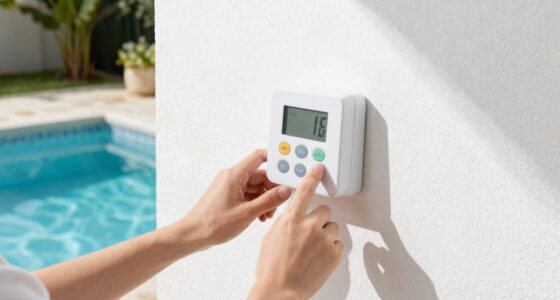
- Use a timer to set your pump to run during off-peak hours, like late at night or early morning, to maximize savings.
- Adjust run times based on weather conditions: more during hot, sunny days to ensure proper circulation and chemical distribution; less during cooler or cloudy days to prevent unnecessary wear.
- Regularly test your water chemistry — pH, chlorine, alkalinity — and tweak your schedule if needed to ensure water remains balanced and safe.
For example, I set mine for 11 p.m. to 7 a.m., aligning with off-peak rates, and check chlorine levels weekly. This approach balances cost savings with water quality, preventing algae and ensuring swimmer safety. Tailoring your schedule to seasonal changes and weather patterns can further optimize your pool’s health and your energy bills.

Poolmaster 22260 5-Way Swimming Pool or Spa Water Chemistry Test Kit with Case, Essential Collection
- Water Chemistry Testing: Tests Chlorine, Bromine, pH, and more
- Clear-View Test Block: Includes integrated color matching chips
- Solutions Included: 1oz and 1/2oz reagent bottles
As an affiliate, we earn on qualifying purchases.
As an affiliate, we earn on qualifying purchases.
Smart & Variable-Speed Pumps Make This Easier
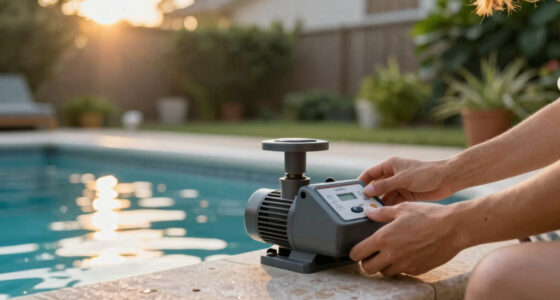
If you’re serious about saving money and keeping your pool healthy, smart or variable-speed pumps are game changers. They let you fine-tune flow rates, run longer at lower speeds, and schedule precisely, which helps optimize energy use and water chemistry management.
Imagine a pump that automatically runs during off-peak hours, adjusts speed based on water needs, and alerts you when chemical levels drop. This level of control not only enhances efficiency but also reduces wear and tear on your equipment by avoiding unnecessary high-speed runs. The ability to program different speeds and schedules means you can tailor circulation to match your pool’s specific needs, minimizing chemical degradation and maximizing filtration efficiency.
According to an anonymous researcher, these pumps can reduce energy use by up to 75%, making them a smart investment for long-term savings and better water quality. Plus, many models integrate with smart home systems, giving you full control remotely or via automation, further simplifying maintenance and scheduling.
The Bottom Line: Balance Cost, Chemistry & Comfort
The key to a healthy, sparkling pool lies in balancing when you run your pump with how you care for your water. Running at night can slash your electricity bill, but make sure your chemicals stay balanced through regular testing and adjustment. During the day, UV helps sterilize, but chemicals can break down faster, requiring more frequent dosing. This tradeoff highlights the importance of understanding your pool’s specific needs and environmental factors.
Choosing the right schedule depends on your local rates, pool size, and how much effort you’re willing to put into water chemistry management. Using smart controls and variable-speed pumps can take the guesswork out of scheduling, enabling you to optimize both energy savings and water quality effortlessly.
Ultimately, a little planning and the right technology can turn your pool into a sparkling oasis that doesn’t drain your wallet or your patience. Regular monitoring, combined with strategic scheduling, ensures your pool stays inviting and healthy all season long.
Frequently Asked Questions
Is it better to run my pool pump during the day or at night?
It depends on your goals. Nighttime running can save money with lower energy rates and cooler temps, while daytime operation benefits from UV sterilization and natural sunlight. Find the balance that works for your pool and budget.How do electricity rates influence the best time to run my pool pump?
Many utility companies offer lower rates after hours, sometimes saving you up to 50% on your energy bill. Check your local rates and schedule your pump accordingly to maximize savings.Will running my pool pump at night affect my water chemistry negatively?
Not if you monitor and adjust your chemicals regularly. Night runs can help maintain chemical stability and reduce algae growth, but always test your water weekly to keep pH and chlorine levels in check.How long should I run my pool pump each day?
Most pools need about 8-12 hours of circulation daily. Use a timer to split this into manageable sessions, and adjust based on weather, usage, and water clarity needs.Are there risks to running the pump at night, like equipment damage?
Loud pumps might disturb neighbors if not properly muffled. Also, in cooler weather, running at night can sometimes reduce wear, but avoid running during storms or extreme cold without proper precautions.Conclusion
Smart scheduling isn’t just about saving a few dollars — it’s about making your pool healthier with less effort. Whether you choose night or day, aim for balance. Set your timer, check your water, and enjoy your sparkling pool all season long.
Imagine a pool that stays clear, costs less to run, and feels just right — that’s the goal. So, what’s your next step? A quick timer tweak or a chemical test? Either way, your pool will thank you.
College move-in / dorm season Picks
dorm essentials
As an affiliate, we earn on qualifying purchases.