
TL;DR

Get home appliances delivered free with Prime
- Fast, free delivery on millions of items
- Prime Video, Amazon Music and more included
- Member-only deals all year
This article offers a clear fall checklist for winterizing pool and spa timers. It covers shutting down equipment, testing freeze protection, and maintaining timers to prevent damage and save energy during the off-season.
Imagine waking up to a frosty morning, your pool covered in a thin layer of ice. Without proper winterization, your costly equipment and plumbing could suffer damage from freezing water. But with a simple fall checklist for your timers, you can safeguard your investment and save energy during the chilly months.
This guide walks you through every step — whether you plan to close your pool or keep it running at a reduced schedule. Fall is the critical time to double-check your timers, test freeze protection, and prepare for winter’s unpredictability. Doing it right now means fewer headaches and a smoother restart in spring.
Test your freeze protection system before the first cold snap to ensure it activates properly.
Reduce your pump run time in fall — 4 to 6 hours daily usually suffices in cooler weather.
Turn off and lock out your timer if closing the pool completely, and drain equipment to prevent freeze damage.
Inspect weatherproof enclosures and replace backup batteries on digital timers annually.
Plan for power outages by installing backup power sources or manually draining your system if needed.
Winterizing Pool & Spa Timers
A small fall reset can prevent a very expensive spring repair. Decide whether to close or keep running, reduce unnecessary circulation, test freeze protection, and make sure the timer can survive cold, moisture, and power loss.
Close it—or keep it circulating?
Every setting downstream depends on this decision. Fully winterized systems should be drained and electrically locked out; operating systems need shorter schedules plus dependable freeze protection.
Close Completely
Remove water from vulnerable equipment and prevent the timer from accidentally energizing a dry pump.
Keep It Running
Maintain water quality with less daily runtime while ensuring circulation begins automatically during freezing weather.
Five links between frost and safe plumbing
Freeze protection only works when every link responds. A programmed setpoint is not proof that the sensor, relay, pump, and plumbing will operate together.
Cold air sensed
Outdoor sensor detects the temperature drop.
Threshold reached
Freeze mode activates near the chosen setpoint.
Timer commands
Controller sends power through the relay.
Pump starts
Circulation begins across protected circuits.
Water moves
Moving water resists freezing longer than standing water.
The fall setup sequence
Complete these tasks while conditions are comfortable. If electrical connections, breakers, or GFCI devices need repair, use a licensed electrician.
Choose the winter mode
Confirm whether the system will be drained and closed or remain operational on a reduced schedule.
Reset runtime
Cut summer-length cycles. Mechanical timers also need manual correction after daylight saving changes.
Trigger freeze mode
Lower the thermostat setting or use the controller’s test mode and observe whether the pump starts.
Seal the enclosure
Look for cracked gaskets, moisture, corrosion, loose wires, insects, and rodent debris.
Refresh digital memory
Replace the backup battery, confirm the date and time, and verify that programs survive a brief outage.
Plan for no power
Arrange backup power or learn the exact manual-drain procedure before severe weather arrives.
Know what your controller can—and cannot—do
Variable-speed pumps may contain their own onboard schedules. Check for conflicts with external time clocks so one controller does not override another.
| Timer type | Outage behavior | DST handling | Freeze protection | Fall priority |
|---|---|---|---|---|
| Mechanical clock Classic dial and trippers |
~Resumes after power returns but loses elapsed time | ×Must be reset manually | ~Needs a standalone freeze guard | Reset clock, inspect trippers, test auxiliary thermostat |
| Digital timer Programmed electronic control |
✓Battery can retain settings | ~Model and settings dependent | ✓Often built in | Replace battery, verify time, setpoint, and outputs |
| Smart controller App or Wi-Fi managed |
~Automation returns only when power returns | ✓Usually automatic when configured | ✓Common integrated feature | Review alerts, sensor status, schedules, and offline plan |
| Variable-speed pump Onboard programming |
~Depends on internal memory | ~Model dependent | ~May rely on external automation | Eliminate conflicts between onboard and external timers |
Use less energy without losing freeze defense
Cooler water slows algae growth and reduces sanitizer demand. Shorten routine circulation, but let freeze protection override the schedule whenever temperatures fall.
Seasonal pump schedule
Illustrative daily runtime; adjust for climate, pool volume, sanitizer, and water conditions.
Freeze-guard activation zone
Common controllers start circulation within this approximate air-temperature range.
Keep moisture, corrosion, and schedule drift out
A timer can appear normal from the outside while a failed gasket, weak battery, or shifted mechanical clock quietly removes winter protection.
Weather seal
Inspect the outdoor enclosure, door, conduit entries, and gasket. Replace cracked seals and investigate any moisture immediately.
Clean and dry
Look for corrosion, insects, nesting material, and heat damage. Do not touch energized conductors.
GFCI protection
Test the GFCI using the manufacturer’s procedure. Have loose, discolored, or damaged wiring serviced professionally.
Program memory
Replace digital backup batteries annually and verify that schedules remain stored through a brief power interruption.
Time and DST
Correct the displayed time after an outage or fall clock change. Mechanical clocks do not self-adjust.
Spring reference
Photograph timer positions, wiring labels, setpoints, and schedules before shutdown or seasonal reprogramming.
A freeze guard cannot circulate water without power
During a winter outage, timer-based protection disappears. Choose a response in advance based on local freeze severity, outage frequency, and equipment exposure.
No power means no automatic protection.
Waiting until pipes begin to freeze leaves little time for safe draining or backup-power setup.
Protect every jet, blower, and hidden line
A drained spa can still retain water in low points, air lines, and equipment cavities. Follow the manufacturer’s winterization procedure or hire a qualified technician.
Ready before the first freeze?
Complete all five checks. If any answer is uncertain, resolve it before temperatures approach the freeze-protection setpoint.
Close-or-run plan confirmed
Fall schedule and clock verified
Sensor-to-pump response tested
Enclosure, battery, and GFCI checked
Backup power or draining plan ready
Decide: Are You Closing or Keeping the Pool Open?
Understanding your winter plan shapes every other step. If you’re closing your pool, you’ll drain and disconnect equipment, then lock out the timer. If you’re keeping it open, you’ll reduce run times and set the timer to protect against freezes.
For example, in colder climates, many homeowners drain the pump and filter, then lock out the timer to avoid accidental runnings during freeze events. In milder regions, some keep the pump running at a lower schedule, saving energy and maintaining water quality.
Knowing your choice upfront helps you follow the right procedures, avoid damage, and optimize your energy savings.
As an affiliate, we earn on qualifying purchases.
How to Properly Shut Down Your Pool Equipment
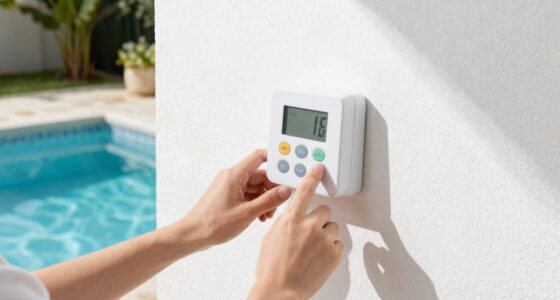
Shutting down your pool equipment is straightforward but crucial. First, turn off the circuit breaker to disconnect power. Remove any trippers from mechanical timers to prevent accidental activation. Drain pumps, filters, and lines if you’re closing for good.
For example, drain the pump by opening the drain plug and ensuring all water is out. Cover equipment with a weatherproof shelter or pad to prevent damage from snow and moisture. Document your settings for spring — a quick photo or written note helps you reprogram easily.
Remember, if you’re unsure about draining or handling electrical work, hire a licensed pro to avoid safety hazards.
digital pool timer backup batteries
As an affiliate, we earn on qualifying purchases.
As an affiliate, we earn on qualifying purchases.
Adjust Your Timer Settings for Fall — What You Need to Know
Reducing your timer’s run time is a simple way to cut energy bills and avoid unnecessary wear on equipment. In summer, many pools run 8–12 hours daily. In fall, cut that down to 4–6 hours, depending on your climate and sanitizer needs.
For example, in cooler regions, running the pump overnight during the coldest hours helps prevent freezing, while in warmer climates, shorter cycles still keep water fresh without wasting power.
If you use a digital timer or smart controller, verify the schedule before the first freeze. For mechanical timers, reset the clock if daylight saving time changes occurred — these units don’t auto-adjust.
As an affiliate, we earn on qualifying purchases.
Test and Confirm Your Freeze Protection Works
Freeze protection is your best friend during winter. It’s a setting on digital timers or a standalone thermostat that activates your pump when temperatures drop below a certain point—usually around 34–38°F. Understanding why this matters is key: if this system fails, your water can sit stagnant and freeze, expanding and cracking pipes, which leads to costly repairs and potential water damage.
Before the first freeze, testing this mode isn’t just about confirming functionality; it’s about ensuring reliability when it matters most. Use a thermometer to check the air temperature, then manually lower your thermostat or activate the freeze mode. Observe if the pump kicks on as expected. If it doesn’t, you risk having water sit stagnant in pipes, increasing the chance of freeze damage. Ensuring your system reacts correctly is a small step that can save you hundreds or thousands in repairs, especially in climates prone to sudden temperature drops.
pool equipment weatherproof enclosure
As an affiliate, we earn on qualifying purchases.
As an affiliate, we earn on qualifying purchases.
Inspect Your Timer Hardware — Keep Out Moisture and Corrosion
Physical condition matters. Check the weatherproof enclosure—look for cracks, moisture, or corrosion. Gaskets should be intact to prevent water ingress, which can fry circuits or cause shorts.
For example, a homeowner found moisture inside her timer box after a storm, which caused her pump to run erratically. Replacing the gasket and sealing the box solved the problem.
Ensure GFCI protection is working and wires are tight. If you notice rodent nests or insect debris, clear them out and consider adding a protective cover or rodent-proof box.
Maintain and Update Your Digital Timer — Battery, Time, and Settings
Digital timers often have backup batteries. Replace them annually to prevent loss of programming during power outages. Confirm the current date and time after replacing batteries.
For example, a homeowner’s timer lost its schedule after a storm because the backup battery died. A quick battery swap restored the settings and avoided waking up to a frozen pool.
Review daylight saving time (DST) settings too, especially if your timer doesn’t auto-adjust. Keeping everything accurate ensures your schedule matches real-world conditions, preventing unintended run times that could lead to freezing or algae growth.
Plan for Power Outages — Protect Your Equipment and Freeze Safety
Power outages during winter can disable your freeze protection, leaving pipes vulnerable. If you face regular outages, consider a battery backup or generator for your timer system. This isn’t just about convenience—it’s about preventing catastrophic damage to your plumbing and equipment, which can cost thousands in repairs if water freezes and expands unchecked.
For example, a homeowner in a cold climate experienced a power failure during a snowstorm. His freeze protection system was offline, and water froze, cracking pipes. Installing a battery backup or generator kept the system running during outages, avoiding costly repairs and service disruptions. The tradeoff here is investing in backup power versus facing potential extensive damage—it’s a small cost for peace of mind and long-term savings. In the absence of backup power, knowing how to manually drain your pipes and equipment becomes critical to prevent freeze damage, especially during unexpected outages.
Special Steps for Spa Owners — Keep It Safe and Ready
If you keep your spa in use year-round, maintaining circulation and heating schedules is vital to prevent freezing and equipment damage. If you plan to close it, drain water from all lines, including blowers and jets, then shut off power at the breaker. This prevents water from sitting stagnant and freezing inside pipes, which can cause cracks or leaks that are costly to repair.
For example, a homeowner drains her spa completely, disconnects the blower, and locks out the breaker. Regularly checking the cover for leaks or damage is essential; even small leaks can lead to water intrusion and freeze risks. Whether you keep your spa running or shut it down, setting timers correctly helps avoid damage and ensures a quick restart in spring. Proper preparation here can prevent both safety hazards and expensive repairs, making your spa ready for winter without surprises.
Coordinate Multiple Controllers — Avoid Conflicting Settings
If you have multiple timers, smart controllers, or pump onboard timers, make sure they don’t override each other. Designate one master control to prevent confusion and accidental runnings. Failure to do so can lead to inconsistent operation, which might cause equipment stress, unnecessary energy consumption, or even freeze damage if the system runs at inappropriate times.
For example, a homeowner with a smart Wi-Fi controller and an external timer noticed her pump was running at odd hours, risking freezing during cold nights. After setting her smart app as the master control, she avoided conflicts, ensured proper operation, and saved energy. This hierarchy prevents miscommunication between devices and helps maintain consistent, safe operation during winter and spring startup, reducing the risk of damage and energy waste.
Frequently Asked Questions
Should I leave my pool pump running during winter?
If you live in a climate where the pool remains open year-round, maintain a reduced schedule, especially during the coldest nights. If you plan to close your pool, shut off power, drain equipment, and lock out timers to prevent freeze damage.
How many hours should my pump run in fall and winter?
Typically, 4–6 hours per day is enough in cooler months. This keeps water moving enough to prevent freezing and algae growth without wasting energy. Adjust based on your local climate and water chemistry.
At what temperature does freeze protection activate, and can I trust it?
Most freeze protection systems turn on around 34–38°F. Test your system before the first freeze to confirm it activates reliably. Regular testing prevents surprises and costly repairs.
Do I need to winterize my timer box itself?
If your timer is outdoors or in a vulnerable area, check that the enclosure is weatherproof, sealed, and protected from moisture. Consider covering or relocating it to prevent corrosion and damage.
What happens if there’s a power outage during winter?
Power outages disable freeze protection, risking freeze damage. Installing a backup power source or manually draining your system is essential if outages are common in your area.
Conclusion
Fall is the critical moment to protect your pool and spa from winter’s damage. A few simple steps—testing freeze protection, adjusting timers, and inspecting equipment—can save you hundreds of dollars and hours of headache come spring.
Think of your timers as the control tower for your pool’s health — keep them well-tuned, and they’ll keep your water safe and your equipment happy all winter long.
Cold & flu season Picks
humidifiers
As an affiliate, we earn on qualifying purchases.