
TL;DR
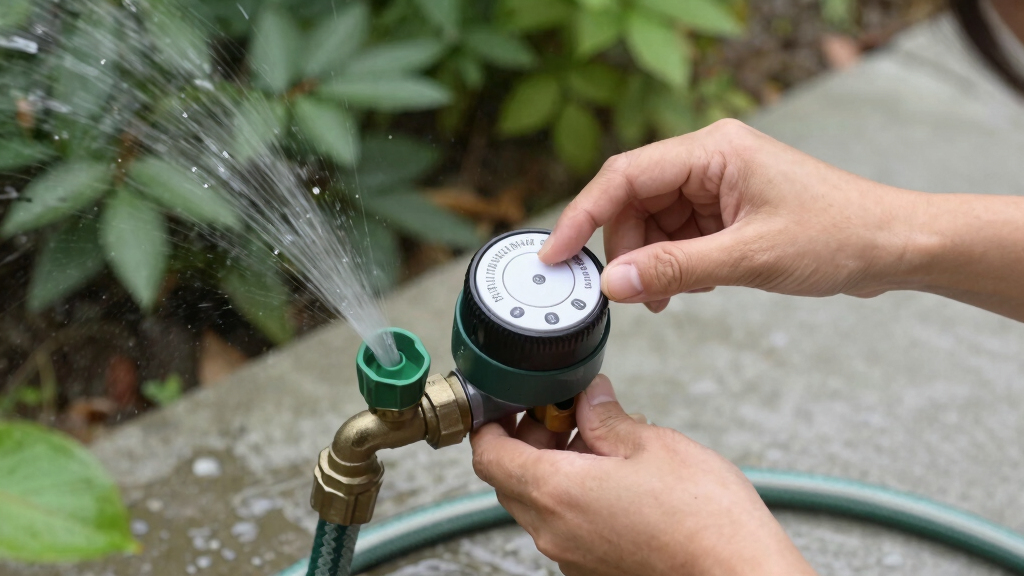
Hose timers do reduce water pressure temporarily during flow, due to internal restrictions like narrow passages. This loss is usually 2–10 psi or 10–30% of flow, mainly affecting high-demand sprinklers. Knowing this helps you plan better and avoid weak watering results.
Ever notice how your sprinkler coverage shrinks after installing a timer? Or how the water seems weaker, less forceful? It’s not your imagination. Hose timers, especially the common solenoid types, cut into your system’s flow during operation. But understanding exactly how they do it — and what that means for your garden — can save you frustration and water.
This guide breaks down the flow basics, showing you what’s happening inside your timer, how much pressure you actually lose, and what practical steps you can take to keep your watering efficient and strong. No jargon, just clear advice to help you get the most from your irrigation setup.
Hose timers reduce flow only during operation, due to internal restrictions like narrow passages.
Always check a timer’s flow rating and orifice size before purchasing to match your watering demands.
Symptoms like weak spray or pulsating heads signal flow restriction, which can be tested with simple flow checks.
Using larger hoses, keeping runs short, and cleaning inline devices can help maintain higher pressure.
Choose timers with high-flow ratings or mechanical designs if maximum water delivery is your goal.
Do Hose Timers Reduce Water Pressure?
Yes — but only while water is running. Every timer’s narrow internal passages create friction loss during flow, typically costing you 2–10 psi and 10–30% of your GPM. Static pressure stays untouched. Here’s exactly what’s happening inside the valve — and how to keep your sprinklers throwing far.
Why the Pressure Only Drops While Water Flows
A pressure gauge screwed on downstream reads full static pressure with the valve closed. The moment water moves, restriction turns into friction — and friction eats pressure. Think narrow straw versus wide pipe.
Valve Closed = Full Pressure
With no water moving, there is no friction. Static pressure at the spigot stays exactly the same with or without a timer — which is why so many homeowners are fooled by a gauge reading taken at rest.
Narrow Orifice → Velocity → Loss
Water must squeeze through passages of just ¼″–⅜″ inside most solenoid timers. Velocity spikes, turbulence builds, and the energy shows up as a 2–10 psi drop and measurably lower GPM.
Sprinklers Suffer, Drip Shrugs
Impact and oscillating sprinklers lose visible throw and coverage radius. Drip zones run at just 1–4 GPM — well inside any timer’s capacity — so they barely notice the restriction.
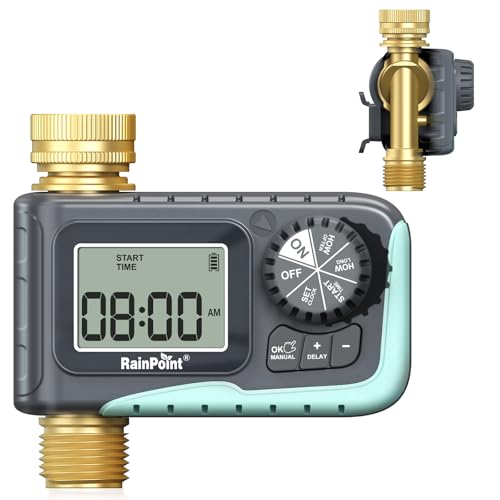
RAINPOINT Sprinkler Timer, 100% Metal Pipe Water Timer for Garden Hose, Programmable Hose Controller for Watering, Sprinkler Controller with Manual Watering/Rain Delay for Outdoor Lawn & Garden (1PCS)
100% METAL WATER PIPE: The newly upgraded sprinkler timer pipe is made entirely of 100% metal. This hose…
As an affiliate, we earn on qualifying purchases.
As an affiliate, we earn on qualifying purchases.
How Much Flow Actually Survives the Timer
Approximate effective flow through common setups, benchmarked against an unrestricted outdoor spigot delivering ~13 GPM.

Premier Reverse Osmosis Capillary Flow Restrictor for 35, 50, 75 or 100 GPD Membrane (50 GPD) Pack of 1
This sale is for ONE (1) Reverse Osmosis Capillary Flow Restrictor.
As an affiliate, we earn on qualifying purchases.
As an affiliate, we earn on qualifying purchases.
Mechanical vs. Digital vs. Smart — Which Lets More Water Through?
Not all timers restrict flow equally. The valve mechanism inside matters more than the price tag or the feature list.
| Timer Type | Internal Design | Typical Flow Loss | Min. Pressure Needed | Best For |
|---|---|---|---|---|
| MechanicalWind-Up / Full-Port Ball Valve | Opens or closes a full-bore port — no diaphragm, no narrow seat in the flow path. | ✓ Lowest — near-unrestricted flow | ✓ Very low; works on weak supply | Maximum delivery, rain barrels, simple single-zone setups |
| Digital SolenoidBattery-Powered, Most Common | Solenoid diaphragm and valve seat shrink the passage to ~¼″–⅜″. | ✗ Highest — often 20–30% of flow | ~ Needs roughly 5–10 psi to fire reliably | Convenient scheduling on small-to-medium zones, drip systems |
| Smart / Wi-FiB-hyve, Rachio & Similar | Solenoid-based, but newer models add larger valves plus built-in flow sensors. | ~ Moderate — varies widely by model | ~ Similar 5–10 psi minimum | App control, usage tracking, leak alerts, multi-zone management |

RESTMO Water Flow Meter with Brass Inlet Metal Thread, Measure Gallon/Liter Consumption and Flow Rate for Outdoor Garden Hose Watering, RV Water Tank Filling, Lawn Sprinkler and Nozzle Sprayer
Pure Brass Inlet & Metal Thread: Durable heavy-duty brass construction ensures exceptional durability and effortless installation or removal.
As an affiliate, we earn on qualifying purchases.
As an affiliate, we earn on qualifying purchases.
Your Timer Isn’t the Only Culprit — Losses Stack
Every inline device adds its own friction. Follow the water from the tap to the sprinkler head and count what each stage costs.
▸ The timer often gets blamed for a system-wide problem. Clean and budget for every device on the line.
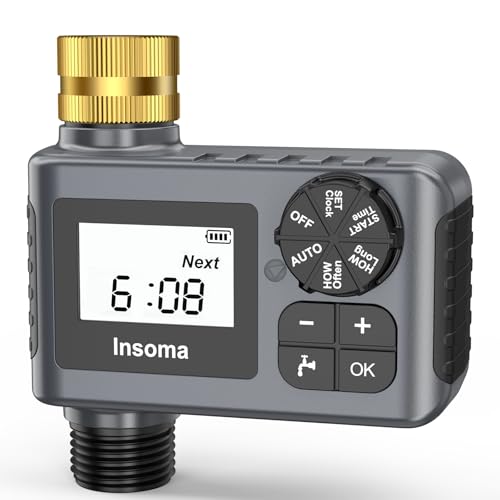
Water Timer for Outdoor Garden Hose, Hose Timer with Rain Delay/Manual Mode, Automatic Drip Irrigation Controller System for Lawn Yard Garden Watering
【Durable Brass Inlet for Extended Lifespan】: Featuring a 100% brass water inlet and metal-threaded connection, this Insoma water…
As an affiliate, we earn on qualifying purchases.
As an affiliate, we earn on qualifying purchases.
Spot the Throttle, Restore the Throw
Classic symptoms on the left, field-tested fixes on the right. Most flow problems are solved in an afternoon.
Signs Your Timer Is Limiting Flow
- Sprinkler throw shrank right after the timer was installed.
- Impact heads pulsate or mist instead of a clean, steady rotation.
- Longer runtimes needed to soak the same area as before.
- Uneven coverage, or heads that never fully pop open.
- Pressure collapses when two zones run at the same time.
- Gravity-fed rain barrel barely drips — below the timer’s 5–10 psi minimum.
Simple Tricks to Keep Flow Strong
- Buy a timer rated 10+ GPM — verify the real orifice size, not the box copy.
- Swap ⅝″ hose for ¾″ — worth roughly a 20–30% flow boost on long runs.
- Keep runs short and strip out unneeded splitters and connectors.
- Clean inlet screens and washers — debris chokes flow even further.
- Never daisy-chain two high-demand sprinklers off one timer outlet.
- Choose mechanical or high-flow digital when maximum delivery is the goal.
The 5-Gallon Bucket Test: Measure, Don’t Guess
No tools beyond a bucket and a phone stopwatch. Run it with and without the timer to see exactly what the valve costs you.
Connect & Open
Attach the timer, open the spigot fully, and let the valve activate so water runs through the timer’s real flow path.
Fill the Bucket
Time how long it takes to fill a 5-gallon bucket. Repeat with the timer removed for a clean before/after comparison.
Read the Result
Under 30 seconds ≈ 10 GPM — plenty for big sprinklers. Around 60 seconds ≈ 5 GPM — expect weak throw and pulsating heads.
Rain barrels and gravity setups almost never reach the 5–10 psi minimum a solenoid timer needs to open reliably. Pair the barrel with a small pump — or use a mechanical timer — before blaming the valve.
The Whole Story in One Line
How Hose Timers Actually Impact Water Flow and Pressure
Hose timers mainly reduce water flow *while water is running.* When you turn off the tap, static pressure remains high, but once the system activates, internal restrictions cause friction loss. Think of it like squeezing a garden hose: the narrower the squeeze, the less water flows. Many timers have tiny internal openings — often just 1/4″ or 3/8″ — which create resistance.
For example, a typical outdoor spigot might deliver 9–17 GPM at 40–60 psi. But when a timer is in play, effective flow can drop to 4–8 GPM, and pressure can fall by 2–10 psi. That’s why your impact sprinkler might spray less far, or your rotating heads might pulsate or mist. Interestingly, the static pressure—the pressure at the spigot when no water flows—remains unchanged, which confuses many homeowners.
This friction arises because the water must squeeze through these tiny openings, creating turbulence and heat. The more restrictions, the greater the pressure drop. It’s like trying to force water through a narrow straw versus a wide pipe.
How to Read a Timer’s Flow Rating & Know What You’re Getting
When shopping for hose timers, pay close attention to their flow ratings. Many timers are marketed as ‘high-flow,’ but that can be misleading. A timer rated at 10 GPM ideally has an internal orifice large enough to handle that flow comfortably. However, many budget models have effective passages of just 1/4″ — limiting flow to around 4–6 GPM.
To verify, check the specifications or ask the manufacturer about the internal orifice size. A quick way to test your system: connect a timer, run water through it into a bucket, and measure how long it takes to fill a 5-gallon container. If it fills in less than 30 seconds, you’re getting close to 10 GPM.
Remember, a timer’s flow rate isn’t just a marketing claim — it’s a real, measurable feature that impacts how well your sprinklers perform, especially on larger lawns or with multiple heads.
Signs Your Timer Is Limiting Water and How to Spot It
Notice your sprinklers spray less far, or you need longer runtimes? Or maybe your impact heads pulsate or mist? These are classic signs that your timer’s internal restrictions are throttling flow.
Other clues: uneven watering patterns, heads that don’t fully open, or a noticeable drop in pressure when multiple zones run simultaneously. If you’re using a rain barrel or gravity-fed system and see weak output, your timer’s restrictions may be too much for low-pressure setups.
Testing can help: connect a simple pressure gauge or time how long it takes to fill a bucket. If flow is below your expectations, upgrading to a high-flow timer or adjusting your setup can restore the pressure and coverage you want.
Simple Tricks to Keep Your Water Flow Stronger
Want to keep your watering vigorous? Here are practical steps:
- Choose a high-flow timer specifically rated for 10+ GPM. Some models have larger internal valves designed for better flow.
- Use a 3/4″ hose instead of standard 5/8″. Larger diameter hoses reduce friction, helping keep pressure up over longer runs.
- Keep runs short and avoid unnecessary connectors or inline devices that add friction.
- Clean inlet screens and washers regularly — dirt or debris can choke flow even further.
- Don’t daisy-chain multiple high-demand sprinklers off one timer unless it’s rated for that combined flow.
For instance, swapping out a 5/8″ hose for a 3/4″ one can boost flow by 20–30%, making a noticeable difference in how far your spray reaches.
Mechanical, Digital, or Smart Timer — Which Lets More Water Through?
Not all timers restrict flow equally. Mechanical timers, like wind-up or full-port ball-valve types, tend to be less restrictive because they simply open or close without internal restrictions. Digital solenoid timers often have smaller internal passages, which can cause more flow loss. Smart timers, especially Wi-Fi-enabled models, can incorporate flow sensors and larger valves to mitigate restrictions.
For example, a mechanical ball valve with a full port allows nearly unrestricted flow, while a standard digital timer might cut flow by 20–30%. Some smart timers now boast high-flow features, making them better for larger lawns or multiple zones.
The choice depends on your needs. If maximum flow is critical, look for models explicitly rated for high GPM, and consider mechanical or high-flow digital options.
Pressure Loss from Other Inline Devices & How to Minimize It
Remember, your timer isn’t the only culprit. Inline devices like backflow preventers, filters, splitters, and pressure regulators all add resistance. Each can reduce flow and pressure, especially if they’re old or dirty.
For example, a backflow preventer might cut flow by 1–3 GPM, and a clogged filter can cause pressure drops of 5–10 psi. To keep your system running strong, regularly inspect and clean these devices, and choose low-resistance models when possible.
Budgeting for these losses means planning for slightly higher pressure at the spigot or using a higher-rated timer to compensate. It’s a small step that makes a big difference in coverage and efficiency.
What’s New? Smart, High-Flow, and Multi-Zone Timers in 2024
Smart hose timers have gone mainstream. Models like Orbit B-hyve and Rachio now feature built-in flow sensors, app-based control, and weather integration. Many offer high-flow options explicitly designed for larger setups, with larger internal valves and better flow capacity.
New multi-zone timers let you control two, four, or more outlets independently — each with its own flow restrictions. Some even include leak detection and usage tracking, turning flow concerns into a built-in feature.
In 2024, expect more timers with Wi-Fi, Bluetooth, and smart home compatibility, making irrigation smarter and less restrictive than ever before.
Frequently Asked Questions
Do hose timers reduce water pressure?
Yes — they create friction during flow, which lowers pressure by about 2–10 psi. Static pressure remains unchanged, but flow drops when the timer is active. Knowing this helps you plan for better watering coverage.Why did my sprinkler get weak after I installed a timer?
Most likely, the timer’s internal restrictions or inline devices are limiting flow. Check for clogged screens, narrow passages, or use a high-flow timer rated for your system’s demands.Can I run two sprinklers at once from a dual-outlet timer?
It depends on the timer’s flow rating. Running two high-demand sprinklers simultaneously can reduce pressure dramatically if the timer isn’t rated for that combined flow. Use high-flow models or stagger watering zones.Will a timer work with low water pressure or gravity-fed rain barrels?
Most timers need at least 5–10 psi to operate reliably. Gravity-fed rain barrels often lack enough pressure, so a small pump may be necessary for effective watering.How do I test my pressure and flow myself?
Connect a simple pressure gauge to your spigot and time how long it takes to fill a 5-gallon bucket with and without the timer. This gives you a clear picture of flow and pressure loss.Conclusion
Understanding flow restrictions in hose timers lets you make smarter choices. When you pick the right timer and optimize your setup, your garden gets more water — with less waste and frustration.
Remember, a little knowledge goes a long way. Your best tool for lush, healthy landscaping is knowing how your system handles flow — and making sure it doesn’t get in the way.