TL;DR
Open a free Amazon Business account
Business pricing, bulk buying and tax-exempt orders.
Create a free accountAs an affiliate, we earn on qualifying purchases.
Sunrise and sunset ramping gradually adjusts your tank lights, mimicking natural light cycles. It reduces stress for aquatic life, prevents algae blooms, and boosts plant growth, with many modern fixtures and controllers making setup easy.
Ever notice how your fish seem calmer at dawn and dusk? That’s no coincidence. In the wild, light doesn’t switch on like a switch—it’s a slow, gentle transition. In your planted tank, mimicking this natural rhythm with sunrise and sunset ramping can make a huge difference.
If you want healthier plants, happier fish, and less algae, understanding and implementing ramping is a game-changer. It’s easier than you think, especially with modern LED fixtures and smart controllers. Let’s explore how this simple feature can elevate your aquatic setup to a whole new level.
Ramping creates a natural transition that reduces stress and algae in planted tanks.
Longer ramping periods, around 30 minutes to 1 hour, mimic dawn and dusk more realistically.
Modern LED fixtures and controllers make setting up ramping quick and customizable.
Adding ramping can boost plant growth and overall tank stability.
If your lights lack built-in ramping, external controllers or upgrades can easily fill the gap.
What Is Sunrise and Sunset Ramping—and Why Should You Care?
Sunrise and sunset ramping are features that gradually increase or decrease your tank’s light over a set period, usually 15 minutes to two hours. Instead of harshly flipping lights on or off, ramping creates a natural progression that your fish and plants love.
Imagine waking up to a gentle dawn glow and winding down with a soft sunset—your aquatic life experiences the same. This reduces stress, encourages natural behaviors, and prevents the algae outbreaks that often follow sudden light changes.
Understanding why this matters is crucial: abrupt lighting changes can cause stress responses in fish, such as increased respiration or erratic swimming, which over time can weaken their immune systems. For plants, sudden shifts can hinder photosynthesis efficiency or cause stress-induced bleaching. From an ecological perspective, the tradeoff is between simplicity and natural mimicry—manual on/off is easier but stressful, while ramping requires initial setup but yields healthier, more resilient tank inhabitants.
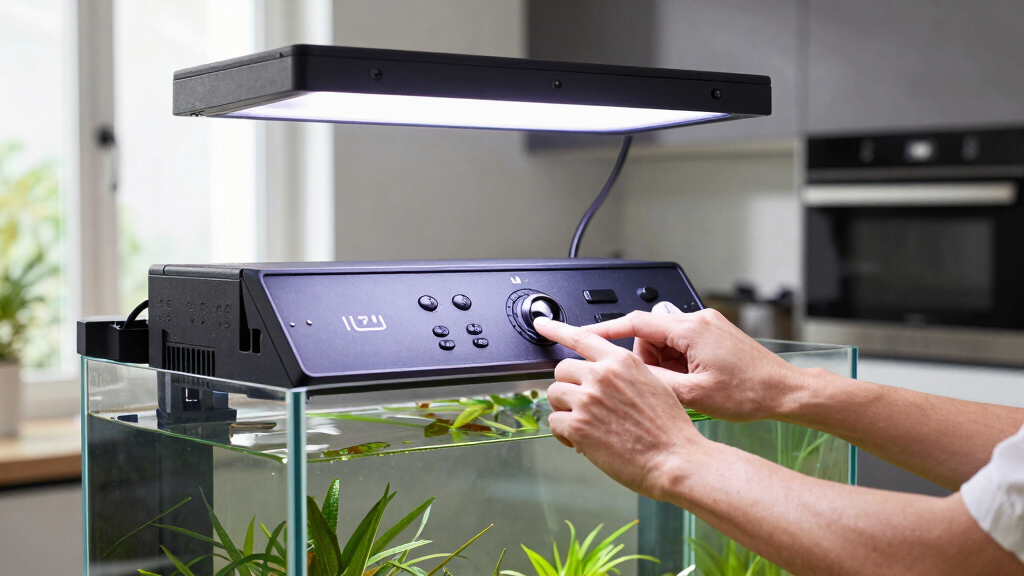
aquarium LED light with sunrise sunset ramping
As an affiliate, we earn on qualifying purchases.
As an affiliate, we earn on qualifying purchases.
How to Set Up Sunrise and Sunset Ramping in Your Tank in 3 Easy Steps
- Choose a compatible lighting system: Look for LED fixtures with built-in ramping or add an external controller.
- Program your desired ramping schedule: Decide whether you want a 15-minute, 30-minute, or 1-hour transition. Many controllers let you customize this easily.
- Test and adjust: Run the schedule during a quiet moment, observe how smoothly the transition feels, and tweak the timing as needed.
For example, a hobbyist with an LED fixture connected to a Wi-Fi-enabled controller set the ramp to 45 minutes in the morning and evening. After a week, they found plants grew faster, and their fish appeared less stressed.
programmable aquarium light controller
As an affiliate, we earn on qualifying purchases.
As an affiliate, we earn on qualifying purchases.
Compare Built-In Ramping Features vs. External Controllers
| Feature | Built-In Ramping | External Controllers |
|---|---|---|
| Ease of setup | Very straightforward; often just a setting adjustment | Requires additional device and setup, but offers more flexibility |
| Customization | Limited to manufacturer presets | Highly customizable – schedule multiple ramp times and intensities |
| Cost | Included in premium fixtures | Additional expense but more control options |
If you want simplicity, choose fixtures with built-in ramping. For advanced control, external controllers like Neptune Apex or GHL open up a world of scheduling options, including syncing ramping with CO₂ or feeding times.
aquarium light timer with ramping feature
As an affiliate, we earn on qualifying purchases.
As an affiliate, we earn on qualifying purchases.
Why Longer Ramping Periods Make Your Tank Feel More Natural
Ramping for 30 minutes to an hour mimics dawn and dusk in nature. It’s like watching the sky turn from deep indigo to bright blue or from golden to twilight. The slower the transition, the more soothing it feels.
From an ecological perspective, longer ramping periods better replicate the gradual change of natural light, which evolved over millions of years. This slow transition helps fish and plants adapt more comfortably, reducing physiological stress and preventing sudden metabolic shocks. When the transition is brief—say, 10-15 minutes—the rapid change can be perceived as a disturbance, triggering stress responses like increased respiration rates or erratic swimming behaviors. These rapid shifts can also interfere with the natural circadian rhythms of your aquatic inhabitants, potentially leading to long-term health issues. Conversely, longer ramping periods allow for a gentle, more natural adaptation, supporting a stable environment and healthier, more resilient aquatic life. The tradeoff is that longer ramping requires a bit more planning and time, but the benefits in ecosystem stability and organism health outweigh the inconvenience, especially in sensitive or heavily planted tanks.
As an affiliate, we earn on qualifying purchases.
How Ramping Reduces Algae and Fish Stress—Real Stories
A common problem in planted tanks is algae blooms following sudden light increases. Ramping prevents this by easing the transition, giving algae less of a chance to take hold.
One hobbyist shared how their tank’s algae problem vanished after switching to a 1-hour sunrise and sunset schedule. Fish also appeared more relaxed, swimming calmly through the day instead of darting at sudden light changes.
According to an anonymous researcher, gradual lighting changes can cut algae growth by up to 40%, making your tank easier to maintain and healthier for your aquatic friends. This reduction is significant because algae thrive on sudden nutrient surges and light spikes, which ramping helps to mitigate by allowing the biological filtration and plant uptake to adjust gradually, maintaining water quality and preventing nutrient overloads that favor algae proliferation.
What Modern Technology Makes Ramping a Breeze?
Today’s LED fixtures and controllers make ramping simple and customizable. Many fixtures now include Wi-Fi connectivity, so you can set your schedule from your phone.
High-end controllers like Neptune Apex or GHL let you create complex routines—dawn, midday, dusk—auto-adjusting based on your preferences. Hobbyists also share DIY projects using Arduino or Raspberry Pi to craft personalized ramping programs, often at a fraction of commercial costs.
Imagine waking up to a gradual glow filling your room, your plants basking in gentle light, all with a tap or a tap on your tablet.
Key Facts About Ramping: What You Need to Know
- Typical ramping lasts from 15 minutes to 2 hours for a natural feel.
- Proper ramping can boost plant growth by providing stable, gradual light changes.
- Sudden light shifts cause stress and algae, but ramping prevents this.
- Many premium LED fixtures now include customizable ramping features as standard.
Your Most Common Ramping Questions—Answered
Q: Why is ramping crucial for a healthy planted tank? Ramping mimics natural light cycles, reducing stress for fish and plants, and preventing algae blooms caused by abrupt lighting changes.
Q: How long should my ramping be? Typically 30 minutes to an hour offers a natural feel, but some hobbyists extend to 2 hours for even softer transitions.
Q: Can I add ramping to my current setup? If your lights lack this feature, upgrading or adding external controllers can enable this simple but effective tweak.
Q: Is ramping necessary? Not mandatory, but it greatly enhances tank stability, plant health, and fish comfort.
Q: Which tools are best for ramping? Built-in fixture features or external aquarium controllers like Neptune Apex or GHL give you powerful options.
Frequently Asked Questions
How do I set up ramping if my lights don’t have it built-in?
If your current lights lack ramping, you can add an external controller compatible with your fixtures. Many hobbyists use devices like the Neptune Apex or GHL to program custom schedules, including gradual dawn and dusk effects. Alternatively, upgrading to fixtures with built-in ramping simplifies setup and saves time.
Is ramping necessary for a healthy planted tank?
While not strictly necessary, ramping significantly enhances natural behaviors, supports plant growth, and helps prevent algae blooms caused by sudden light changes. It creates a calmer, more stable environment for your aquatic life.
How long should my ramping be?
Most hobbyists find 30 minutes to an hour provides a smooth, natural transition. Longer periods, like 1.5 to 2 hours, can mimic dawn and dusk even more accurately, especially in highly planted or sensitive tanks.
Can I add ramping to an existing light system?
Yes. If your current fixture lacks ramping, external controllers or smart timers can automate gradual light changes. Upgrading to a fixture with built-in ramping is another easy option that requires minimal setup.
How does ramping help prevent algae growth?
Gradual light increases prevent the sudden surge of energy that algae thrive on. By easing your tank into full light, ramping keeps algae at bay and promotes a healthier, clearer water column.
Conclusion
Adding sunrise and sunset ramping isn’t just about aesthetics—it’s about creating a more natural, stable environment for your aquatic life. It’s simple to set up, especially with modern technology, and the benefits ripple through your tank’s health and clarity.
Next time you schedule your lighting, think of it as waking up with the sun or winding down into twilight—your fish and plants will thank you for it. Why not give your tank that gentle, natural glow today?
Grilling season Picks
grills
As an affiliate, we earn on qualifying purchases.