TL;DR

Get home appliances delivered free with Prime
- Fast, free delivery on millions of items
- Prime Video, Amazon Music and more included
- Member-only deals all year
Mechanical timers are simple and durable but limited in features. Digital timers offer more control, while smart timers provide remote access and automation. Choosing the right one depends on your budget and control needs.
Imagine coming home after work and finding your pool perfectly timed for a refreshing swim — no manual fiddling needed. Pool timers do just that, automating when your pump runs so you can enjoy a cleaner, more efficient pool.
But not all timers are created equal. Some are sturdy and simple, others packed with tech and remote control. Understanding the differences can save you money, energy, and hassle. Today, we’ll compare mechanical, digital, and smart pool timers to help you pick the best one for your backyard oasis.
Choose a mechanical timer for simplicity and durability, especially if you don’t need remote control.
Digital timers offer flexible programming and are easy to update, making them ideal for most homeowners.
Smart timers provide remote access, automation, and energy savings but require Wi-Fi and security precautions.
Matching your lifestyle and pool usage patterns with the right timer type saves energy and reduces hassle.
Security and regular updates are essential for smart timers to keep your system safe and responsive.
What Is a Mechanical Pool Timer and Why It Still Works
A mechanical pool timer is a straightforward device that uses a dial and gear mechanism to turn your pump on and off at set times. Think of it like an old-fashioned alarm clock, but for your pool equipment.
For example, you might set it to run every day from 6 a.m. to 8 a.m. — no batteries or Wi-Fi needed. These timers are built tough, often lasting 10+ years with minimal fuss.
They’re perfect if you want a simple, reliable setup that doesn’t rely on electronics or internet connections. Just turn the dial, set your times, and forget it.
However, the main tradeoff is flexibility. Mechanical timers only support one schedule, which can be limiting if your needs change frequently. They also lack the ability to adapt to weather or energy-efficient programming, so you might end up wasting energy if your schedule isn’t perfectly aligned with actual usage or weather conditions. Despite these limitations, their durability and simplicity make them a dependable choice for many homeowners seeking a no-fuss solution.
As an affiliate, we earn on qualifying purchases.
Why Digital Pool Timers Offer Better Control and Flexibility
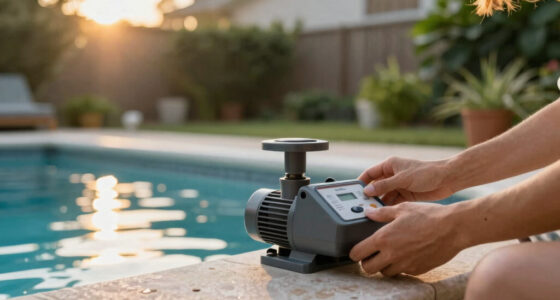
Digital timers are electronic devices that you program with buttons or a touchscreen. They let you set multiple on/off cycles, adjust times precisely, and often include backup batteries to keep your schedule safe during outages.
Why does this matter? Because flexibility in programming means you can tailor your pool operation to your lifestyle, weather, and seasonal changes. For instance, on hot days, you might want longer pump runs to keep the water clean and circulating, while on cooler days, shorter cycles save energy. Digital timers make this customization straightforward, allowing for multiple schedules that can be easily modified without fuss.
Their user-friendly interfaces and quick updates mean you can respond swiftly to unexpected changes—such as a sudden heatwave—without reconfiguring an entire setup. This adaptability can lead to significant energy savings and improved water quality, making digital timers a valuable upgrade over mechanical models.
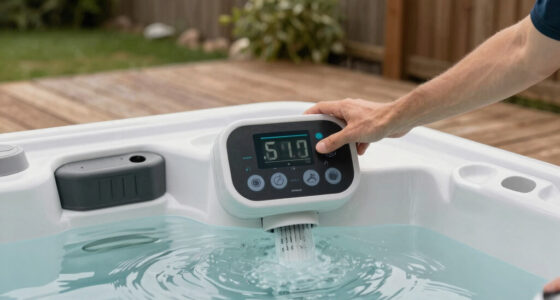
digital pool timer with multiple programs
As an affiliate, we earn on qualifying purchases.
As an affiliate, we earn on qualifying purchases.
Smart Pool Timers — The Future of Pool Control
Smart timers are internet-connected devices that you control via smartphone apps. They can be integrated into your home automation system, allowing you to manage your pool from anywhere.
Why does this matter? Because remote control and automation open new possibilities for energy efficiency and convenience. For example, if a heatwave is forecasted, you can extend your pump’s run time remotely, ensuring your pool stays clean and warm without manual intervention. Conversely, if you forget to turn off the pump, the smart timer can automatically adjust or shut down based on weather data, preventing unnecessary energy use.
Furthermore, voice command integration with Alexa or Google Home simplifies operation—just ask to turn on or off the pool pump. The tradeoff is that these devices rely on Wi-Fi stability and are vulnerable to hacking if security isn’t maintained. Therefore, choosing a reputable brand with robust security features is crucial. Overall, smart timers offer a level of automation and energy management that can significantly enhance your pool experience, but they require a reliable internet connection and some tech-savviness.
As an affiliate, we earn on qualifying purchases.
Frequently Asked Questions
Can I install a pool timer myself, or do I need a professional?
In most cases, if you’re comfortable with basic electrical work, you can install a mechanical or digital timer yourself. However, smart timers often require Wi-Fi setup and app configuration, which might be trickier. When in doubt, hire a licensed electrician to ensure safety and proper wiring.
Are smart timers worth the extra cost?
If you value remote control, automation, and energy savings, smart timers are a smart investment. They typically pay for themselves over time through energy efficiency and added convenience. But if you prefer simplicity, a digital timer might be enough.
What happens during a power outage with digital and smart timers?
Many digital timers include backup batteries to retain your schedule during outages. Smart timers may lose connectivity temporarily but often have local storage or fallback modes. Always check your device’s specs to see how it handles power interruptions.
How secure are smart pool timers from hacking?
Smart timers depend on Wi-Fi, so using strong passwords, enabling network encryption, and keeping firmware updated are vital. Choose devices from reputable brands that prioritize security to minimize risks.
As an affiliate, we earn on qualifying purchases.
Conclusion
Picking the right pool timer isn’t just about price — it’s about control, convenience, and energy savings. Mechanical timers still prove reliable, but digital and smart options unlock smarter, more adaptive pool management.
Imagine a summer weekend where your pool runs perfectly, and you’re free to relax without fuss. The right timer makes that a reality — a simple switch in technology can transform your backyard experience.
Halloween Picks
halloween
As an affiliate, we earn on qualifying purchases.